

Your CV is the single most important document in your job search. It’s not merely a list of previous roles or a chronological record of employment; it’s a carefully constructed marketing tool that positions you as the ideal candidate for your target role. In today’s competitive job market, where recruiters spend an average of just six seconds on an initial CV scan, understanding the essential tips for a great CV can be the difference between landing an interview and being overlooked. Whether you’re a recent graduate entering the workforce, a seasoned professional seeking advancement, or someone transitioning careers, the fundamental principles of effective CV writing remain constant. The following guidance will help you create a CV that clearly demonstrates your value and improves your chances of securing interviews.
Understanding What Employers Actually Want
Before diving into specific tips for a great CV, it’s crucial to understand the perspective of those reading your document. Hiring managers and recruiters aren’t looking for exhaustive career histories; they’re searching for evidence that you can solve their problems and add value to their organisation.
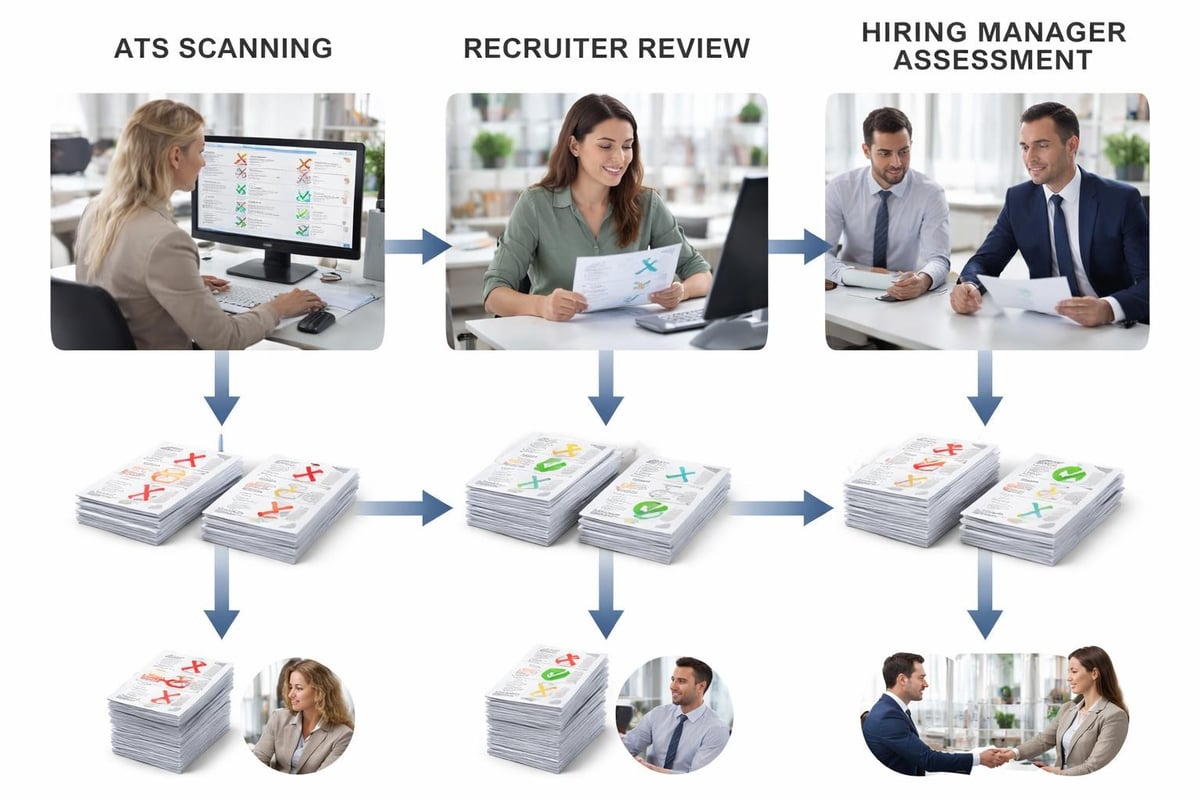
Modern recruitment processes typically involve multiple stages of filtering. Your CV must first pass through Applicant Tracking Systems (ATS), which scan for relevant keywords and structured information. It then needs to capture human attention within seconds, demonstrating immediate relevance to the role. Finally, it should provide sufficient detail to convince the reader that you’re worth interviewing.
Employers look for relevant experience, measurable achievements, professional presentation, evidence of progression and a clear alignment between your background and the requirements of the role.
Structuring Your CV for Maximum Impact
The structure of your CV fundamentally affects its readability and effectiveness. A well-organised document guides the reader’s eye to your most compelling information whilst maintaining professional credibility.
Essential Sections to Include
Every professional CV should contain specific core sections, presented in a logical order. Start with your contact details at the top, including full name, phone number, email address, and location (city and county, not full address). LinkedIn profile URL is optional but increasingly expected for professional roles.LinkedIn Profile and Guide.
Your personal statement or professional profile comes next. This 3-4 line introduction summarises who you are professionally, your key strengths, and what you’re seeking. It’s not a wish list or objective statement; it’s a value proposition.
Every professional CV should include contact details, a professional profile, key skills, career history and education. Additional sections such as professional development, certifications or voluntary work can be included where they add value to the application.
The professional experience section forms the heart of your CV. List roles in reverse chronological order, with your current or most recent position first. For each role, include the job title, company name, location, and dates (month and year format).
Formatting That Works
Visual presentation matters more than many candidates realise. Using a clear font and including essential sections ensures your CV remains readable and professional across different systems and devices.
Stick to standard, professional fonts like Arial, Calibri, or Times New Roman in 10-12 point size. Maintain consistent formatting throughout, using bold for emphasis strategically rather than excessively. White space is your friend; don’t cram every millimetre with text.
Good formatting includes consistent margins, clear headings, readable fonts, sensible spacing and a logical structure that allows recruiters to find information quickly.
Most professional CVs should fit comfortably on two pages. Graduates and early-career professionals may use one page, whilst very senior executives might extend to three, but two pages remains the gold standard for most roles.
Writing Compelling Content
The words you choose and how you present your experience directly influence whether a recruiter wants to learn more. This represents perhaps the most critical aspect when considering tips for a great CV.
Achievement-Focused Descriptions
Rather than listing duties and responsibilities, focus on achievements and measurable outcomes. Every bullet point should answer the question: “So what?” What impact did you have? What changed because of your contribution?
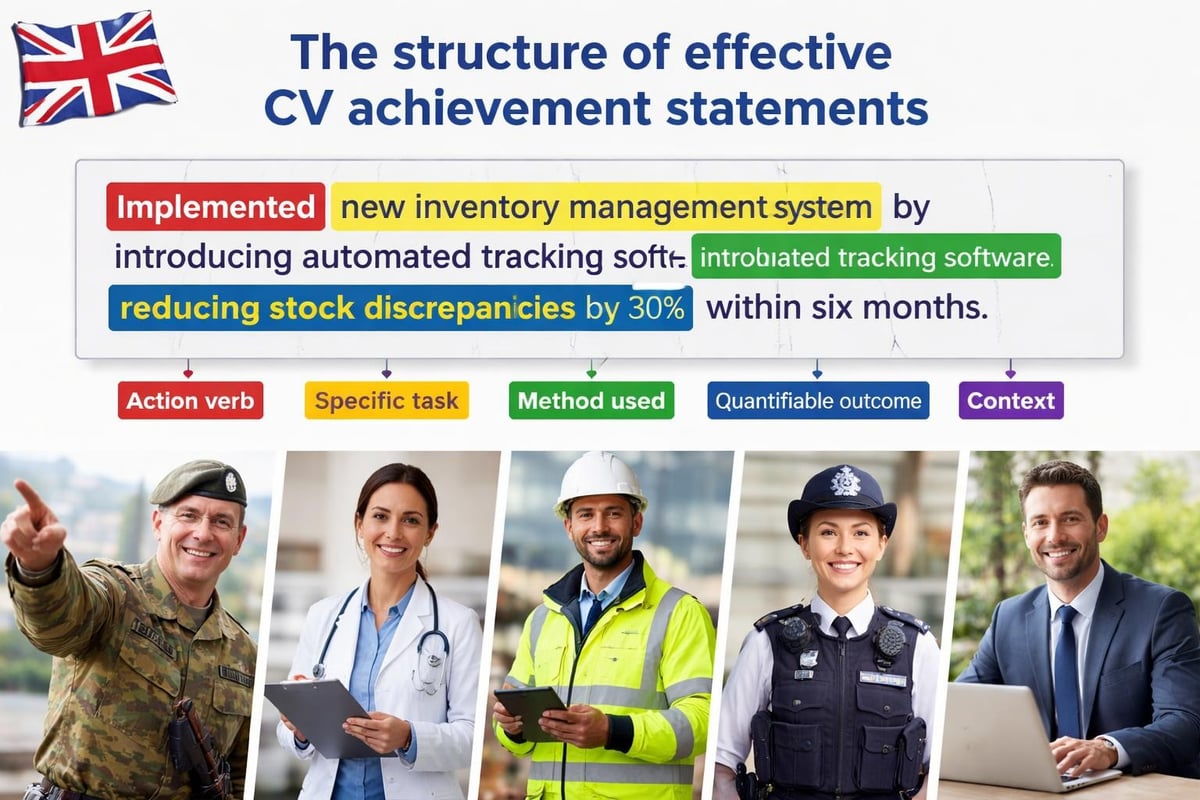
Transform passive job descriptions into active achievement statements. Instead of “Responsible for managing a team,” write “Led a team of eight sales professionals, increasing quarterly revenue by 23% through targeted coaching and performance management.”
Strong achievement statements typically combine an action, a challenge or responsibility, the approach taken and a measurable outcome that demonstrates value to the employer.
Keywords and ATS Optimisation
Applicant Tracking Systems scan CVs for specific keywords and phrases that match the job description. Understanding this technical reality is essential among tips for a great CV in 2026.
Carefully review the job advertisement and identify key requirements, skills, and qualifications. Incorporate this language naturally throughout your CV, particularly in your skills section and role descriptions. However, avoid “keyword stuffing” where terms appear forced or repetitive.
Keywords should be incorporated naturally throughout your CV, ensuring it performs well with ATS software whilst remaining engaging and easy for recruiters to read.
Tailoring Your CV to Each Application
Generic CVs rarely succeed in competitive fields. Tailoring your document to each specific role represents one of the most important tips for a great CV, yet it’s also one of the most commonly overlooked.
Strategic Customisation
Tailoring doesn’t mean rewriting your entire CV for every application. It involves strategically adjusting emphasis, keywords, and specific achievements to align with each role’s requirements.
Start by analysing the job description thoroughly. Identify the 5-7 most important requirements or skills. Ensure these appear prominently in your CV, particularly in your personal statement and the first few bullet points of your current role.
Reorder bullet points within roles to prioritise the most relevant achievements. If applying for a project management position, lead with your project delivery accomplishments. For a client-facing role, emphasise customer relationship and satisfaction metrics.
Advice on making your CV stand out consistently highlights the importance of customisation. Recruiters can immediately identify generic applications, which signal lack of genuine interest or effort.
An effective tailored CV should reflect the target role through its profile, key skills, achievements, terminology and overall emphasis, ensuring relevance to both recruiters and ATS systems.Whilst focusing on CV content, don’t underestimate the power of an accompanying cover letter. Bespoke cover letters provide context for your application, explain your motivation, and address potential concerns or career gaps directly. A strong cover letter complements your CV by telling the story behind the facts, making your application more memorable and compelling.
What to Avoid: Common CV Mistakes
Understanding what not to include is equally important when considering tips for a great CV. Certain elements consistently undermine otherwise strong applications.
Content to Exclude
Never include photographs unless specifically requested (common in some countries but not standard UK practice). Avoid personal details like date of birth, marital status, nationality, or National Insurance number. These create unnecessary bias risks and aren’t relevant to your professional capabilities.
References don’t belong on your CV. “References available upon request” wastes valuable space stating the obvious. Provide references when asked, typically at the interview stage or after a formal offer.
Avoid generic profiles, unexplained gaps, irrelevant information, dense blocks of text and spelling mistakes. A clear, concise and well-structured CV is far more effective than one overloaded with unnecessary detail.Formatting Pitfalls
Overly creative designs, unusual fonts, or excessive graphics may look appealing but often fail ATS scanning and appear unprofessional to conservative industries. Keep design clean and functional unless working in creative fields where visual flair is expected and valued.
Tables, text boxes, and columns can confuse ATS software, causing your content to be read incorrectly or not at all. Stick to simple, linear formatting with clear section headings.
Demonstrating Career Progression
How you present your career journey significantly influences employer perception. Effective career progression demonstrates ambition, capability, and increasing responsibility over time.
Showing Growth Within Roles
If you’ve been promoted within the same organisation, make this explicitly clear. List each position separately with distinct dates and responsibilities, showing how your role evolved and expanded.
Even without formal promotions, you can demonstrate progression by highlighting increased responsibilities, larger projects, expanded team sizes, or broader scope over time. This narrative of growth reassures employers that you’re ambitious and capable of development.
For career changers, focus on transferable skills and achievements that bridge your previous experience to your target role. Don’t try to hide your background; instead, reframe it to show relevant value.
Handling Career Gaps
Career gaps happen for numerous legitimate reasons: redundancy, caring responsibilities, health issues, further education, or travel. The key is addressing them briefly and honestly rather than leaving unexplained voids.
A short note in brackets explaining the gap is often sufficient: “(Career break: caring for elderly parent)” or “(Sabbatical: completed professional qualification)”. This transparency prevents assumptions and shows integrity.

Industry-Specific Considerations
Different sectors and seniority levels require adapted approaches, though the fundamental tips for a great CV remain consistent across contexts.
Public Sector and Military Transitions
Those transitioning from military, police, or NHS roles face unique challenges. Military ranks and internal terminology mean nothing to civilian employers. Translate your experience into commercial language, focusing on leadership, project management, logistics, training, or whatever skills are relevant to your target role.
Emphasise quantifiable achievements and scale. “Managed operational logistics for 200-person unit across multiple locations” translates directly to civilian operations management. Security clearances, if held and still valid, can be valuable differentiators for certain roles.
Senior Leadership CVs
Executive CVs require a different emphasis. Strategic impact, organisational transformation, P&L responsibility, and board-level experience become central. The focus shifts from doing to leading, from tasks to outcomes, from individual contribution to organisational change.
Senior CVs often extend to three pages, given the breadth and depth of relevant experience. However, earlier career roles should be summarised briefly, with detail concentrated on the most recent 10-15 years.
CV Writing for Military Veterans
Military veterans and service leavers often possess leadership, operational planning, logistics and project management experience that civilian employers highly value. However, military terminology does not always translate effectively within civilian recruitment processes.
A professionally written CV helps present military achievements in language that recruiters and applicant tracking systems immediately recognise, improving visibility and interview opportunities.
CV Writing for Police Officers
Police officers develop highly transferable skills including leadership, investigation, stakeholder engagement, risk assessment and operational management. These strengths are valuable across many sectors but are often described using terminology unfamiliar to civilian recruiters.
Professional CV writing helps translate policing experience into language that aligns with corporate, consultancy, compliance, security and public sector opportunities.
Continuous Improvement and Professional Review
Even experienced professionals benefit from an external perspective on their CVs. What reads clearly to you may confuse others. Assumptions about what’s obvious or impressive may not align with recruiter expectations.
The Value of Expert Feedback
When reviewing your CV, assess whether your achievements are clearly demonstrated, your impact is easy to understand, your strongest points are prominent and the overall document presents a convincing case for interview.
Regular updates keep your CV current and ready for unexpected opportunities. Even when not actively job hunting, review and refresh your CV every 6-12 months, adding new achievements and removing outdated information.
Ready to Improve Your CV?
A professionally written CV helps you present your achievements clearly, strengthen your personal brand and improve your chances of securing interviews in a competitive market.
I work with professionals across the UK through detailed one-to-one consultation, creating bespoke CVs, cover letters and LinkedIn profiles tailored to individual career goals.
Learn more about my Professional CV Writing Service, read my client testimonials and discover how professional CV writing can support your next career move.
Measuring CV Effectiveness
Understanding whether your CV is working requires tracking and analysis. In a job search, data provides valuable insights for continuous improvement.
Key Performance Indicators
Track your application-to-interview conversion rate. If you’re applying to 20 suitable roles but receiving no interview invitations, your CV likely needs improvement. A healthy conversion rate varies by industry and seniority but generally ranges from 10-25% for well-targeted applications.
Monitor which types of roles and companies respond positively. Patterns reveal where your CV positioning resonates most effectively, helping refine your job search strategy and potentially your career direction.
Tracking applications, interview invitations, response times and conversion rates helps identify whether your CV is generating interest and where improvements may be required.
Feedback from recruiters and hiring managers, when available, provides invaluable insights. If multiple sources mention the same issue, address it promptly.
Final Refinement: The Details Matter
The final 5% of effort often determines whether your CV succeeds or fails. This attention to detail separates good applications from great ones.
Proofreading and Consistency
Read your CV multiple times, focusing on different aspects each time: first for content and impact, then for grammar and spelling, and finally for formatting and consistency. Reading aloud helps identify awkward phrasing and unnatural language.
Check that all dates align correctly with no gaps or overlaps that might raise questions. Ensure company names are spelt correctly and consistently. Verify that job titles match your actual positions, as these can be verified through LinkedIn or reference checks.
Numbers and statistics deserve particular scrutiny. Double-check all percentages, figures, and metrics to ensure accuracy. An error in reported achievements can undermine your entire application if discovered.
Ask a trusted colleague or friend to review your CV with fresh eyes. They’ll spot issues you’ve missed after reading the same document repeatedly. Their questions about unclear points reveal where additional context or explanation would strengthen your content.
The Finishing Touches
Save your CV with a professional filename: “John_Smith_CV_2026.pdf” rather than “CV.doc” or “Resume_Final_v3.pdf”. This small detail demonstrates professionalism and helps recruiters manage multiple applications.
Always submit CVs as PDFs unless specifically instructed otherwise. PDF format preserves your formatting across different systems and devices whilst preventing accidental edits. Word documents can display differently depending on software versions and settings.
Consider including a footer with your name and page number on multi-page documents. This ensures pages remain associated if printed or separated digitally.