

Transitioning from military service to civilian employment represents one of the most significant career shifts any professional can undertake. For British veterans, the challenge often lies not in capability or experience, but in effectively translating military accomplishments into language that resonates with civilian employers. Understanding how to structure your CV, which achievements to highlight, and how to demonstrate the value of your service requires both strategic thinking and practical examples. This guide explores veteran resume examples that showcase best practices for UK service members moving into civilian careers, offering concrete templates and approaches that have successfully opened doors across industries.
Understanding the Military-to-Civilian CV Gap
The disconnect between military and civilian CVs stems from fundamental differences in how achievements are communicated. Military personnel typically use service-specific terminology, rank structures, and operational frameworks that civilian hiring managers simply don’t understand.
Veteran resume examples that succeed share common characteristics. They translate acronyms, reframe responsibilities in business terms, and quantify achievements using metrics familiar to civilian employers. Rather than listing “Section Commander, 2nd Battalion, The Royal Regiment of Fusiliers,” an effective CV might state “Leadership & Operations Manager overseeing team of 12 personnel in high-pressure environments.”
Successful military-to-civilian CV writing focuses on translating military experience into language employers immediately understand. Achievements should be quantified wherever possible, responsibilities should be described using civilian terminology and qualifications should be presented in a way that clearly demonstrates their relevance to the target role.
The most successful transitions occur when veterans view their military experience through a commercial lens. What did you manage? What were the budgets? How many people reported to you? What systems did you operate?
Veteran Resume Examples by Service Branch
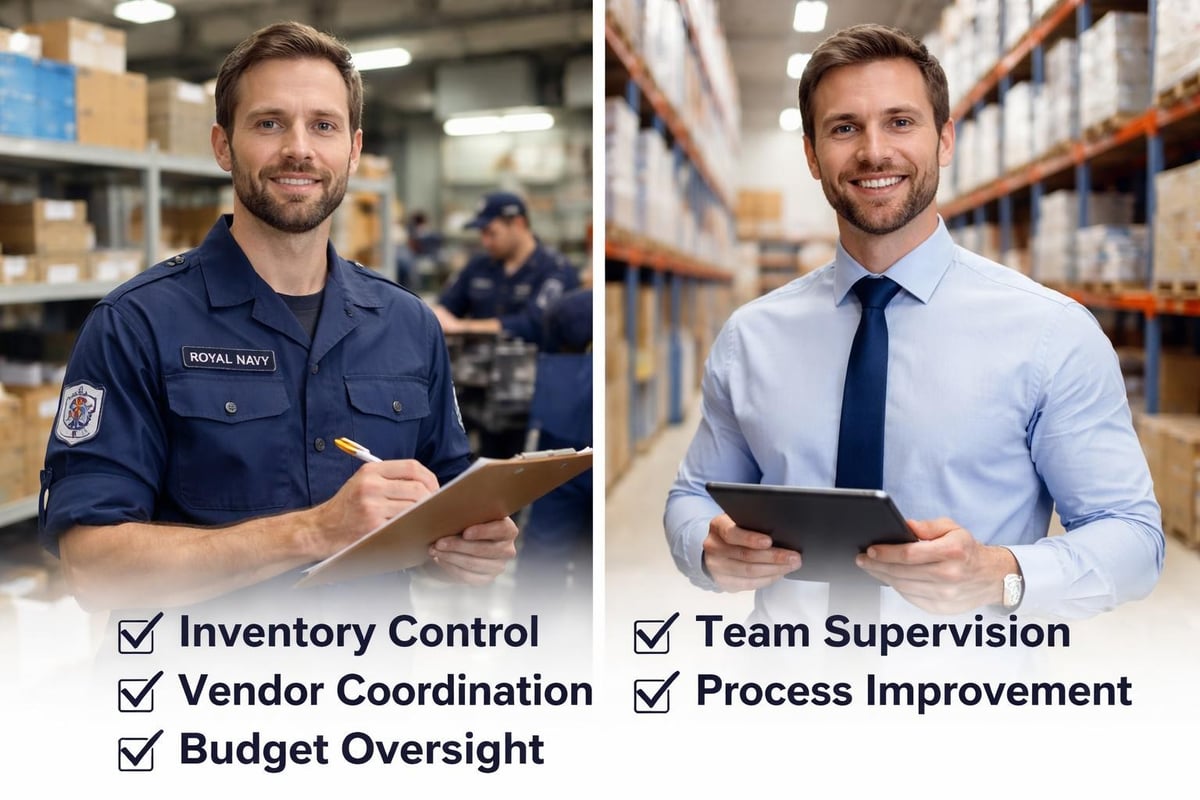
Different service branches develop distinct skill sets that align with various civilian sectors. Understanding these natural pathways helps structure your CV more effectively. Army experience develops leadership, operational planning and logistics capabilities that transfer directly into civilian management roles. Whether managing personnel, coordinating resources or overseeing complex operations, many military responsibilities align closely with commercial leadership, project management and supply chain positions.
Army personnel often transition well into logistics, project management, operations, and leadership roles. A Royal Logistics Corps veteran might structure their experience as follows:
Royal Navy and Royal Marines Examples
Naval experience frequently translates to technical, engineering, and maritime commercial roles. Consider this Royal Navy Warfare Specialist example:
Before: “Weapon Engineer Technician (Marine Engineering), HMS Defender”
After: “Marine Systems Engineer – Maintenance & Technical Operations”
Conducted preventative maintenance on complex mechanical systems valued at £15M
Managed technical documentation, ensuring 100% regulatory compliance
Trained and supervised junior technicians in safety protocols and procedures
Coordinated with cross-functional teams during critical operational periods
Royal Marines veterans possess particularly strong credentials for security, risk management, and emergency response positions. Their veteran resume examples should emphasise crisis management, rapid decision-making, and physical resilience.
Royal Air Force Transitions
RAF personnel often move into aviation, aerospace engineering, air traffic management, and technical project roles. An RAF Avionics Technician might present their background as:
Professional Summary: “Qualified Avionics Systems Specialist with 8 years’ experience maintaining and troubleshooting complex electronic systems. Proven track record in quality assurance, technical documentation, and team leadership. Security clearance holder with expertise in diagnostic procedures and regulatory compliance.”
This approach immediately communicates value in civilian terms whilst preserving the technical credibility developed through service.
Essential CV Sections for Veterans
Structuring your CV correctly ensures civilian employers can quickly identify your qualifications and suitability. The most effective veteran resume examples follow a clear, professional format.
Professional Summary
This opening section should immediately establish your civilian value proposition. Avoid generic statements like “dedicated veteran seeking new opportunities” and instead focus on specific expertise:
“Project Manager and Team Leader with 10 years’ proven experience coordinating multi-million pound operations, managing cross-functional teams of 25+ personnel, and delivering critical projects under strict deadlines. Expert in risk assessment, resource allocation, and stakeholder communication. Currently transitioning specialist skills into commercial project management roles.”
Skills Section
List transferable competencies using civilian terminology:
Leadership & Team Management: Led teams ranging from 8 to 30 personnel
Project Coordination: Managed concurrent projects with budgets exceeding £500K
Risk Assessment: Conducted operational risk analysis in high-stakes environments
Technical Proficiency: Advanced skills in [specific systems, software, or equipment]
Security Clearance: Current SC clearance (if applicable and relevant)
Professional Experience
This section requires the most careful translation. For each role, structure information using this framework:
Job title (civilian translation) with dates
Organisation (military unit in recognisable terms)
Bullet points emphasising achievements and responsibilities
Example:
Operations Coordinator | Royal Engineers | April 2018 – March 2026
Coordinated logistics for operations involving 150+ personnel across multiple locations
Managed equipment inventory worth £3.5M, maintaining 99.5% accountability
Developed and implemented standard operating procedures improving efficiency by 23%
Supervised and mentored team of 12 junior coordinators, with 100% progression rate
Tailoring Your CV to Target Roles
Generic CVs rarely succeed in competitive markets. The most effective veteran resume examples demonstrate clear alignment between military experience and specific civilian opportunities.
Matching Military Skills to Job Descriptions
When applying for positions, create a skills matrix comparing your background to employer requirements:
Job Requirement | Your Military Experience | Evidence |
|---|---|---|
Team leadership | Section Commander, 8-person team | Led operational deployments, 100% mission success rate |
Budget management | Managed £750K equipment budget | Maintained financial accountability with zero discrepancies |
Stakeholder communication | Liaison between units and external agencies | Coordinated multi-agency operations involving 5+ organisations |
This approach, combined with insights from professional CV writing services, ensures your application directly addresses employer needs.
Industry-Specific Examples
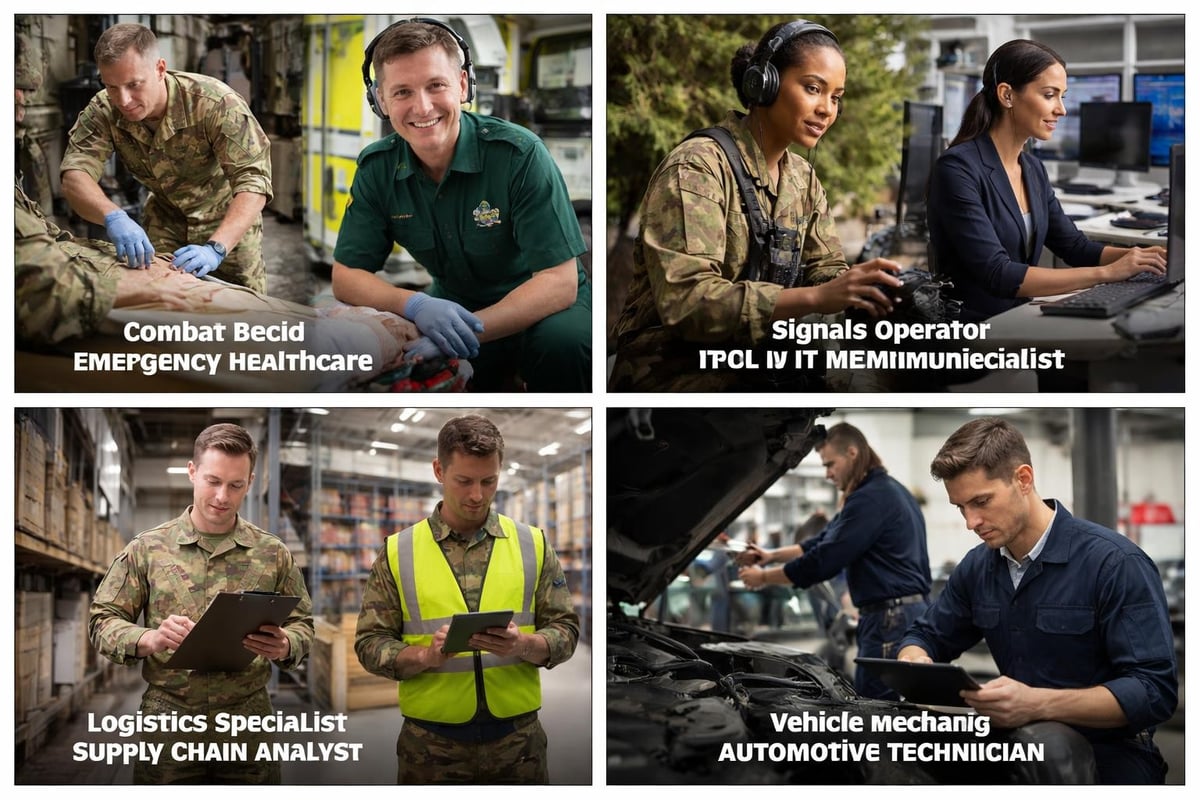
Security Sector: Former Royal Military Police transitioning to corporate security should emphasise investigation experience, risk assessment capabilities, and security clearance status.
Logistics Industry: Ex-Royal Logistics Corps personnel can highlight supply chain management, inventory control systems, and distribution coordination.
Engineering Roles: REME (Royal Electrical and Mechanical Engineers) veterans possess directly transferable skills in maintenance, diagnostics, and technical project management.
Healthcare: Combat Medical Technicians can transition to NHS roles, private healthcare, or emergency services by emphasising clinical skills, trauma response, and patient care under pressure.
Each sector requires slightly different presentation whilst maintaining core translation principles found in successful veteran resume examples.
Common Mistakes to Avoid
Many veterans unknowingly undermine their applications through preventable errors. Understanding these pitfalls helps you create stronger veteran resume examples.
Excessive Military Jargon
Poor Example: “Served as 2IC for SQMS responsible for G1098 accountability across BG operations during Op HERRICK rotation.”
Improved Version: “Deputy Manager for equipment logistics, maintaining accurate inventory records for 500+ items across operational deployment.”
Underselling Achievements
Veterans often describe responsibilities without highlighting accomplishments. Every bullet point should demonstrate impact:
Weak: “Responsible for vehicle maintenance”
Strong: “Maintained fleet of 18 vehicles achieving 98% operational readiness, exceeding departmental target by 12%”
Length and Format Issues
British CVs typically span two pages maximum. Veterans with extensive service histories must be selective, focusing on the most recent and relevant experience. Earlier service can be summarised briefly unless directly applicable to target roles.
Ignoring ATS Optimisation
Many large employers use Applicant Tracking Systems (ATS) to filter CVs before human review. Effective veteran resume examples include relevant keywords from job descriptions, use standard section headings, and avoid complex formatting that confuses scanning software.
Addressing Employment Gaps and Deployment Periods
Military service inherently involves periods that might appear as gaps in civilian CVs. How you address these periods affects employer perception significantly.
Deployment Explanation
Rather than leaving unexplained date ranges, briefly contextualise operational deployments:
Training & Development Coordinator | Royal Signals | 2021-2023Including 7-month operational deployment providing communications support
Established and maintained secure communication networks for 200+ users
Trained 15 personnel on technical systems achieving 100% certification rate
Coordinated equipment maintenance schedules ensuring zero critical failures
This approach acknowledges deployment whilst maintaining professional CV flow.
Transition Periods
If you’ve undertaken resettlement training, courses, or qualifications during your transition, include these prominently:
Professional Development | January 2026 – March 2026
Completed Project Management Professional (PMP) certification
Advanced Excel and data analysis training (Level 3)
Commercial driving qualification (C+E licence)
These additions demonstrate proactive skill development and commitment to civilian career success.
Supporting Your CV with Additional Documents
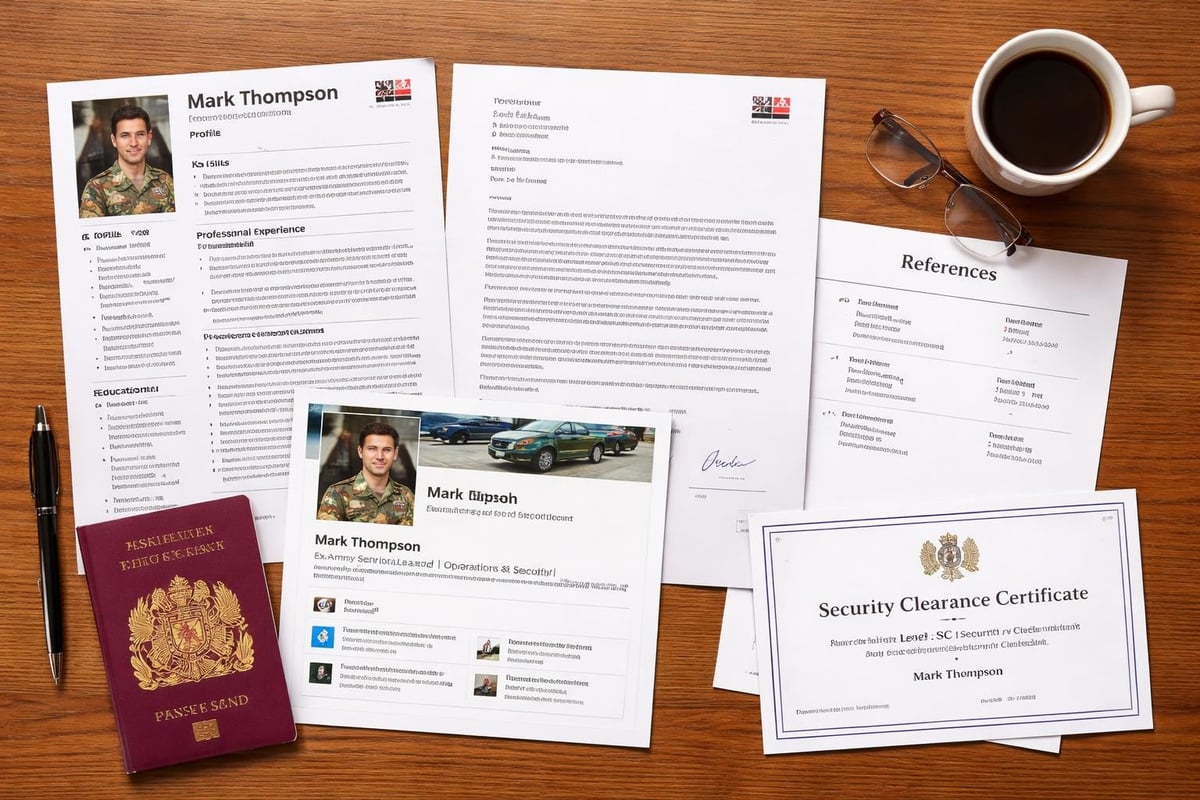
Strong veteran resume examples rarely stand alone. Supporting documentation strengthens applications considerably.
Cover Letters for Veterans
Every application should include a tailored cover letter explaining your transition and enthusiasm for the specific role. I also explain why it’s important to always include a cover letter, along with what key information to add, ensuring your application package presents a complete professional narrative.
A veteran’s cover letter should:
Open with clear interest in the specific position
Briefly explain your transition without dwelling on military details
Highlight 2-3 key achievements directly relevant to the role
Express genuine enthusiasm for the company and sector
Close with confident call to action requesting interview opportunity
References and Security Clearance
Military references carry weight, but ensure referees understand they may be contacted by civilian employers. Brief them on the roles you’re pursuing so they can frame their references appropriately.
Leveraging Digital Platforms
Modern job searching extends beyond traditional CVs. Veterans must establish professional online presence to maximise opportunities.
LinkedIn for Veterans
Your LinkedIn profile serves as a dynamic, searchable CV that recruiters actively use. Optimise your profile by:
Using civilian job titles in your headline and experience sections
Writing achievement-focused summaries rather than duty lists
Joining relevant professional groups in your target industry
Engaging with content related to your desired sector
Requesting recommendations from former colleagues who can speak to transferable skills
The CV platforms guide offers additional insights on maximising your digital presence across multiple channels.
A professionally written LinkedIn profile can strengthen your job search by reinforcing the achievements, skills and experience highlighted within your CV whilst increasing visibility with recruiters.
Online Application Systems
When submitting applications through company portals:
Save your CV in multiple formats (PDF and Word) with clear file names
Complete all fields in online forms, even if information appears in your CV
Use keywords from job descriptions in your application responses
Follow instructions precisely, particularly regarding document specifications
Keep records of applications including job descriptions and dates
Many recruitment systems automatically rank candidates based on keyword matching, making tailored applications essential for success.
Sector-Specific Veteran Resume Examples
Certain industries actively seek veteran talent due to the natural skill alignment. Understanding these sectors helps focus your transition strategy.Military engineering and technical experience often translates exceptionally well into construction, engineering and facilities management careers. Experience managing projects, maintaining equipment, overseeing safety standards and coordinating teams provides a strong platform for transition into these sectors.
Emergency Services
Former military personnel frequently excel in police, fire, ambulance, and rescue services. These veteran resume examples should emphasise:
Decision-making under pressure in critical situations
Physical fitness and ability to meet demanding standards
Teamwork and communication in emergency response contexts
Regulatory compliance and procedural adherence
Transport and Logistics
Military logistics experience translates exceptionally well to civilian supply chain roles. Highlight:
Inventory management systems and stock control accuracy
Distribution coordination across multiple locations
Supplier relationship management and procurement
Compliance with transport regulations and safety standards
Quantifying Military Achievements
Numbers provide concrete evidence of capability. The strongest veteran resume examples extensively use quantifiable metrics.
Budget and Resource Management
“Managed equipment inventory valued at £4.2M with 99.7% accuracy”
“Controlled departmental budget of £380K, delivering 8% under-spend through efficient resource allocation”
“Administered procurement process for supplies worth £150K annually”
Team Leadership
“Supervised team of 24 personnel across three shifts, achieving 100% qualification compliance”
“Mentored 18 junior staff members with 94% promotion success rate”
“Led cross-functional team of 35 during operational deployment”
Performance Improvements
“Implemented maintenance procedures reducing equipment downtime by 34%”
“Redesigned training programme improving pass rates from 67% to 89%”
“Streamlined logistics processes cutting delivery times by 2.5 days”
These specific figures demonstrate tangible impact far more effectively than vague statements about “improved efficiency” or “enhanced performance.”
Professional Development and Qualifications
Military service provides numerous qualifications and training opportunities. Ensure your CV prominently features relevant credentials.
Civilian-Recognised Qualifications
Many military courses carry civilian equivalence or direct transferability:
HGV licences (C, C+E) gained through military driver training
First Aid qualifications from combat medical training
Project management certifications through formal military leadership courses
Technical NVQs achieved during trade training
Security qualifications such as SIA licences
List these in a dedicated “Qualifications & Certifications” section using recognised civilian terminology.
Resettlement Training
The Career Transition Partnership (CTP) and service resettlement programmes offer valuable courses. Include any completed training:
Professional Qualifications (2025-2026)
Project Management Fundamentals – APM accredited
IOSH Managing Safely – Health & Safety certification
Prince2 Foundation – Project methodology qualification
Advanced Excel for Business – Microsoft certified
This demonstrates proactive preparation for civilian employment and commitment to continuous professional development.
Veterans’ Frequently Asked Questions
How long should a veteran’s CV be?
Your CV should typically be two pages maximum for UK applications. Focus on the most recent 10-15 years of experience, with earlier service summarised briefly. Senior officers with extensive command experience might extend to three pages, but only if every line adds genuine value. Quality and relevance matter far more than comprehensive service history.
Should I mention my military rank on my CV?
Include rank only if it adds meaningful context to your responsibilities and seniority level. For senior ranks (Major and above, or equivalent), the rank can signal substantial leadership experience. For junior ranks, the civilian job title translation matters more. Never lead with rank alone; always pair it with a role description: “Sergeant (Training Coordinator)” rather than simply “Sergeant.”
Should I create different CV versions for different jobs?
Absolutely. Tailoring your CV to each application significantly improves success rates. Maintain a master CV containing all your experience and achievements, then create customised versions emphasising the most relevant skills and accomplishments for each target role.
You can also read my client testimonials to see how former service personnel have successfully secured civilian employment across a wide range of industries. If you would like personalised support with your military-to-civilian transition, you can also book a consultation to discuss your career goals, target roles and CV requirements.
As a former Royal Navy veteran who successfully transitioned into civilian leadership and business ownership, I understand the challenges service leavers face when presenting military experience to civilian employers. My consultative approach focuses on translating achievements, leadership responsibilities and operational expertise into language that recruiters immediately understand and value.
Translating military experience into compelling civilian CVs requires understanding both the language of business and the genuine value veterans bring to organisations. The most effective veteran resume examples demonstrate this bridge through clear communication, quantifiable achievements, and strategic presentation. If you’re transitioning from service and need expert guidance crafting a CV that truly reflects your capabilities and opens doors to your next career chapter, John Logan Consulting and Mentoring provides bespoke, consultative CV writing services specifically designed to position you confidently for civilian success.