

In 2026, competition for top roles is fiercer than ever—does your CV stand out or blend in?
A strong CV is now essential for anyone aiming to advance their career in the fast-changing UK job market. Employers expect more than a list of duties—they want evidence of impact, adaptability, and digital skills.
With a strong CV, you open doors to new opportunities, secure more interviews, and accelerate your career progression. This guide will take you step-by-step through building a future-ready CV that gets noticed.
You will find a comprehensive, practical approach tailored to evolving employer expectations. Explore the latest 2026 CV trends, proven structure, content strategies, design tips, role-specific advice, and expert insights to help you craft a winning profile.
Understanding the 2026 CV Landscape
Navigating the modern UK job market means understanding how a strong cv should adapt to new expectations. The landscape for CVs continues to evolve rapidly, shaped by technology, employer needs, and global events. Grasping these shifts is essential if you want your application to stand out and secure interviews in 2026.

Evolution of CV Expectations
Since the pandemic, employer expectations for a strong cv have changed. Remote work and AI recruitment tools have pushed companies to focus more on skills-first hiring and digital profiles. Today, 78% of UK recruiters use applicant tracking systems (ATS) during initial screening. This shift means candidates must adapt their CVs to meet new standards and ensure their achievements are visible to both humans and technology.
Key 2026 CV Trends
A strong cv in 2026 highlights soft skills, adaptability, and digital literacy. Employers now expect concise, impact-driven CVs that are no longer than two pages. Using clear metrics and measurable results is critical. For instance, instead of listing duties, candidates should show how they made a difference, such as improving efficiency or boosting sales, to demonstrate tangible value.
The Role of ATS and Technology
Applicant tracking systems are now central to screening a strong cv. These systems scan for keywords and relevant experience, so optimising your CV for ATS is vital. Common errors, like using unusual layouts or missing keywords, can lead to automatic rejection. To avoid this, carefully match your skills and experience to the job description, ensuring your strong cv passes both software and human checks.
Industry-Specific Requirements
A strong cv must be tailored for its sector. In finance, quantifiable achievements and compliance matter most. Tech CVs highlight certifications and project experience. Education roles focus on safeguarding and student outcomes. Public service, including police or military professionals transitioning to civilian roles, often benefit from visually referencing English uniforms and clearly translating service skills into civilian achievements.
The UK Job Market in 2026
The UK market in 2026 demands digital skills, adaptability, and leadership across sectors. London leads in tech and finance roles, while regions focus on healthcare and public service. For the latest data on in-demand skills, see Expert Insights: Skills in Demand for the 2026 UK Hiring Market. Adapting your strong cv to regional and sector trends increases interview chances.
Common Pitfalls to Avoid
Many candidates harm their chances by using outdated formats or generic content. Over half, about 54%, of CVs are rejected due to poor formatting alone. Avoid these mistakes by personalising every strong cv, using modern layouts, and focusing on relevant achievements. Consistently updating your CV ensures it remains effective and aligns with employer expectations.
Building the Core Structure of a Strong CV
A strong cv is built on a solid foundation. The right structure ensures your achievements shine and your application passes both human and ATS checks. Let us break down each section you need to include for your CV to stand out in 2026.
Essential Sections for Every CV
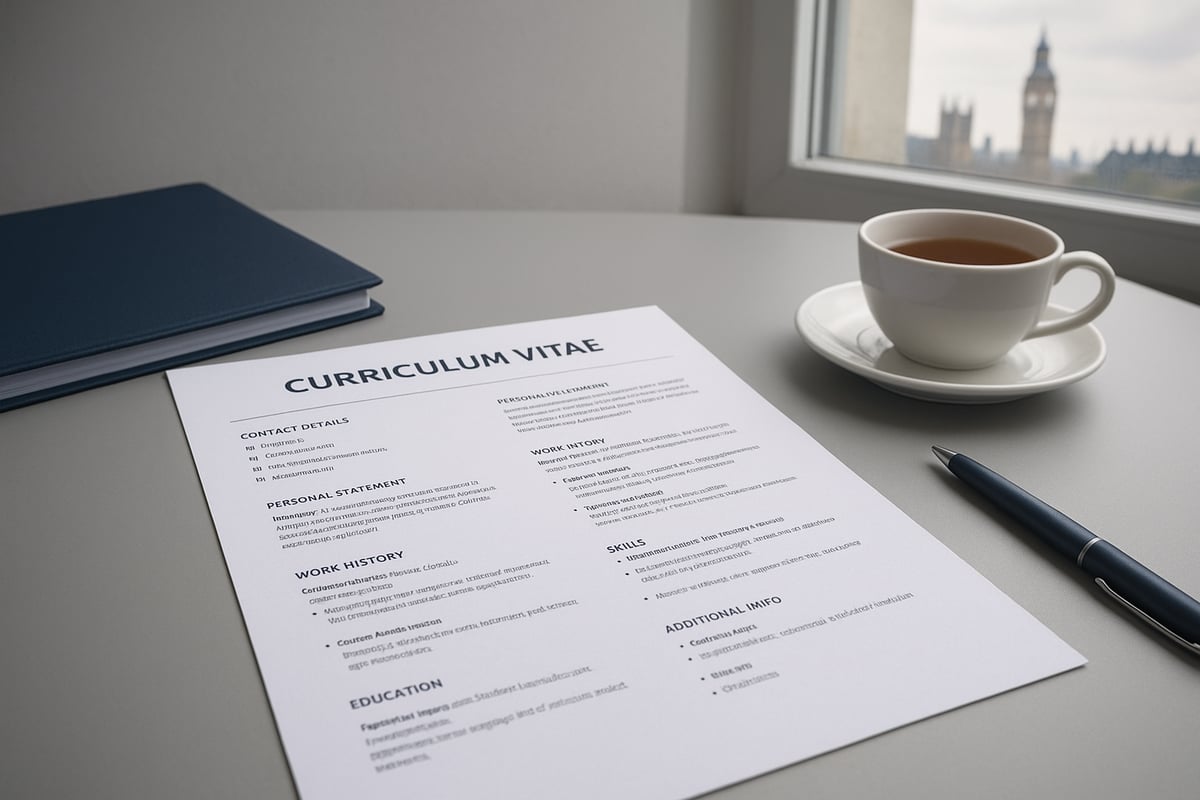
Every strong cv should contain: contact details, a concise personal statement, work history, education, key skills, and additional information. The two main layouts are chronological, which highlights your career progression, and functional, which focuses on skills if you are changing roles or industries. For more on how to structure these sections, see What makes a successful CV. Choose the format that best highlights your strengths and aligns with your target job.
Writing a Powerful Personal Statement
Your personal statement is your headline. In just three to five lines, show employers why you are the right choice. For instance, a mid-level manager could write, “Dynamic operations manager with 8 years’ experience leading diverse teams to deliver consistent 20% year-on-year growth. Skilled in digital transformation, team leadership, and process optimisation.” A strong cv uses this section to set a confident, professional tone from the start.
Showcasing Work Experience Effectively
Present your experience using action-oriented bullet points. Begin each point with a strong verb and focus on results. Instead of listing duties, highlight achievements: “Increased customer retention by 25% through improved service strategies.” Quantifying your impact is vital for a strong cv, as it shows measurable success and value to potential employers.
Highlighting Education and Qualifications
For graduates, place education before work history. For experienced professionals, education follows your career section. Include degree details, dates, and any certifications vital for 2026 roles, such as digital marketing or data analysis. A strong cv makes relevant qualifications easy to spot for both recruiters and ATS systems.
Presenting Skills for Maximum Impact
List both hard and soft skills. UK employers in 2026 look for digital literacy, adaptability, leadership, and communication. Use a table or bullet points for clarity. For example:
| Hard Skills | Soft Skills |
|---|---|
| Data Analysis | Leadership |
| Project Management | Adaptability |
| Digital Marketing | Communication |
A strong cv showcases these in relation to the role you are targeting.
Including Additional Sections
Languages, volunteering, awards, and professional memberships can set you apart. Only add hobbies and interests if they are relevant or demonstrate valuable qualities. For instance, volunteering as a mentor or being a member of a professional body highlights commitment and initiative. These extras often give your strong cv the final edge.
Content Strategies to Make Your CV Stand Out
A strong cv goes beyond listing job titles and duties. To truly stand out in the competitive 2026 UK market, you must craft every section with intention, clarity, and measurable impact. Discover the strategies that transform a CV into a powerful career tool.

Using Metrics and Achievements
Hiring managers are drawn to quantifiable results. Instead of detailing tasks, highlight what you achieved in each role. For a strong cv, use numbers, percentages, and timeframes to demonstrate your value.
- “Increased customer satisfaction by 15% within six months”
- “Reduced operational costs by £10,000 annually”
- “Managed a team of 12 across three regions”
A table can help illustrate impact:
| Task | Achievement |
|---|---|
| Managed projects | Delivered 95% on time |
| Led training | Improved skills by 20% |
| Process improvement | Cut errors by 30% |
Tailoring Content for ATS Optimisation
Applicant Tracking Systems (ATS) scan CVs for relevant keywords before a human ever sees them. To ensure your strong cv passes this filter, analyse job ads for target phrases and mirror their terminology.
Place keywords naturally in your profile, skills, and experience sections. Avoid keyword stuffing, as it can hinder readability. For a detailed guide on keyword integration, see Using keywords in your CV.
Customising for Each Application
Generic CVs rarely impress. Tailor every strong cv to the specific job and sector. Adjust your summary, skills, and achievements to reflect the employer’s priorities.
For example, a CV for a police-to-civilian role should showcase relevant skills with appropriate English uniform imagery if included. Highlight transferable experience and use language familiar to the new sector.
Powerful Language and Action Verbs
Active, impactful language makes your strong cv memorable. Replace passive phrases with dynamic verbs such as:
| Passive Phrase | Action Verb Example |
|---|---|
| Responsible for sales | Generated sales |
| Involved in projects | Delivered projects |
| Helped with training | Facilitated training |
Avoid clichés like “hardworking” or “team player.” Instead, let your achievements show these qualities.
Addressing Career Gaps or Changes
If your strong cv includes career gaps or sector changes, address them positively. Briefly explain gaps due to study, caring, or redundancy, focusing on skills gained during that time.
For career changers, such as ex-military professionals, translate service skills into civilian terms. Case studies show English military uniforms can provide visual context, but always emphasise adaptability and new qualifications.
Integrating Digital Profiles
Modern employers expect to see digital footprints. Include your LinkedIn or a professional portfolio link, ensuring consistency across platforms.
Best practices:
- Keep your digital profiles updated and aligned with your CV
- Use a professional photo for LinkedIn (if appropriate)
- Highlight recent projects or endorsements
A strong cv, supported by online presence, boosts credibility and opens more doors.
Design and Presentation: Creating a Professional Impression
First impressions matter. Presenting a strong cv with a clean, modern design sets you apart in the 2026 UK job market. Employers and Applicant Tracking Systems (ATS) both judge your CV’s professionalism at a glance. Prioritise clarity, structure, and accessibility to demonstrate attention to detail and readiness for top roles.
Layout and Formatting Best Practices
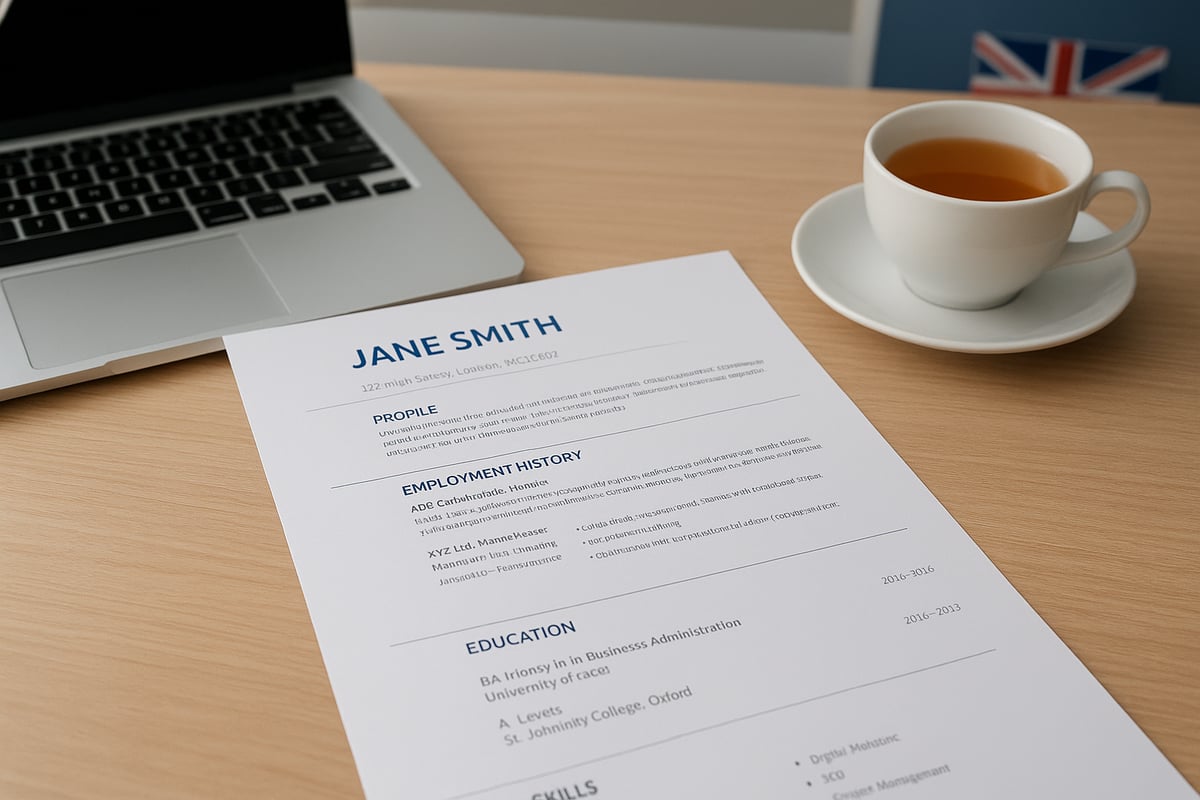
A strong cv starts with a logical structure. Use a single, easy-to-read font such as Arial, Calibri, or Verdana. Headings should be bold, with generous spacing between sections. Stick to a two-column layout only if you are sure it remains ATS-friendly; otherwise, a single column is safest. Avoid graphics that may confuse ATS software.
- Keep margins wide for white space
- Use bullet points for clarity
- List most recent roles first in each section
For more detailed advice, see Crafting a professional CV.
Visual Elements and Branding
Subtle branding can make your strong cv memorable while staying professional. Incorporate a restrained colour palette, such as navy or grey accents, to guide the reader’s eye. Icons can help highlight sections like skills or contact details, but use them sparingly. In the UK, photos are rarely appropriate—focus on content, not appearance. If you include images for roles like ex-police or military, use English uniforms only.
Ensuring Readability and Accessibility
Optimise your strong cv for both human readers and ATS. Use a minimum font size of 10pt and clear, legible typefaces. Break up sections with headings and avoid dense paragraphs. Bullet points help present achievements clearly. Always check accessibility: screen readers should be able to interpret your CV, and colours must provide sufficient contrast for readability.
Length and Conciseness
A strong cv in 2026 should be no more than two pages. This standard shows you can prioritise key information. Trim outdated roles, irrelevant details, or lengthy descriptions. Focus on results and skills most relevant to your target role. Use concise language and avoid repetition. Recruiters value brevity and clarity over exhaustive lists.
File Formats and Submission Tips
Choose PDF for most online applications, as it preserves your strong cv’s formatting. Some portals require Word documents, so have both versions ready. Name your file professionally: “FirstName_LastName_CV2026.pdf”. Avoid generic names like “CV.docx”. When emailing, include a short, polite message and always use a professional email address.
| Format | When to Use | Notes |
|---|---|---|
| Most applications | Preserves layout and style | |
| Word | Some online forms | Editable, but less secure |
Proofreading and Polishing
The final step for a strong cv is thorough proofreading. Spelling or grammar errors can lead to instant rejection. Read your CV aloud or ask a trusted contact to review it. For professional results, consider expert editing. Remember, you can always contact John Logan at John@johnloganbmc.co.uk for a comprehensive review and feedback on your CV’s impact.
Tailoring Your CV for Different Roles and Career Stages
A strong CV must evolve as your career progresses. Whether you are entering the workforce, seeking mid-level promotions, aiming for the boardroom, or making a sector switch, personalisation is key. By understanding what recruiters look for at each stage, you can maximise your chances of success in 2026.
Entry-Level and Graduate CVs
For school leavers and recent graduates, a strong CV spotlights transferable skills, academic achievements, and extracurricular activities. Use a clear structure, starting with a concise personal statement. Include:
- Coursework relevant to your target industry
- Internships or part-time roles
- Teamwork, communication, and digital skills
Showcase leadership in clubs or volunteering. An English school uniform in your CV image can help recruiters instantly recognise your background.
Mid-Level Professionals
At mid-career, your strong CV should balance technical expertise with evidence of leadership. Highlight promotions, project management, and measurable results, such as:
- Increased efficiency or revenue
- Leading cross-functional teams
- Training or mentoring others
Demonstrate growth by showing how your responsibilities and achievements have evolved over time.
Senior Executives and Board-Level Roles
For executive and board-level roles, a strong CV focuses on strategic impact and governance. Use a tailored executive summary and bullet points to outline:
- Organisational transformation
- Board membership or advisory roles
- Delivering on corporate objectives
Highlight your influence on company direction and culture, using quantifiable results wherever possible.
Career Changers and Returners
Transitioning careers or returning after a break requires reframing your experience. Identify transferable skills from previous roles and explain your motivation for change. For example, ex-military professionals in English military uniforms can show leadership, discipline, and adaptability. Address any career gaps with brief, positive explanations and focus on recent training or upskilling.
Ex-Military and Ex-Police Professionals
Professionals leaving the armed forces or police must translate service experience for civilian recruiters. Avoid jargon and relate achievements to business outcomes, such as managing teams or leading operations. Use English police or military imagery to establish credibility. Common challenges include explaining ranks and transferable skills, but practical examples and clear language can bridge the gap.
Sector-Specific Adaptations
Every industry has unique requirements. In finance or tech, use keywords from job descriptions and highlight compliance or digital skills. Healthcare and public service roles demand evidence of empathy and regulatory knowledge. Align your strong CV with future skills identified in the Assessment of Priority Skills to 2030 report and keep up to date with Hiring Trends Update: Key UK Labour Market Shifts and What to Expect in 2026 to ensure your application matches industry expectations.
Frequently Asked Questions About Strong CVs for 2026
Wondering what makes a strong CV in 2026? Here are answers to the most common questions UK professionals ask about building a winning profile.
What are the most important changes in CV writing for 2026?
CVs in 2026 must be concise, results-focused, and optimised for ATS. Emphasise digital skills and tailor every application to the specific role.
How do I ensure my CV passes ATS screening?
Use keywords from the job ad, clear section headings, and a simple layout. Avoid images or graphics that can confuse software and lead to rejection.
What are the best ways to address a career gap on my CV?
Be open, focus on skills gained during the gap, and use positive language. With gaps on the rise, UK’s CV Data Reveals Persistent Rise in Employment Gaps offers useful insight.
Should I include a photo or personal details on my CV in the UK?
No, UK employers prefer CVs without photos or personal details like age or marital status. Stick to professional information to avoid bias.
How can I get professional help with my CV?
For expert advice on creating a strong CV, contact John Logan at John@johnloganbmc.co.uk. Personalised support can boost your chances in the 2026 job market.
Now that you’ve seen what goes into building a CV that truly stands out for 2026, you might be thinking about how to put these strategies into practice for your own career goals. Remember, a strong CV is more than just a summary of your experience—it’s your personal marketing tool, opening doors to new opportunities and faster progress. If you’d like expert, one-to-one help crafting a CV that is completely tailored to you and the evolving UK job market, I’m here to support you every step of the way. Explore how we can work together: Professional CV Writer UK Bespoke CV Writing Service for Results