

Your CV is frequently the first impression you make on a potential employer, and in today’s competitive job market, that impression needs to be exceptional. With decades of experience supporting professionals across the UK, I’ve witnessed firsthand how the right approach to CV writing can transform career prospects. These professional CV tips are based on real-world recruitment insights, ATS system requirements, and what actually captures attention in 2026. Whether you’re updating an existing document or starting from scratch, understanding the fundamentals of effective CV writing will position you ahead of other candidates and significantly increase your interview success rate.
Understanding What Employers Actually Want
Recruiters typically spend between six and eight seconds on an initial CV scan. That brief window determines whether your application progresses or gets rejected. Your CV must immediately communicate your value, relevance, and professional identity.
When applying professional CV tips, start by recognising that employers aren’t looking for your life story. They want specific evidence that you can solve their problems and deliver results. This means every line on your CV should serve a strategic purpose.
The Two-Page Standard
One of the most important professional CV tips concerns length. Unless you’re in academia or a highly specialised technical field, your CV should be two pages maximum. This constraint forces you to prioritise your most impressive achievements and relevant experience.
A two-page CV should focus the first page on your contact details, professional profile, key skills and most recent experience. The second page can cover earlier career history, education and supporting information. Avoid unnecessary graphics, excessive white space and irrelevant content that adds length without strengthening your application.
The two-page format respects the recruiter’s time whilst demonstrating your ability to communicate concisely. It’s a professional standard across most UK industries in 2026.
Crafting a Powerful Professional Profile
Your professional profile sits at the top of your CV and acts as your personal pitch. This section is where many candidates struggle, either writing something too generic or missing the opportunity entirely. Among the most valuable professional CV tips is learning to write a profile that immediately positions you for your target role.
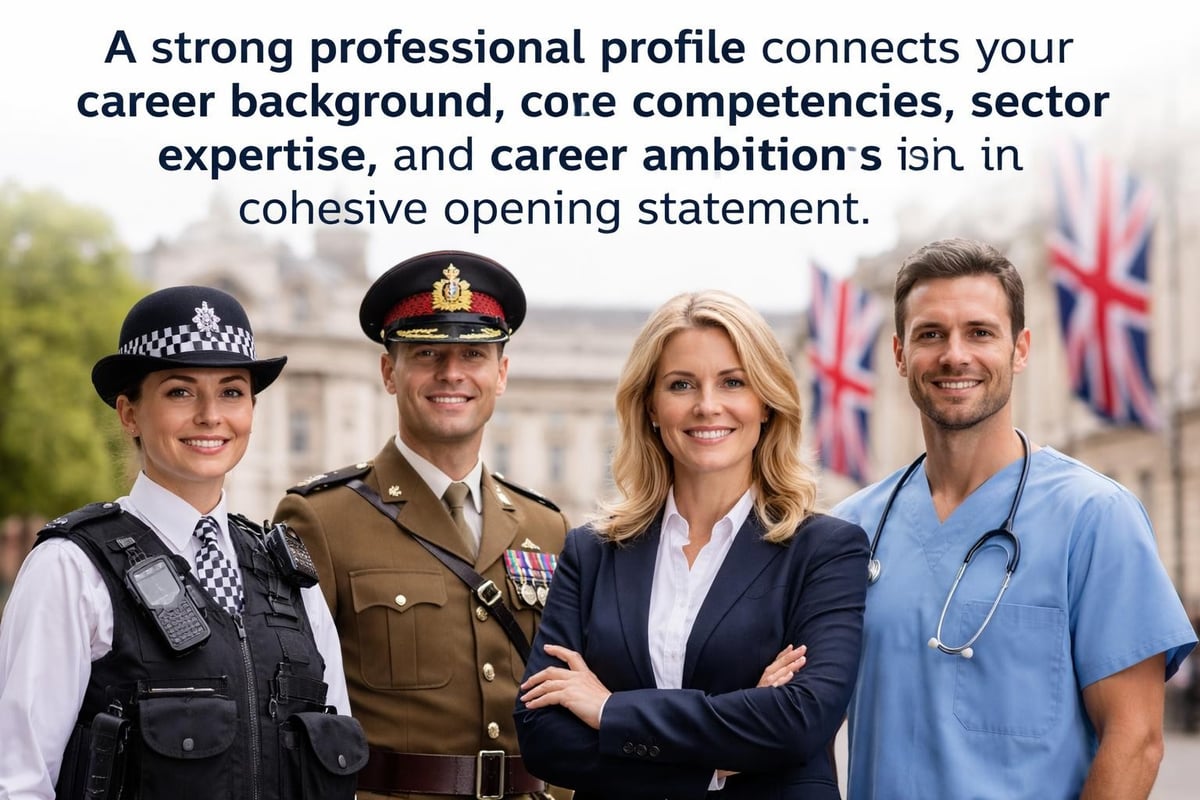
An effective professional profile should clearly communicate your current professional identity, areas of expertise, notable achievements and the type of opportunity you are pursuing. The objective is to establish credibility quickly and encourage the recruiter to continue reading.
This four-to-six-line paragraph should be tailored for each application. Generic profiles stating you’re “a hard-working team player” won’t differentiate you from hundreds of other applicants.
Demonstrating Achievement Rather Than Listing Duties
Perhaps the most transformative of all professional CV tips is shifting from responsibility-based writing to achievement-based writing. Most CVs simply list what someone was supposed to do in their role. Exceptional CVs demonstrate what they actually accomplished.
Strong CV achievements should combine action, context and measurable results. Rather than simply stating that you managed a team or improved a process, explain what you did, why it mattered and what outcome was achieved. Recruiters are far more interested in evidence of impact than a list of responsibilities.Notice how the strong examples include specific numbers, timeframes, and measurable outcomes.
When describing achievements, focus on measurable outcomes such as revenue generated, costs reduced, performance improvements, project delivery, team leadership, awards and promotions. Quantifiable evidence provides credibility and helps employers understand the impact of your contribution.
Even if your role doesn’t involve obvious metrics, you can quantify impact. A teacher might reference “improved student achievement scores by 15% over two academic years” or a customer service professional could note “maintained 98% satisfaction rating across 500+ monthly interactions.”
Optimising for Applicant Tracking Systems
In 2026, approximately 75% of CVs are initially screened by Applicant Tracking Systems (ATS) before human eyes review them. Understanding ATS requirements is among the most critical professional CV tips for modern job seekers. These systems scan CVs for relevant keywords, appropriate formatting, and role-specific qualifications.
ATS-Friendly Formatting
Your CV formatting directly impacts whether the ATS can properly parse your information. Many visually impressive CVs fail at this stage because they confuse the software.
ATS-friendly CVs use standard section headings, common fonts, clear date formats and simple layouts that can be read accurately by recruitment software. Avoid complex graphics, text boxes and unusual formatting that may prevent your information from being processed correctly.
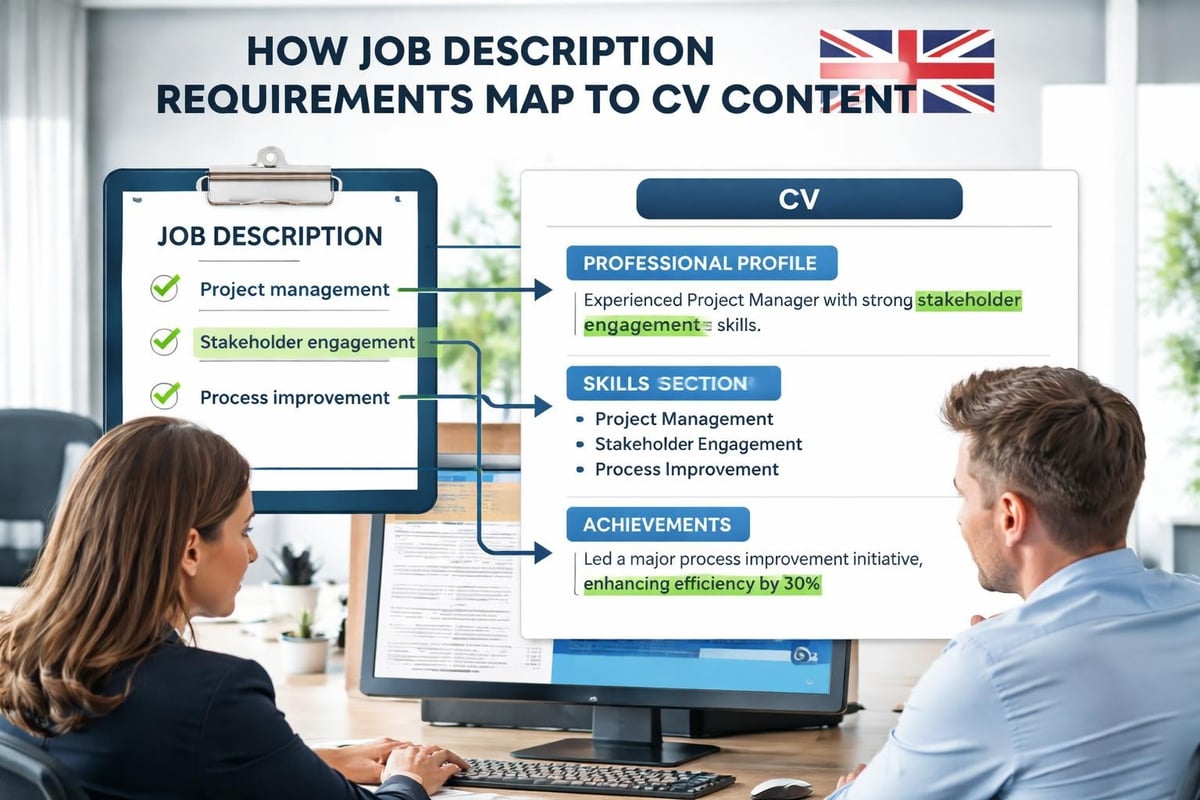
The keyword element deserves particular attention. Review the job description carefully and naturally incorporate relevant terms throughout your CV. If the role requires “stakeholder management,” use that exact phrase rather than alternatives like “managing relationships with stakeholders.”
My professional CV writing service focuses heavily on ATS optimisation because even the most qualified candidate won’t get an interview if their CV doesn’t pass the initial screening. I explain how these systems work and ensure every CV I create performs well whilst remaining genuinely personal and compelling.
Tailoring Your CV for Each Application
Generic CVs rarely succeed. One of the most frequently overlooked professional CV tips is the importance of customisation for each role you’re targeting. This doesn’t mean rewriting your entire CV every time, but it does require thoughtful adjustment of emphasis and content.
Strategic Tailoring Approach
Effective tailoring begins with analysing the job description, identifying the employer’s priorities and adjusting your profile, skills and achievements accordingly. The most relevant accomplishments should receive the greatest prominence, whilst examples and terminology should reflect the language used by the employer wherever appropriate.
According to guidance from Morgan Law, this targeted approach significantly increases your chances of progressing to interview stage. Recruiters can recognise when someone has genuinely considered the role versus sending a standard document.
Presenting Your Career History Effectively
The employment history section forms the bulk of your CV and requires careful structuring. These professional CV tips will help you present your career progression clearly and compellingly.
For each role, include:
- Job title and employing organisation
- Location and dates (month/year format)
- Brief context about the organisation if not widely known
- Three to six achievement-focused bullet points
- Relevant skills developed or deployed
Your most recent roles should contain the greatest level of detail because they best reflect your current capabilities. Earlier positions can be summarised more briefly, particularly if they no longer relate directly to the type of role you are targeting.
Handling Career Gaps
Career gaps are increasingly common and less stigmatised in 2026. Rather than trying to hide them, briefly acknowledge what you did during that time. Whether you were caring for family, pursuing education, travelling, or dealing with health matters, a simple one-line explanation prevents recruiters from speculating negatively.
Essential Sections and What to Include
Beyond your profile and employment history, several other sections strengthen your CV. Applying these professional CV tips ensures nothing important gets overlooked.
Skills Section
Create a focused skills section that balances technical abilities with professional competencies. Avoid listing basic software like Microsoft Word unless genuinely relevant to the role. Instead, concentrate on:
A strong skills section should focus on specialist expertise, technical competencies, industry-specific knowledge, professional certifications and language capabilities that are directly relevant to your target role.
Education and Qualifications
List your education in reverse chronological order. For graduates within five years, include degree classification and relevant modules or dissertation topics. For more experienced professionals, simply listing the qualification, institution, and year is sufficient.
Professional qualifications, memberships, and continuing professional development deserve their own subsection, particularly in regulated industries or professional services where credentials matter significantly.
Depending on your profession, additional sections such as professional memberships, awards, publications, presentations or voluntary work can add value and help demonstrate expertise, commitment and professional credibility.
The key professional CV tip here is relevance. Every section should strengthen your application for your target role. If it doesn’t serve that purpose, leave it out.
Common CV Mistakes to Avoid
Understanding what not to do is as important as knowing best practices. These professional CV tips highlight the most frequent errors that undermine otherwise strong applications.
Common mistakes include using personal pronouns throughout the CV, including unprofessional contact details, adding photographs where they are not required, failing to explain employment gaps, making spelling errors or relying on overly complex formatting that distracts from the content.
Many candidates also make the mistake of listing hobbies that add no professional value. Unless your interests genuinely demonstrate relevant skills or exceptional achievement, use that space for professional content instead.
The Importance of Professional Review
Even experienced professionals benefit from external perspective on their CV. What seems clear to you may confuse recruiters who don’t know your career context. This is where professional input becomes invaluable.
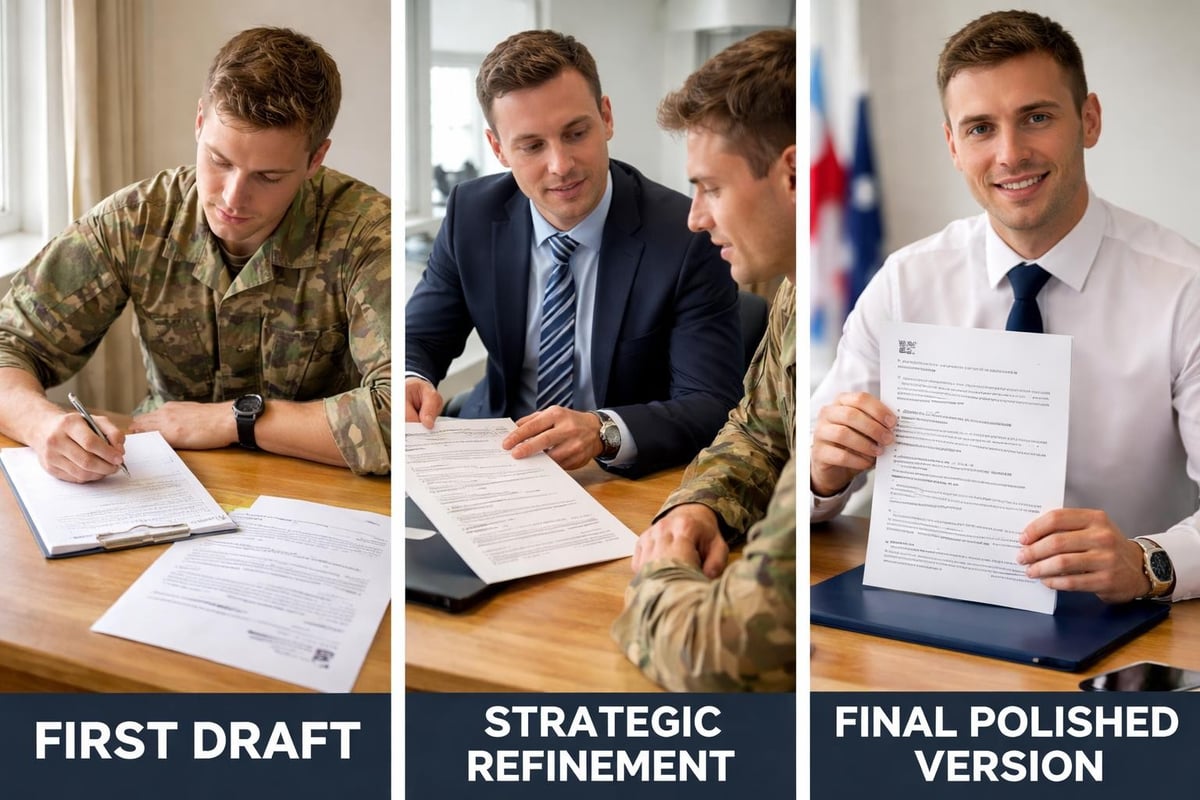
Before finalising your CV, assess whether it clearly communicates your value, demonstrates measurable achievements, aligns with your target roles, performs well within ATS systems and ensures every section strengthens your application.
If you’re uncertain about any of these questions, getting feedback from a professional CV writer can make the difference between rejection and interview invitation. You’re welcome to send your current CV to John@johnlogan.co.uk for an honest assessment of how well it’s working for you.
Complementing Your CV with Supporting Documents
Whilst your CV is the cornerstone of your application, other documents strengthen your candidacy. Among important professional CV tips is understanding when and how to use supporting materials.
Cover Letters Matter
Despite what some candidates believe, cover letters remain relevant in 2026. A well-crafted cover letter allows you to address specific points in the job description, explain your motivation for the role, and provide context that doesn’t fit naturally on your CV. The guidance provided in my bespoke cover letters service focuses on creating letters that complement rather than repeat your CV content.
Each cover letter should be tailored to the specific opportunity, referencing the organisation’s challenges and how your experience positions you to contribute. Generic letters do more harm than good, so if you’re not prepared to customise, it’s better to send a strong CV alone.
LinkedIn Consistency
Your LinkedIn profile should align with your CV whilst offering additional depth. Recruiters frequently cross-reference these documents, and inconsistencies raise red flags. Your headline, current role, employment dates, and key achievements should match across both platforms.
Formatting for Maximum Impact
Visual presentation significantly affects how your CV is received. These professional CV tips on formatting ensure your document looks as professional as its content.
Professional formatting relies on consistency, clarity and readability. Use appropriate font sizes, adequate spacing, clear section headings and sensible margins to ensure the document remains easy to read on both screen and paper.
Avoid the temptation to shrink fonts or margins excessively to fit more content. If you’re struggling with space, the issue is editing, not formatting. Every line should earn its place through relevance and impact.
Effective CV formatting should prioritise readability and professionalism. Use a clear font such as Arial, Calibri or Georgia, maintain consistent spacing throughout the document and ensure headings stand out clearly from the main body text. A clean and uncluttered layout allows recruiters to absorb key information quickly.
Professional presentation demonstrates attention to detail and respect for the reader’s time. It suggests you’ll bring the same care to your work.
Industry-Specific Considerations
Whilst fundamental principles apply across sectors, certain industries have particular expectations. Incorporating these professional CV tips relevant to your field shows awareness of sector norms.
Creative Industries
Creative professionals often have more flexibility with CV design, but creativity should enhance readability rather than obscure content. Your portfolio demonstrates creative ability; your CV demonstrates professional competence and career progression.
Technical and IT Roles
Technical CVs should prominently feature specific technologies, programming languages, methodologies, and certifications. Create a dedicated technical skills section, and ensure achievement descriptions include the technologies used.
Healthcare and Medical Fields
Medical CVs require careful attention to qualifications, registrations, clinical experience, and continuing professional development. Professional registrations with the relevant UK regulatory body must be current and clearly stated.
Senior Executive Positions
Executive CVs benefit from a strong focus on strategic achievements, P&L responsibility, organisational transformation, and board-level accomplishments. The professional CV writing approach for senior roles emphasises leadership impact and business results.
Regular Updates and Maintenance
One of the most practical professional CV tips is maintaining your CV as an ongoing document rather than something you update only when job searching. Every six months, review and refresh your CV with recent achievements, new skills, and completed projects.
Regularly updating your CV helps ensure achievements are recorded whilst still fresh in your memory, keeps your career history accurate and allows you to respond quickly when new opportunities arise.
Many professionals keep a “master CV” with comprehensive detail about every role, then create targeted versions for specific applications. This approach ensures you never forget significant achievements whilst keeping application documents focused.
Ready to Strengthen Your CV?
A professionally written CV should do more than document your employment history. It should clearly communicate your value, demonstrate your achievements and position you effectively for the opportunities you want to secure.
I work with professionals across the UK to create bespoke CVs through detailed one-to-one consultation, ensuring every document reflects the individual behind it rather than relying on templates or generic content.
Learn more about my Professional CV Writing Service, read my client testimonials and discover how a professionally written CV can help you secure more interviews and better career opportunities.
Questions and Answers
Q: How far back should my CV go?
A: Generally, include the last 10-15 years of employment history in detail. Earlier roles can be summarised briefly under “Earlier Career” unless they’re particularly relevant to your target position. The focus should remain on recent, relevant experience that demonstrates current capability.
Q: Should I include salary information on my CV?
A: No, salary details don’t belong on a UK CV. If an application specifically requests salary history or expectations, provide this information in your cover letter or the application form, not on your CV itself. This allows you to address the topic with appropriate context.
Q: How do I explain a career change in my CV?
A: Emphasise transferable skills and relevant achievements from your previous career that apply to your new direction. Your professional profile should clearly state your new career focus, and you might include a brief statement explaining your transition. Focus on what you bring to the new field rather than what you’re leaving behind.
Q: Is it better to use a functional or chronological CV format?
A: Chronological CVs (reverse chronological order) work best for most UK applications. Functional CVs, which group achievements by skill rather than by role, can appear as though you’re hiding something and often confuse ATS systems. Even if you have career gaps or frequent job changes, a well-crafted chronological CV handles these better than a functional format.
Q: How often should I tailor my CV for different applications?
A: You should customise your CV for every application. This doesn’t mean completely rewriting it each time, but your professional profile, skills emphasis, and achievement prioritisation should reflect the specific role requirements. Create a strong master CV, then adjust emphasis and keywords for each opportunity.
Measuring Your CV’s Effectiveness
Your CV’s purpose is securing interviews. If you’re applying to suitable roles but not getting interview requests, your CV likely needs improvement. Track your application-to-interview ratio as a measure of CV effectiveness.
Useful indicators of CV effectiveness include interview conversion rates, response times, recruiter feedback, the quality of opportunities being secured and increased engagement with your LinkedIn profile.
If your interview rate falls below 15-20% for genuinely suitable roles, it’s time to revisit these professional CV tips and potentially seek professional assistance. You can request a candid review by sending your CV to John@johnlogan.co.uk for constructive feedback.
The Value of Professional Expertise
Writing your own CV presents inherent challenges. You’re too close to your own career story, you may undervalue certain achievements, and you lack insight into what recruiters in your sector truly prioritise. Professional CV writers bring objectivity, sector knowledge, and understanding of current recruitment practices.
If you are unsure whether your CV positions you effectively, demonstrates achievements convincingly, performs well with ATS systems or generates sufficient interview opportunities, professional support may help identify areas for improvement.
Taking Action on These Professional CV Tips
Reading professional CV tips is valuable, but implementation creates results. Set aside dedicated time to apply these principles to your own CV. Work through it section by section, asking whether each element clearly demonstrates your value and relevance.
Your action plan:
- Review your professional profile against the criteria discussed
- Transform responsibility statements into achievement-based bullet points
- Add quantifiable results to at least 60% of your achievements
- Ensure ATS-friendly formatting throughout
- Customise your CV for your next target application
- Request feedback from a trusted colleague or professional
Remember that your CV is a career marketing document, not an autobiography. Every decision about what to include, how to phrase it, and where to position it should be guided by one question: does this strengthen my application for the roles I’m targeting?
The difference between a good CV and an exceptional one often comes down to these professional CV tips applied consistently throughout the document. Small refinements in how you present your experience, structure your achievements, and position your expertise compound to create significant competitive advantage.
Applying these professional CV tips will substantially improve your application success rate and position you more effectively for the opportunities you deserve. If you’d like expert support crafting a CV that genuinely opens doors, John Logan Consulting and Mentoring provides completely bespoke, consultative CV writing services with no templates or AI shortcuts. With decades of recruitment experience and over 150 five-star reviews, I create ATS-optimised CVs that are as unique as your career story.