

Getting the personal information section right on your CV is more critical than most candidates realise. This seemingly straightforward part of your document sets the professional tone for everything that follows, yet it’s where many job seekers either include too much or leave out essential details. In 2026, with evolving data protection regulations, applicant tracking systems, and changing employer expectations, understanding exactly what belongs in your personal information CV section has become both more important and more nuanced. The right approach balances accessibility, professionalism, and privacy whilst ensuring recruiters can contact you without hesitation.
What Personal Information Must Appear on Your CV
The essential contact details form the foundation of any strong CV. Your full name should appear prominently at the top of the document, typically as the largest text element on the page. This establishes your professional identity immediately and ensures the document is instantly recognisable if separated from other application materials.
Your mobile telephone number is absolutely non-negotiable. Recruiters and hiring managers need a direct line to reach you quickly, particularly when scheduling interviews or making time-sensitive offers. Include the number in an international format if you’re applying for roles across different countries, but for UK-based applications, the standard format works perfectly well.
Email Address Standards
A professional email address ranks equally with your telephone number in importance. Create an address that incorporates your name without numbers, underscores, or unprofessional terms. Addresses like john.logan@email.co.uk or j.logan26@email.co.uk work appropriately, whilst anything featuring nicknames, birth years that date you, or informal language will damage your credibility before anyone reads a single achievement.
Your location information requires careful consideration. In 2026, full home addresses are no longer necessary and can actually raise privacy concerns. Instead, simply list your city and county, such as “Manchester, Greater Manchester” or “Edinburgh, Scotland”. This provides sufficient geographical context for recruiters assessing commute feasibility or relocation requirements without exposing your exact residence.
Personal Information to Leave Off Your CV
Understanding what to exclude from your personal information CV section is equally vital. Certain details that were once commonplace now create legal complications, introduce unconscious bias, or simply waste valuable space on a document that should typically span just two pages.
Modern CVs should avoid personal information that has no bearing on your ability to perform the role. Details such as age, marital status, dependants, religious beliefs, political views, photographs and National Insurance numbers create unnecessary privacy concerns and can introduce unconscious bias into the recruitment process.
Why Age Information Damages Your Application
The date of birth debate continues to divide opinion, but the professional consensus in 2026 firmly supports leaving it off entirely. Age discrimination remains a persistent challenge in recruitment, despite being illegal. By omitting your date of birth, you force employers to assess your suitability based purely on skills, experience, and achievements rather than making assumptions about your career stage.
Similarly, photographs introduce unnecessary bias. Unless you’re applying for roles where appearance is a genuine occupational requirement, such as acting or modelling, your CV should let your professional accomplishments speak for themselves.
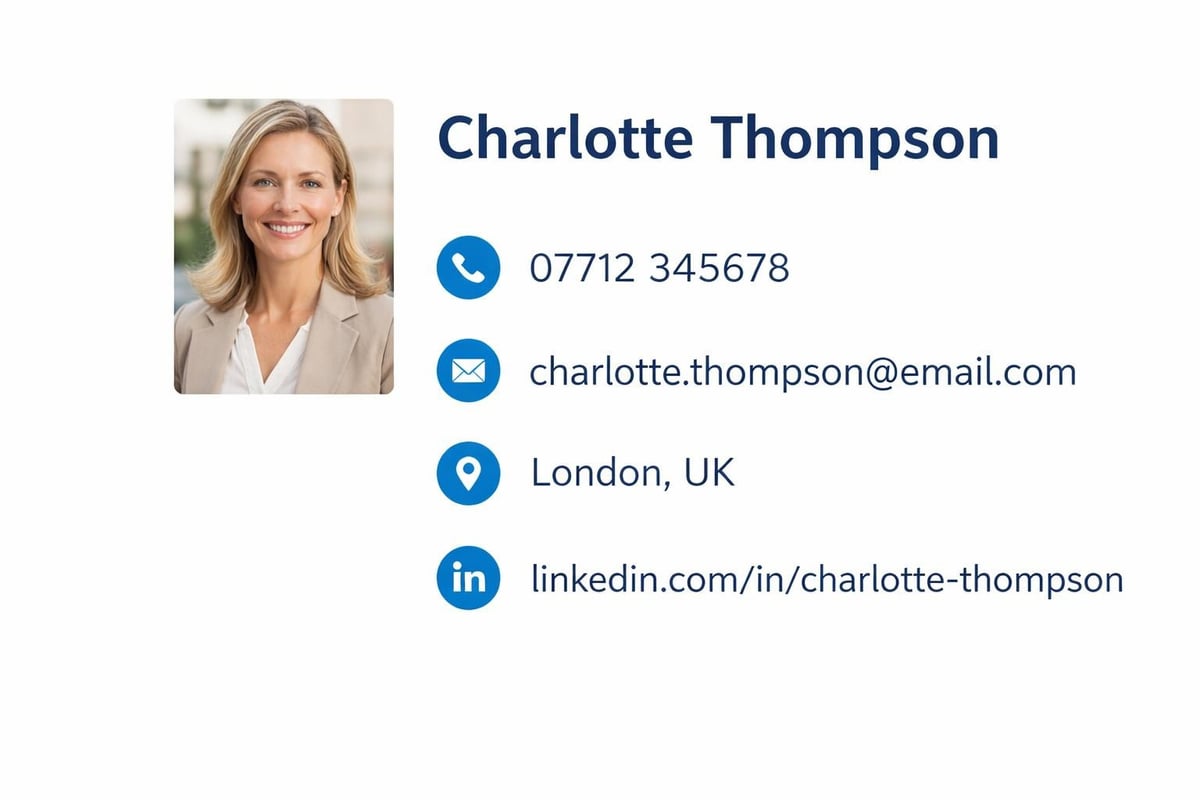
The personal information section should contain only the details recruiters genuinely need to identify and contact you. Your full name, telephone number, professional email address, location and LinkedIn profile are generally sufficient for most UK applications.
Your LinkedIn profile URL has become an essential component of personal information CV sections in 2026. This digital extension of your CV allows recruiters to verify your professional background, view recommendations, and assess your industry engagement. However, the default LinkedIn URL, typically a random string of numbers and letters, looks unprofessional.
Customise your LinkedIn URL to incorporate your name, creating something like linkedin.com/in/johnlogan rather than linkedin.com/in/johnlogan847392. This small adjustment significantly enhances the professional appearance of your CV header whilst making it easier for recruiters to find and remember you.
When you work with a professional CV writer, they’ll ensure your LinkedIn profile complements your CV perfectly, maintaining consistency in your professional story across both platforms whilst optimising each for its specific purpose.
Professional Online Presence
Beyond LinkedIn, consider whether other professional profiles deserve inclusion. A GitHub profile makes sense for developers, a portfolio website works for creative professionals, and a professional Twitter account might be relevant for journalists or marketing specialists. The key criterion is professional relevance. If the platform showcases work-related achievements or industry expertise, include it. If it’s primarily personal or social, leave it off.
Personal Statements Versus Personal Information
Many candidates confuse the personal information section with the personal statement or professional summary. These are distinct elements that serve different purposes. The personal information CV section provides contact details and basic identifiers. The personal statement, positioned immediately below, delivers a compelling 3-4 sentence overview of your professional value proposition.
An effective personal statement should clearly communicate your professional level, core expertise, key achievements and career objectives. The aim is to provide recruiters with an immediate understanding of your value and encourage them to continue reading the rest of your CV.
This narrative element transforms your CV from a static document into a targeted application. Whilst your personal information remains relatively constant across applications, your personal statement should be tailored for each role, reflecting the specific requirements and language used in the job description.
Industry-Specific Considerations
Different sectors have varying expectations for personal information presentation. Medical professionals might include professional registration numbers, whilst those in regulated industries may need to reference specific certifications or clearances.
Understanding these nuances ensures your personal information CV section meets industry standards without overwhelming the reader. For most commercial roles, however, the streamlined approach outlined earlier serves you best.
When preparing international applications, research the specific conventions and legal requirements of the target country. What constitutes essential personal information varies significantly across cultures and legal frameworks.
Data Protection and Privacy Concerns
The personal information you include on your CV enters potentially dozens of databases, applicant tracking systems, and email inboxes. In 2026, with data protection regulations more stringent than ever, candidates must balance accessibility with security.
Sensitive information such as National Insurance numbers, driving licence details, passport information, bank account details and full home addresses should never appear on a CV. Employers who require these details will request them later through secure recruitment processes.
These details serve no legitimate purpose at the application stage and expose you to identity theft risks. Employers who genuinely need this information for employment purposes will request it through secure channels after making a conditional offer.
GDPR Considerations
Under GDPR regulations that continue to apply in the UK, you have rights regarding how your personal information is processed. When submitting your CV, you’re implicitly consenting to your data being used for recruitment purposes. However, you can specify retention preferences, such as requesting your CV be deleted after a specific period if you’re unsuccessful.
Some candidates add a brief data protection statement at the bottom of their CV, though this isn’t necessary. Focus instead on controlling what information you share initially and with whom you share it.

Common Personal Information Mistakes
Even experienced professionals make critical errors in their personal information CV sections. These mistakes, whilst seemingly minor, can derail applications before they truly begin.
Common mistakes include using unprofessional email addresses, listing outdated contact information, forgetting to update location details after moving, using work email addresses for job searching and providing multiple contact numbers without identifying a preferred option.
The unprofessional email address remains remarkably common. Addresses created during university or featuring nicknames, hobbies, or jokes have no place on a professional CV. If your current email doesn’t meet professional standards, creating a new one takes five minutes and could save your application.
Similarly, ensure your voicemail message sounds professional. Recruiters calling to invite you for an interview shouldn’t encounter music, jokes, or family members. A simple “You’ve reached [your name]. Please leave a message and I’ll return your call promptly” establishes the right tone.
Most personal information mistakes are easy to avoid but can create unnecessary barriers during the recruitment process. A professional email address, accurate contact details and a clear location are often all that is required to present a professional first impression.
Formatting Your Personal Information Section
The visual presentation of your personal information matters as much as the content itself. This section should be immediately scannable, allowing recruiters to find your contact details in seconds without hunting through dense text or complicated layouts.
Position your name prominently at the top of the page, typically in a larger font size than the rest of your CV. Below this, arrange your contact details in a clean, logical format. Many effective CVs use a two-column approach for contact information, balancing visual appeal with functionality.
Layout Examples
Centred Format: Your name appears centred and large, with contact details arranged in a single line or stacked neatly below. This traditional approach works particularly well for conservative industries like law or finance.
Header Format: Your name appears on the left with contact details aligned to the right, creating a balanced header that maximises space efficiency whilst maintaining professional appearance.
Icon-Enhanced Format: Small, professional icons (telephone, email, location, LinkedIn) can precede each contact detail, improving visual scanning. However, ensure these icons are subtle and professional rather than colourful or distracting.
Whichever format you choose, maintain consistency with the rest of your CV’s design. The personal information section sets the visual tone for the entire document, so ensure fonts, spacing, and alignment match your overall aesthetic.
For more guidance on creating an effective CV, explore my Professional CV Writing Service, where I provide practical advice, tailored support and detailed feedback designed to improve interview success.
Professional Titles and Designations
If you hold professional qualifications or designations relevant to your field, consider whether these belong in your personal information CV section or elsewhere in your document. Letters after your name, such as MBA, ACCA, or CEng, immediately signal your professional standing.
Professional qualifications should be displayed where they add credibility and are relevant to the role being pursued. Widely recognised designations such as MBA, ACCA or CEng can strengthen your professional positioning and immediately communicate expertise to recruiters and hiring managers.For most professionals, limiting post-nominal letters to 2-3 of the most impressive or relevant qualifications maintains clarity whilst establishing credibility. Additional qualifications can be detailed in your education or professional memberships sections.
Optimising for Applicant Tracking Systems
Modern recruitment relies heavily on applicant tracking systems (ATS) that scan CVs before human eyes ever see them. Your personal information CV section must be ATS-friendly to ensure your application progresses through these digital gatekeepers.
ATS issues commonly occur when contact details are hidden within headers, footers, images, text boxes or heavily formatted layouts. Keeping personal information in simple text format helps ensure both recruiters and ATS software can access it easily.
Keep your personal information in the main body of your CV, formatted as simple text. Avoid the temptation to create elaborate header designs that might confuse parsing software. The goal is to make your contact details as accessible to both software and human readers as possible.
Questions and Answers
Should I include my full home address on my CV in 2026?
No, full home addresses are no longer necessary or advisable on modern CVs. Simply listing your city and county provides sufficient location context for recruiters whilst protecting your privacy. This approach addresses employer concerns about commute feasibility and relocation requirements without exposing your exact residence to potentially dozens of recipients.
Is it appropriate to use my current work email address on my CV?
Absolutely not. Using your employer’s email address for job searching raises serious questions about professionalism, judgment, and loyalty. It suggests you’re conducting personal business on company time and may indicate how you’d behave if hired elsewhere. Always use a personal email address that you control and can access regardless of your employment status.
Do I need to include my LinkedIn profile URL on every CV?
Yes, including your LinkedIn profile has become standard practice in 2026. Recruiters routinely check LinkedIn to verify information, view recommendations, and assess cultural fit. Ensure your LinkedIn profile is current, professional, and tells a consistent story with your CV. Customise your LinkedIn URL to make it more professional and memorable.
What should I do if I’ve had a significant career gap that’s visible from my employment dates?
Career gaps are increasingly common and less stigmatised in 2026. The personal information section isn’t where you address gaps. Instead, handle them strategically in your employment history section using either a functional CV format that emphasises skills over chronology, or by briefly explaining significant gaps in your cover letter. For guidance on presenting your career story effectively, consider seeking professional CV support to ensure your experience is presented effectively and in the right context.
Should I include professional social media accounts beyond LinkedIn?
Only include professional social media if it directly showcases work-relevant expertise or achievements. A GitHub profile makes sense for developers, a professional Twitter account with industry thought leadership works for marketing specialists, and a portfolio website benefits creative professionals. Personal Instagram, Facebook, or TikTok accounts have no place on a professional CV unless you’re applying for social media management roles where they demonstrate relevant skills.
## Ready to Improve Your CV?
The personal information section may seem simple, but getting it right creates a professional first impression and ensures recruiters can contact you quickly and easily. Small mistakes in this area can undermine an otherwise strong application.
I work with professionals across the UK through detailed one-to-one consultation, helping clients create bespoke CVs that are clear, professional and aligned with modern recruitment expectations.
Learn more about my Professional CV Writing Service, read my client testimonials and discover how a professionally written CV can help you secure more interviews and better career opportunities.