

A perfect UK CV is more than just a list of jobs and qualifications. It’s a strategically crafted marketing document that positions you as the ideal candidate for your target role. In 2026, with applicant tracking systems filtering applications and recruiters spending an average of six seconds on initial CV reviews, the difference between landing an interview and being overlooked often comes down to how effectively your CV communicates your value. Understanding the specific conventions, formatting standards, and content expectations for the UK job market is essential. Whether you’re a recent graduate, mid-career professional, or senior executive, mastering the art of CV writing can transform your job search from frustrating to fruitful.
Understanding the Perfect UK CV Format
The structure of a perfect UK CV follows established conventions that British employers and recruiters expect. Unlike CVs in other countries, UK CVs typically span two pages for most professionals, though recent graduates might use one page, and senior executives occasionally extend to three.
Essential Sections in Order
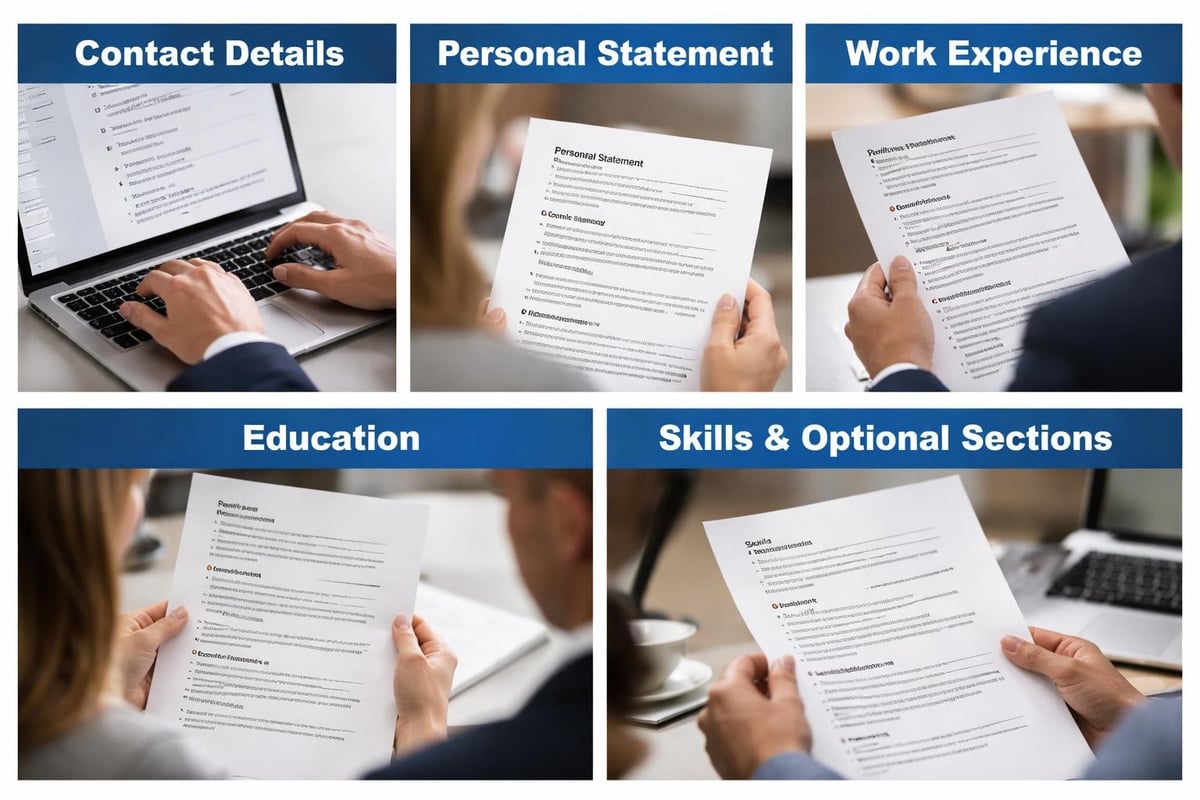
A professional UK CV should contain clearly defined sections covering contact details, a personal statement, work experience, education, key skills and any additional information relevant to the target role. Presenting these sections in a logical order helps recruiters quickly find the information they need.
Formatting Standards That Matter
Formatting can make or break first impressions. A perfect UK CV uses professional fonts like Arial, Calibri, or Georgia in 10.5-11pt size for body text and slightly larger for headings. Margins should be between 1.5-2.5cm on all sides, providing adequate white space without appearing sparse.
Consistency matters enormously. If you bold one job title, bold them all. If you italicise one company name, italicise every company name. These details signal attention to quality and professionalism.
Crafting Compelling Content for Your Perfect UK CV
Content distinguishes good CVs from exceptional ones. A perfect UK CV doesn’t simply list responsibilities; it demonstrates impact, quantifies achievements, and tells a compelling career story that aligns with your target roles.
Writing Achievement-Focused Bullet Points
Strong achievement statements explain what was accomplished, how it was achieved and the measurable impact delivered. Quantified outcomes are particularly valuable because they provide evidence of contribution rather than simply describing responsibilities.
For example, instead of “Responsible for managing social media accounts,” write “Grew Instagram following by 340% in 8 months through targeted content strategy, generating 25+ qualified leads per week.”
The difference is transformative. Recruiters scanning your CV can immediately grasp your value and potential contribution to their organisation.
Personal Statement Excellence
Your personal statement sits at the top of your CV and receives disproportionate attention. In 3-5 lines, it must capture who you are professionally, what you offer, and what you’re seeking. A perfect UK CV includes a statement tailored to specific roles rather than generic career objectives.
Weak example: “Hardworking graduate seeking opportunities to develop my skills in marketing and contribute to a dynamic team.”
Strong example: “Results-driven Marketing Executive with 4 years’ experience delivering ROI-focused digital campaigns for B2B technology clients. Proven track record increasing qualified leads by 65% through strategic content marketing and marketing automation. Seeking to leverage data analytics expertise and creative problem-solving in a Senior Marketing role within the fintech sector.”
The strong version specifies experience level, sector expertise, quantified achievements, and clear career direction. It immediately positions the candidate as someone who delivers results.
Optimising for Applicant Tracking Systems
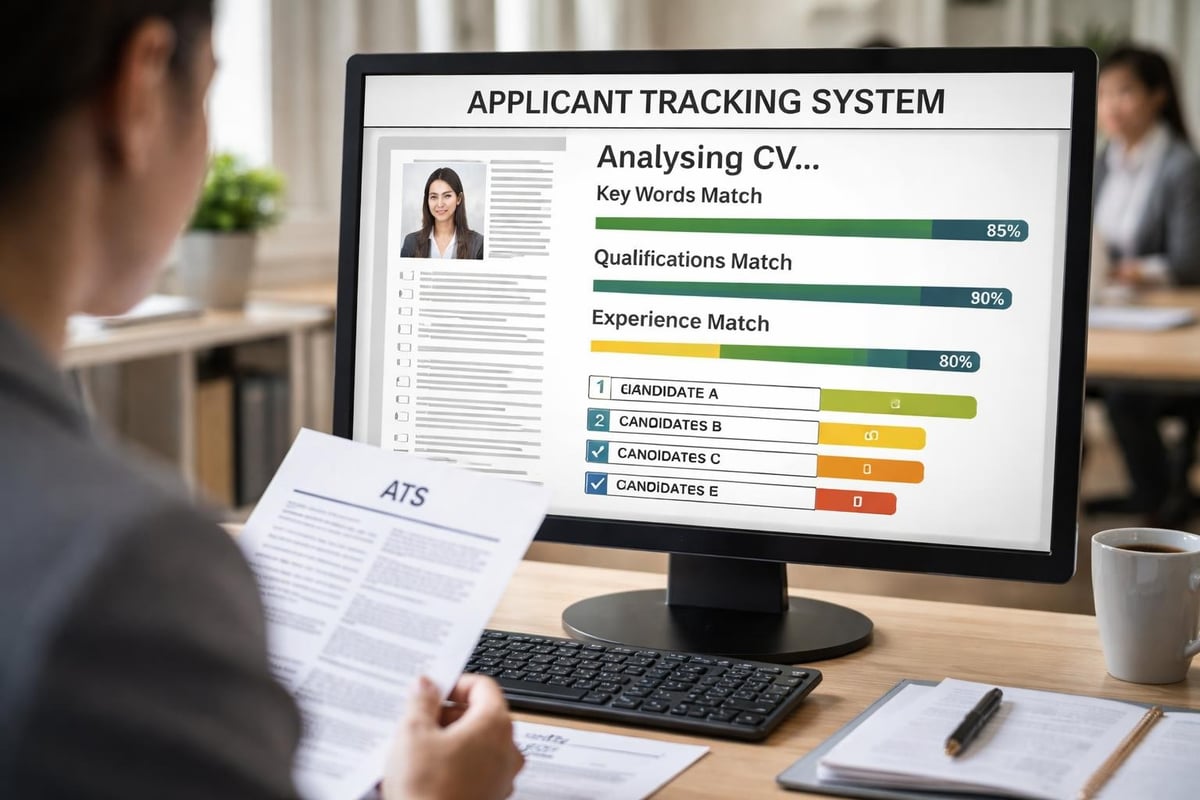
Even a beautifully written CV fails if it never reaches human eyes. Most medium and large UK employers use applicant tracking systems (ATS) to filter applications before recruiters review them. Creating a perfect UK CV requires understanding how these systems work.
ATS-Friendly Formatting Techniques
ATS software scans CVs for keywords, qualifications, and experience matching job descriptions. Complex formatting, graphics, tables, and unusual section headings can confuse these systems, causing qualified candidates to be rejected automatically.
ATS-friendly CVs use standard section headings, simple formatting, clearly presented qualifications and natural keyword integration. Avoiding complex layouts, graphics and unusual formatting improves compatibility with applicant tracking systems whilst maintaining readability for recruiters.
Keywords matter enormously. If a job description mentions “stakeholder management” five times, ensure this exact phrase appears in your CV where truthfully applicable. Match industry terminology, required qualifications, and technical skills precisely.
Strategic Keyword Integration
Effective keyword research involves reviewing multiple job descriptions to identify recurring skills, qualifications, software packages, industry terminology and behavioural competencies. These terms should then be incorporated naturally into relevant sections of the CV.
Integrate these naturally throughout your CV, particularly in your skills section and work experience bullets. However, keyword stuffing (repeating terms unnaturally) damages readability and appears unprofessional when recruiters review your CV.
Keywords should be incorporated naturally throughout your personal statement, work experience, skills and qualifications sections. The aim is to demonstrate relevance to the role without compromising readability or creating an artificial, repetitive document.
Tailoring Your Perfect UK CV for Specific Roles
Generic CVs rarely succeed in competitive job markets. A perfect UK CV is tailored to each application, emphasising the most relevant experience, skills, and achievements for that particular role. This doesn’t mean rewriting your entire CV each time, but rather strategically adjusting emphasis and content.
The Tailoring Process
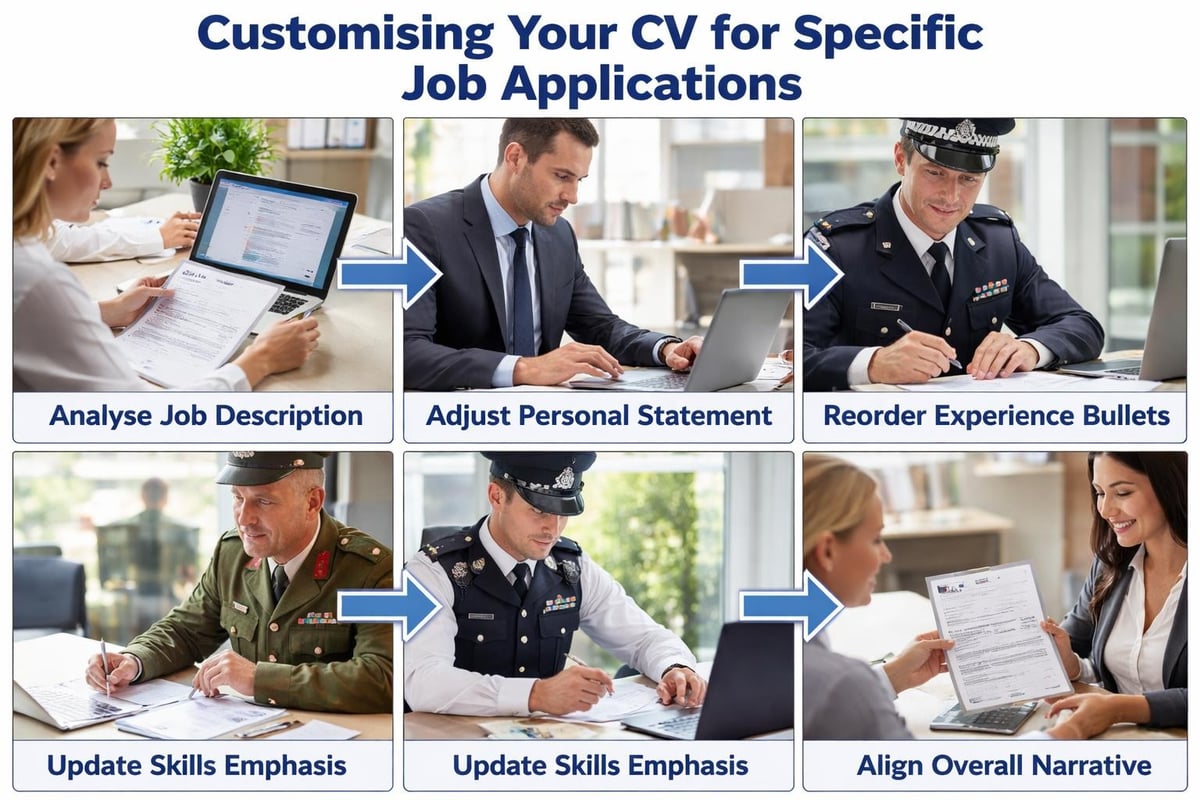
Start with a comprehensive master CV containing all your experience, achievements, and skills. For each application, create a tailored version following these steps:
Step 1: Analyse the job description thoroughly, highlighting essential requirements versus desirable qualities.
Step 2: Adjust your personal statement to reflect the specific role title, key skills, and relevant experience level.
Step 3: Reorder or expand work experience bullets to foreground achievements most relevant to the target role.
Step 4: Customise your skills section to prioritise technical abilities, software, or methodologies mentioned in the job description.
Step 5: Review the entire CV ensuring the overall narrative aligns with what the employer seeks.
Many professionals find that including a bespoke cover letter alongside their tailored CV significantly increases interview rates, as it provides an opportunity to explicitly connect their background with the specific role requirements.
Industry-Specific Considerations
Different sectors prioritise different qualities. Finance employers focus on qualifications, compliance and measurable commercial impact. Technology organisations value technical expertise, innovation and project outcomes. Healthcare employers look for professional registration, patient outcomes and continuous development, whilst creative industries often place greater emphasis on portfolio quality, campaign results and audience engagement. Understanding these priorities helps position your experience more effectively.
Understanding your sector’s priorities helps you construct a perfect UK CV that resonates with industry-specific recruiters and hiring managers.
Common Mistakes That Damage Your CV
Even experienced professionals make errors that undermine otherwise strong CVs. Recognising and avoiding these pitfalls is essential for creating a perfect UK CV that consistently generates interviews.
Content and Accuracy Errors
Spelling and grammar mistakes remain the most damaging single error. Research shows 58% of hiring managers reject CVs containing typos. Use spell-check, read aloud, and have someone else review your CV before sending.
Unexplained employment gaps raise concerns. Address career breaks honestly but briefly, either in your CV or cover letter. Gaps for caring responsibilities, further education, travel, redundancy, or health issues are common and acceptable when briefly explained.
Irrelevant information clutters your CV and dilutes impact. Your Saturday job from 15 years ago, GCSEs when you hold a degree, or hobbies that don’t demonstrate transferable skills typically add little value.
Inconsistent dates or unclear chronology confuse recruiters. Use consistent date formatting (Month Year, such as March 2026) throughout, and ensure all positions clearly show start and end dates.
Generic descriptions that could apply to anyone fail to differentiate you. Instead of “excellent communication skills,” provide evidence: “Delivered quarterly presentations to C-suite executives, resulting in approval for £2.3m infrastructure investment.”
Formatting and Presentation Problems
Poor visual hierarchy makes CVs difficult to scan. Recruiters should immediately identify your current role, key achievements, and relevant skills without close reading. Use heading sizes, bold text, and white space strategically to guide the eye.
Inappropriate personal details, once commonly included (date of birth, marital status, photograph, National Insurance number), now appear outdated and unprofessional in UK CVs. Include only information directly relevant to your application.
Excessive length dilutes impact. If you’re struggling to fit content onto two pages, you’re likely including too much detail from early career roles. Recent positions warrant more space; roles from 10+ years ago might merit just a single line.
Frequently Asked Questions
How long should a perfect UK CV be in 2026?
Two pages remain the standard for most UK professionals. Recent graduates may use one page if they lack extensive experience, whilst senior executives with 20+ years of progressive leadership might extend to three pages. However, every line must add value. Quality trumps quantity, and concise, achievement-focused content always outperforms lengthy job descriptions.
Should I include a photograph on my UK CV?
No. Unlike some European countries, UK CVs traditionally exclude photographs unless specifically requested for roles in modelling, acting, or similar fields. Including an unsolicited photo can appear unprofessional and may even work against you, as some employers remove CVs with photos to ensure unbiased screening. Focus on content quality rather than visual representation.
What’s the difference between a CV and a resume in the UK?
In the UK, “CV” (Curriculum Vitae) is the standard term for the document you submit when applying for jobs. “Resume” is American terminology for essentially the same document, though US resumes are typically shorter (one page) and formatted differently. When applying for UK positions, always refer to it as a CV and follow British formatting conventions.
How often should I update my CV?
Update your CV immediately after significant achievements, new certifications, promotions, or project completions, whilst details remain fresh. Many professionals keep a master CV document that they update quarterly with new accomplishments, then create tailored versions when applying for specific roles. This approach ensures you never forget important achievements and maintains an up-to-date foundation for applications.
Can I use a CV template, or should I create one from scratch?
Templates provide helpful structure but often lack personality and can appear generic. More problematically, many templates use complex formatting that confuses applicant tracking systems. If you use a template, ensure it’s ATS-friendly, then heavily customise it with your own content, formatting adjustments, and industry-appropriate language. Better still, create your CV from a blank document using clear, simple formatting that showcases your unique experience.
Strategic Elements That Strengthen Your CV
Beyond basic structure and content, several strategic elements distinguish a perfect UK CV from a merely adequate one. These refinements demonstrate professionalism and increase your competitive advantage.
Skills Section Architecture
Your skills section should be strategically organised rather than a random list. A skills section should be organised logically, grouping technical skills, professional competencies, language capabilities and transferable strengths into clearly defined categories. Prioritise the skills most relevant to your target role so recruiters can quickly identify your suitability.
Prioritise skills most relevant to your target roles at the top of each category. If every job description mentions “data visualisation,” ensure this appears prominently rather than buried mid-list.
Powerful Action Verbs
The verbs you choose dramatically affect how your achievements land. Replace weak, passive verbs with strong, active alternatives:
Strong action verbs help demonstrate ownership, achievement and impact. Words such as delivered, implemented, developed, led and achieved create a more positive impression than passive language that understates contribution and results.
Starting bullets with impact verbs immediately strengthens your perceived contribution and agency. You weren’t merely present; you actively drove results.
Professional Development and Certifications
Continuous learning signals ambition and adaptability. Include recent professional development, particularly certifications recognised in your industry. For rapidly evolving fields like technology or digital marketing, recent training (within the past two years) holds particular weight.
Position certifications strategically based on their importance. Critical professional qualifications (chartered status, industry-required certifications) might warrant their own dedicated section or prominent placement in your personal statement. Less critical training can be grouped under “Professional Development” or integrated into your education section.
Sector-Specific Showcase Strategies
Certain professions require adapted approaches to create a perfect UK CV that resonates with sector expectations and demonstrates relevant expertise.
Technical and IT Professionals
Technology CVs benefit from a dedicated “Technical Skills” section positioned prominently, often immediately after the personal statement. List programming languages, frameworks, databases, cloud platforms, and development methodologies with proficiency indicators where helpful.
Project highlights can supplement traditional work experience, particularly for contractors or consultants working across multiple clients. Briefly describe the project challenge, your technical contribution, technologies used, and measurable outcomes.
Technology CVs often benefit from highlighting technical environments, major projects and relevant certifications. Recruiters want to understand not only the technologies used but also the commercial outcomes, complexity and value delivered through those projects.
Healthcare Professionals
Medical, nursing, and allied health CVs must prominently feature professional registration numbers and status. These typically appear directly below contact details or within the personal statement to immediately establish credentials.
Clinical specialisms, rotations, and continuing professional development warrant detailed attention. Emphasise patient outcome improvements, clinical audit participation, service developments, and multidisciplinary collaboration.
Healthcare CVs should clearly demonstrate professional registration, clinical expertise, service improvement activity, teaching responsibilities and any research or publication experience. These elements help establish professional credibility and demonstrate ongoing development.
Senior Leadership and Executive CVs
Senior-level CVs focus heavily on strategic impact, organisational transformation, and commercial outcomes. Whilst technical skills matter, leadership competencies, stakeholder management, and P&L responsibility take precedence.
Executive summaries (extended personal statements of 5-8 lines) provide space to establish strategic credentials and leadership philosophy. Career highlights or “Key Achievements” sections positioned prominently can showcase transformational impacts before detailed work history.
Board positions, advisory roles, non-executive directorships, and industry thought leadership (speaking engagements, published articles) strengthen executive positioning.
Perfect UK CVs for Police Officers
Police officers often possess highly transferable skills including leadership, investigation, stakeholder engagement, decision-making and operational management. However, policing terminology does not always translate effectively into civilian recruitment environments.
A professionally written CV helps translate policing experience into language that employers immediately recognise, improving both ATS performance and recruiter engagement when applying for roles outside policing or for promotion opportunities.
Perfect UK CVs for Military Veterans
Military veterans and service leavers often have extensive leadership, planning, logistics and operational experience. The challenge is ensuring these achievements are communicated in civilian language that recruiters and hiring managers understand.
A strong CV translates military experience into commercially relevant achievements, helping employers recognise the value of military leadership, project delivery and operational expertise.
Final Preparation and Quality Checks
Before submitting your perfect UK CV, systematic review ensures nothing undermines your hard work. Quality control catches errors that spell-checkers miss and confirms your CV presents you in the strongest possible light.
Comprehensive Review Checklist
Before submitting a CV, review it carefully for accuracy, consistency, spelling, grammar, keyword relevance and overall readability. Confirm that contact details are current, achievements are quantified where possible and formatting remains consistent throughout the document.
Getting Professional Feedback
Fresh eyes catch issues you’ve become blind to after multiple revisions. If possible, have your CV reviewed by someone in your industry who understands sector expectations and recruiter priorities.
Professional review is particularly valuable when you’re not receiving interview invitations despite relevant qualifications, changing careers or industries, returning to work after a break, or targeting senior or highly competitive roles.
Maintaining Your CV as a Living Document
A perfect UK CV isn’t created once and forgotten. Successful professionals treat their CV as a living document, regularly updated and refined as their careers progress.
Quarterly Update Practice
Schedule quarterly CV reviews to capture recent achievements whilst details remain fresh. Add new responsibilities, completed projects, acquired skills, or earned certifications immediately rather than struggling to remember them months later when job searching.
This practice also helps you recognise your own career progression and identify skill gaps or development opportunities. Reviewing what you’ve accomplished each quarter provides a valuable perspective on your professional growth trajectory.
Achievement Documentation System
Maintaining a record of achievements throughout the year makes future CV updates significantly easier. Recording challenges, actions taken, measurable outcomes and skills demonstrated ensures valuable accomplishments are not forgotten when applying for new opportunities.
When updating your CV or preparing for performance reviews, this log provides ready material. You’ll never forget significant contributions or struggle to quantify your impact.
The discipline of documenting achievements also shifts your mindset towards actively seeking impact opportunities rather than simply completing tasks. This career-long habit pays dividends far beyond CV writing.
Ready to Create the Perfect UK CV?
A successful CV is more than a list of jobs and qualifications. It should communicate value, demonstrate achievement and position you effectively for your target role.
I work with professionals across the UK through detailed one-to-one consultation, creating bespoke CVs that improve interview opportunities, strengthen personal branding and perform effectively with both recruiters and applicant tracking systems.
Learn more about my Professional CV Writing Service, read my client testimonials and discover how a professionally written CV can support your next career move.