
Transitioning from military service to civilian employment represents one of the most significant career changes you’ll face. Your years of dedication, leadership, and technical expertise have equipped you with valuable skills that employers desperately need, yet translating this experience into a civilian-friendly format can feel overwhelming. A military CV example serves as your blueprint for success, showing you exactly how to present your service record in a way that resonates with hiring managers who may never have worn a uniform. This guide will walk you through creating a compelling CV that honours your military achievements whilst speaking the language of civilian recruiters.
Understanding the Fundamental Differences
Military personnel operate within a highly structured environment filled with specific terminology, acronyms, and role titles that hold little meaning outside the armed forces. When examining a military CV example, the first principle to grasp is translation.
Your CV must bridge two completely different worlds. Where your service record might list “Section Commander, Royal Engineers,” a civilian employer needs to understand this as “Team Leader managing 8 personnel in high-pressure operational environments.” The challenge isn’t diminishing your experience but rather reframing it.
Successful military CVs address several important differences between military and civilian employment. Terminology must be translated into language recruiters understand, organisational responsibilities should be explained in a commercial context, achievements need measurable outcomes and technical skills should be described using clear, industry-recognised language. These adjustments help employers appreciate the full value of your experience.
Many veterans make the mistake of simply listing military roles without context. A strong military CV example demonstrates how to unpack each position, revealing the transferable skills that civilian employers actively seek.
The ATS Challenge for Military CVs
Applicant Tracking Systems (ATS) represent another hurdle for military personnel. These software platforms scan CVs for specific keywords before human eyes ever see your application. Military terminology rarely matches the keywords civilian employers programme into their systems.
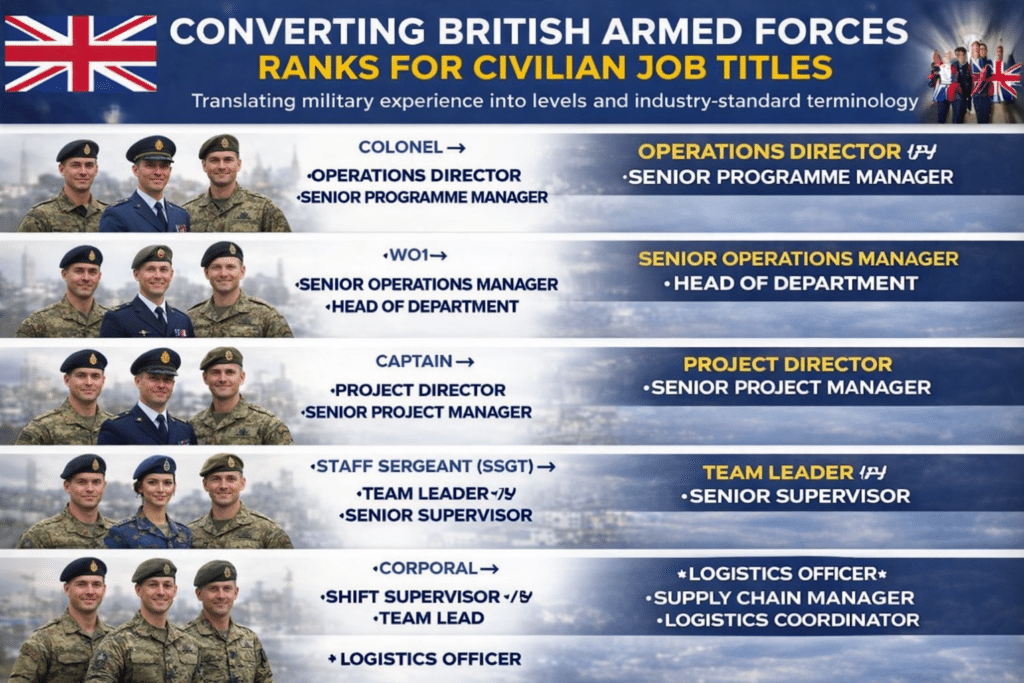
Consider this comparison:
Military terminology often creates barriers during the recruitment process because ATS software and civilian recruiters are unfamiliar with many of the terms used within the armed forces. Replacing military language with recognised civilian equivalents helps ensure your experience is understood correctly. For example, an Officer Commanding may be presented as a Department Manager, whilst a Non-Commissioned Officer may be described as a Supervisor or Team Leader. This approach improves both ATS performance and recruiter understanding without diminishing the significance of your military experience.
Your military CV example must incorporate civilian keywords whilst maintaining accuracy about your actual experience. This isn’t about fabricating skills you don’t possess but rather ensuring the skills you genuinely have are presented in searchable, recognisable terms.
Structuring Your Military CV
The format you choose significantly impacts how effectively your military CV example communicates your value. Unlike civilian careers with linear progression through similar companies, military service often involves diverse roles across different units and locations.
A professional profile at the top of your CV immediately sets context. This 4-5 line summary explains who you are, what you offer, and where you’re heading. For someone leaving the Royal Navy as a Logistics Specialist, this might read: “Results-driven supply chain professional with 12 years managing complex logistics operations in challenging environments. Proven expertise in inventory management, procurement, and distribution across multi-site operations. Strong track record in process improvement, team leadership, and maintaining operational readiness under pressure.”
Essential Sections To Include
A strong military CV should include a professional profile, key skills section, professional experience, education, qualifications and any additional information relevant to the target role. Presenting information in a clear and logical structure makes it easier for recruiters to understand your experience and assess your suitability.
For instance, rather than “Responsible for vehicle maintenance,” write “Managed preventative maintenance programme for 45-vehicle fleet, achieving 98% operational readiness and reducing breakdown incidents by 35% over 18 months.”
Translating Military Achievements
A compelling military CV example doesn’t simply list duties but rather demonstrates impact through concrete achievements. Military service provides countless opportunities to showcase leadership, problem-solving, and results delivery, yet many veterans struggle to articulate these accomplishments effectively.
Think about your military career through the lens of business outcomes. Every operation, training exercise, and daily responsibility involved managing resources, leading people, solving problems, or improving processes. These are precisely the competencies civilian employers seek.
Consider a Platoon Sergeant in the Parachute Regiment. Rather than “Led soldiers during operational deployment,” the STAR approach yields: “Managed team of 28 personnel during 6-month operational deployment in challenging environment, implementing new communication protocols that improved response times by 40% and maintained zero safety incidents throughout tour.”
Skills Translation Matrix
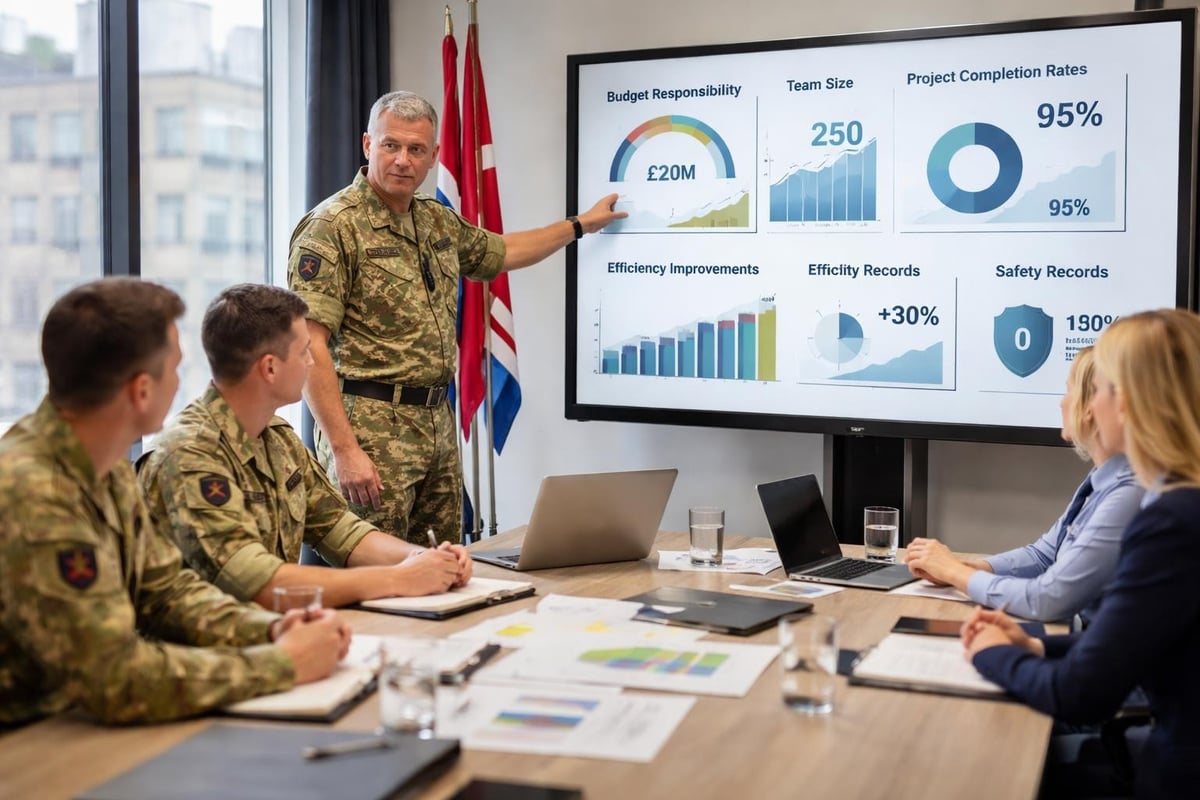
One of the most powerful elements in a military CV example is the skills section. This dedicated area near the top of your CV immediately communicates your capabilities in civilian language before recruiters read your detailed employment history.
Military service develops competencies across multiple categories. Organising these effectively helps recruiters quickly assess your fit for their requirements:
Military roles develop a wide range of transferable skills that are highly valued by civilian employers. Leadership appointments often translate into management and supervisory careers, technical trades align naturally with engineering and IT positions, whilst logistics and operational roles provide a strong foundation for supply chain, procurement and project management careers. The key is presenting these experiences in language that highlights their relevance to the target role.
When listing skills in your military CV example, balance hard and soft competencies. Hard skills include specific technical abilities (logistics software, maintenance procedures, security protocols), whilst soft skills encompass leadership, communication, adaptability, and resilience.
Military personnel develop a wide range of transferable skills throughout their careers, including project planning, risk management, budget control, team leadership, training delivery and strategic thinking. Presenting these capabilities in civilian language helps employers recognise their relevance and value.
Technical Qualifications and Certifications
Military service often includes extensive training that translates directly into civilian qualifications. Your military CV example should prominently feature these credentials, explaining their civilian equivalence where necessary.
For example, a Class 1 HGV licence earned through military service holds the same value as one obtained civilly. Similarly, leadership courses, project management training, and technical certifications all deserve highlighting. Don’t assume recruiters understand military qualifications. If you completed the Senior Command and Staff Course, explain that it’s equivalent to a postgraduate-level strategic management programme.
Addressing Common Concerns
Every military CV example must tackle potential employer concerns head-on, transforming them into strengths. Civilian hiring managers sometimes harbour misconceptions about military personnel, and your CV should preemptively address these through strategic presentation.
Overcoming the “Too Regimented” Perception
Some employers worry that military personnel lack adaptability or struggle with less hierarchical civilian environments. Counter this perception by highlighting examples of initiative, creative problem-solving, and adaptability.
Include achievements that demonstrate flexibility: “Redesigned equipment storage system, reducing retrieval times by 50% and improving space utilisation by 30%.” This shows innovation and process improvement, not rigid rule-following.
Adaptability can be demonstrated through examples of process improvement, independent problem-solving, cross-functional working and responding effectively to changing operational requirements. These experiences show employers that military personnel can thrive in dynamic civilian environments.
Your military CV example should paint you as someone who understands structure and discipline whilst also bringing entrepreneurial thinking and innovation. Working with a professional CV writer can help strike this balance effectively, ensuring your military experience is positioned as an advantage rather than a potential limitation.
Managing Career Gaps and Frequent Moves
Military service often involves postings every 2-3 years, which might appear as job-hopping to civilian recruiters. Your military CV example needs to contextualise this mobility as normal career progression rather than instability.
Group roles by theme rather than strict chronology if appropriate. For instance, you might have a “Leadership and Training Roles (2018-2023)” section that combines three different postings where you performed similar functions. This approach emphasises skill development over geographical movement.
Alternatively, briefly explain posting cycles in your professional profile: “Royal Air Force officer with progressive leadership experience across multiple UK and international postings.” This single phrase normalises the movement inherent in military careers.
Industry-Specific Military CV Examples
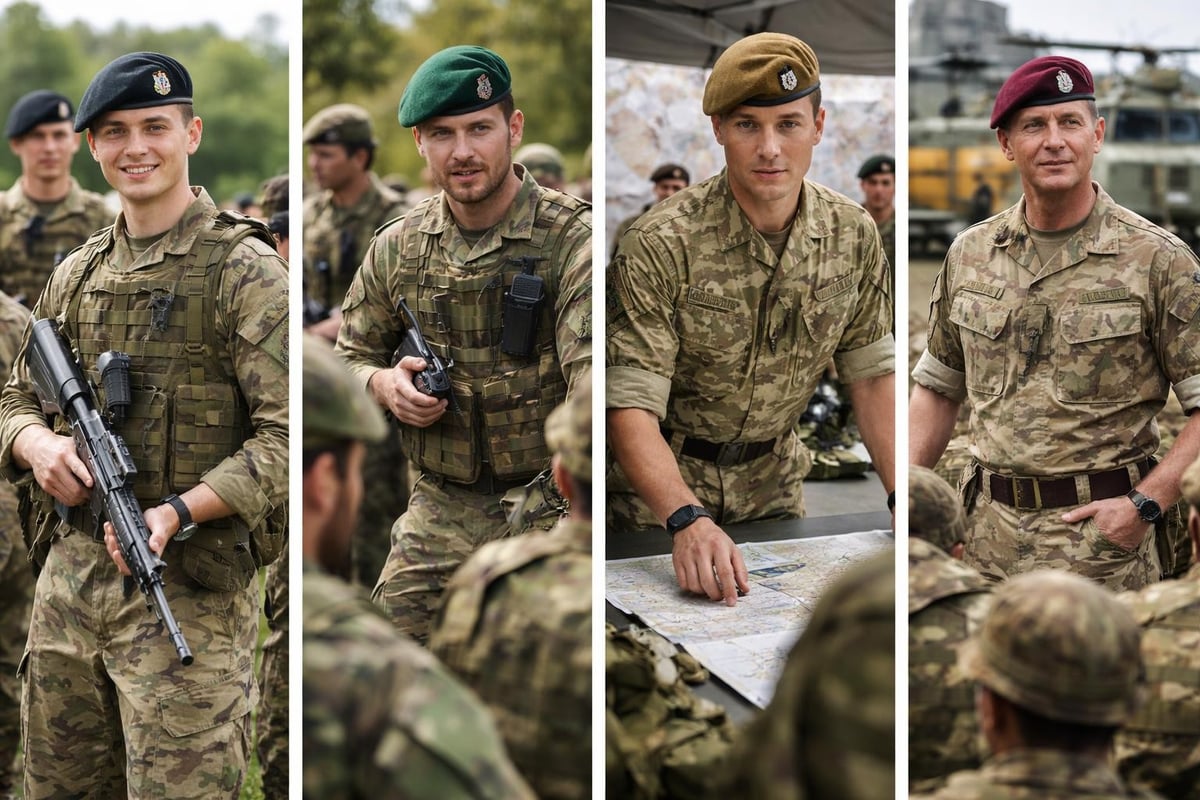
Different civilian sectors value different aspects of military experience. Tailoring your military CV example to your target industry significantly improves success rates. A logistics specialist transitioning into supply chain management will emphasise different achievements than one moving into security risk consulting.
Companies seek leadership, project management, and results delivery. Your military CV example for corporate roles should emphasise:
Highlight any exposure to commercial considerations, even if indirect. Managing procurement, controlling costs, or improving efficiency all resonate in business environments.
Public Sector and Emergency Services
Government departments and emergency services often value military experience highly, as they operate within similar frameworks. Your military CV example here can include more specific terminology around:
These sectors understand rank structures better than commercial employers, though you should still provide civilian equivalents for clarity.
Technical and Engineering Fields
For technical roles, your military CV example must prominently feature specific competencies and qualifications. Employers care less about leadership (though it remains valuable) and more about your technical expertise
Technical and engineering employers are particularly interested in qualifications, systems knowledge, maintenance expertise, fault diagnosis, compliance and project delivery. Military personnel often possess highly transferable technical skills that can be extremely attractive when presented using industry-recognised terminology.
Research job descriptions in your target field and incorporate their exact terminology throughout your military CV example. This ensures both ATS compatibility and recruiter recognition of your relevant experience.
Enhancing Your Application Package
A military CV example represents just one component of your application package. The most successful transitions combine a strong CV with complementary documents that reinforce your narrative.
Cover letters provide essential context that your CV cannot. They explain your motivation for leaving the armed forces, your genuine interest in the specific role, and how your military background uniquely qualifies you for this opportunity. Bespoke cover letters tailored to each application dramatically improve response rates, as they demonstrate research and commitment beyond simply submitting a generic CV.
LinkedIn Optimisation for Veterans
Your LinkedIn profile extends your military CV example into a dynamic, searchable format. Recruiters extensively use LinkedIn to source candidates, particularly for professional and management roles. Many veterans underutilise this platform, missing substantial opportunities.
Optimising LinkedIn involves more than simply copying your CV content. The platform rewards keyword-rich profiles, regular engagement, and strategic networking. Your headline should immediately communicate your target role: “Supply Chain Professional | Ex-Royal Navy Logistics Officer | Specialising in Inventory Management & Procurement” works far better than simply listing your military rank.
The recommendations section proves particularly powerful for veterans. Former colleagues and supervisors can provide third-party validation of your leadership, reliability, and expertise in language that civilian employers understand.
Common Mistakes to Avoid
Reviewing multiple military CV examples reveals patterns of errors that undermine otherwise strong applications. Avoiding these pitfalls significantly improves your success rate.
Acronym Overload
Military communication relies heavily on acronyms and abbreviations. Your CV must eliminate virtually all of these. Write “Non-Commissioned Officer” rather than “NCO,” “United Kingdom” instead of “UK,” and “operational” rather than “ops.”
The only exceptions are universally recognised abbreviations like “HGV” for heavy goods vehicle or established qualifications where the acronym is standard (such as “PRINCE2” for project management).
Underselling Achievements
Many military personnel exhibit excessive modesty, describing significant accomplishments in understated terms. Your military CV example should confidently articulate your impact. If you led a team, say so. If you managed a substantial budget, specify the amount. If your work improved outcomes, quantify the improvement.
Generic, Unfocused Applications
Sending identical CVs to every opportunity yields poor results. Your military CV example should serve as a foundation that you tailor for each application. This doesn’t mean completely rewriting your CV for every job, but rather adjusting your professional profile, reordering skills to match job requirements, and emphasising the most relevant achievements.
Leveraging Your Unique Advantages
Whilst translation and adaptation are necessary, don’t downplay the genuine advantages military experience provides. Your military CV example should confidently position your service as a differentiator, not something requiring apology or excessive explanation.
Military veterans bring qualities that civilian employers struggle to find: proven performance under pressure, demonstrated reliability, security clearance, physical fitness, and values-driven professionalism. These attributes deserve highlighting, particularly for roles involving responsibility, trust, or challenging environments.
Security Clearances
Current security clearances represent substantial value, potentially saving employers months and thousands of pounds in vetting costs. If you hold Developed Vetting (DV), Security Check (SC), or Counter-Terrorist Check (CTC), state this prominently in your additional information section.
Specify the clearance level, issuing date, and current status. Even expired clearances hold value, as reinstatement typically proves faster and easier than initial vetting. For roles requiring security clearance, this single factor might distinguish you from other candidates.
Leadership Under Pressure
Civilian training programmes spend considerable resources developing leadership capabilities that military service builds as standard. Your military CV example should emphasise this leadership experience, particularly if targeting management roles.
Frame leadership through business outcomes: team performance, conflict resolution, motivation during challenges, and achieving objectives with limited resources. These competencies transfer directly into corporate, public sector, and entrepreneurial environments.
Frequently Asked Questions
How long should my military CV be?
Your CV should typically span two pages, regardless of service length. This constraint forces prioritisation, ensuring you include only the most relevant, impressive information. Recruiters spend approximately 30 seconds on initial CV screening, so concise, impactful presentation outperforms exhaustive detail. Focus on the past 10-15 years of experience, providing brief summaries of earlier roles if they add value.
Should I include all my military qualifications?
Include qualifications that hold civilian relevance or demonstrate transferable skills. Leadership courses, technical certifications, and recognised qualifications definitely belong on your CV. Very specific military training with limited civilian application can be omitted unless it directly relates to your target role. If unsure, research whether civilian employers in your chosen field value the qualification.
How do I explain gaps in employment during deployment?
Military deployments aren’t employment gaps but rather intensive work periods. List deployments as part of your employment history, describing them as “Operational Deployment” or “Overseas Assignment” with location and dates. Treat them as distinct roles if they involved different responsibilities than your home posting, or incorporate them within your main role description if the work was continuous.
Can I use a military CV example template?
Templates provide useful structure but risk producing generic, impersonal CVs that fail to stand out. The most effective approach involves understanding the principles behind strong military CV examples, then creating a bespoke document that authentically represents your unique experience. Professional CV writers avoid templates entirely, crafting each CV individually to showcase the specific person and their distinct career story. A detailed one-to-one consultation helps identify the achievements, skills and experience most relevant to your target role
What if I have no civilian work experience?
Many successful transitions occur with no civilian experience whatsoever. Your military service is work experience; it simply requires translation into civilian language. Focus on transferable skills, quantifiable achievements, and the business-relevant aspects of your military roles.
Practical Steps to Get Started
Creating your military CV example begins with thorough preparation. Before writing a single word, invest time in self-assessment and research. Understanding your target industry, identifying transferable skills, and gathering achievement data provides the foundation for a compelling CV.
Before writing your CV, take time to research suitable civilian roles and identify the skills, qualifications and experience employers are seeking. Reviewing job descriptions, gathering evidence of your achievements and quantifying your results will make it easier to create a targeted CV that aligns with the requirements of your chosen career path.
This groundwork makes the actual writing process far more straightforward. You’ll have clarity about your target roles, the language to describe your experience, and evidence to support your claims.
The Editing Process
Your first draft will inevitably contain military terminology and assumptions that civilian recruiters won’t grasp. Effective editing transforms this rough draft into a polished military CV example. Set your draft aside for 24 hours, then review it with fresh eyes. Check for military jargon, vague statements, missing keywords, formatting inconsistencies and any spelling or grammatical errors that could reduce professionalism
Ask someone outside the military to review your CV. They’ll immediately spot terminology that requires explanation or sections lacking clarity. This external perspective proves invaluable for ensuring your CV communicates effectively across the civilian-military divide.
Beyond the CV: Interview Preparation
A strong military CV example opens doors, but interview performance determines whether you walk through them. Many veterans excel on paper yet struggle in civilian interviews, which operate quite differently from military selection boards.
Civilian interviews emphasise storytelling, enthusiasm, and cultural fit alongside competency demonstration. Prepare specific examples that illustrate your skills in action, using the STAR method for structured, compelling responses. Practice discussing your military experience without jargon, explaining roles and achievements in terms that civilian interviewers understand.
Research common interview questions for your target roles and prepare thoughtful responses. Why are you leaving the military? How do you handle conflict? Describe a time you failed. What’s your leadership style? These questions require honest, reflective answers that demonstrate self-awareness and learning.
Remember that enthusiasm matters enormously. Civilian employers want people genuinely excited about the role and company, not simply seeking any job after leaving the forces. Research each employer thoroughly, understanding their challenges, culture, and direction. Ask insightful questions that demonstrate this research and genuine interest.
Your military experience provides substantial advantages: discipline, reliability, leadership, and proven performance in demanding situations. A well-crafted military CV example translates these strengths into civilian language, positioning you confidently for your next career chapter. Whether you’re transitioning into logistics, management, technical roles, or entirely new fields, your service record contains transferable skills that employers genuinely value. You can also read my client testimonials to see how service leavers have successfully secured civilian opportunities.
As a former Royal Navy veteran who successfully transitioned into civilian leadership and business ownership, I understand the challenges service leavers face when translating military experience into language civilian employers understand.
Translating military service into a compelling civilian CV requires careful attention to language, structure, and achievement presentation. By following the principles outlined in this military CV example guide, you’ll create a document that honours your service whilst speaking directly to civilian employers. If you’re ready to ensure your CV positions you powerfully for your next career move, John Logan Consulting and Mentoring offers bespoke CV writing services specifically designed to showcase your unique experience and open doors to better opportunities. With decades of recruitment experience and a completely consultative approach, I’ll help you craft an ATS-optimised CV that truly reflects your achievements and supports your career goals.