
Job hunting for a professional requires a fundamentally different approach compared to early-career candidates. Whether you’re seeking advancement, pivoting to a new sector, or exploring senior-level opportunities, the stakes are higher and the competition more sophisticated. Your experience, track record, and professional reputation must be presented with precision and impact. The days of generic applications and mass CV distribution are long gone.
Senior managers and directors often require a more strategic approach that focuses on commercial impact, organisational leadership and measurable business achievements. Professionally written executive CVs ensure this experience is presented effectively.
Today’s professional job hunt demands strategic positioning, targeted applications, and documents that immediately demonstrate your value to potential employers. This comprehensive guide explores the essential strategies, common pitfalls, and expert techniques that will transform your approach to securing your next career opportunity.
Understanding the Modern Professional Job Market
The landscape of professional employment has shifted dramatically over recent years. Employers now expect a level of sophistication that goes far beyond simply listing responsibilities and qualifications. They’re looking for evidence of impact, leadership, and measurable contributions.
The ATS Challenge
Nearly 75% of CVs are filtered out by Applicant Tracking Systems before a human ever reviews them. For professionals with extensive experience, this presents a unique challenge. Your CV must be both ATS-optimised and compelling to human readers, balancing technical keywords with engaging narrative. Understanding how long your CV should be is crucial when competing at senior levels.
A successful ATS-friendly CV combines relevant keywords, clear formatting and industry-specific terminology without compromising readability. The objective is to ensure your CV passes automated screening whilst still engaging recruiters and hiring managers once it reaches them.
The most successful professionals recognise that beating the ATS is only the first hurdle. Your document must then captivate hiring managers within the first 10 seconds of review.
Market Positioning in 2026
Job hunting for a professional in 2026 means understanding your unique value proposition. What sets you apart isn’t just your experience, but how you frame that experience relative to employer needs.
Research from LinkedIn’s job search strategies shows that professionals who clearly articulate their niche expertise secure interviews 3.5 times faster than those with generalist positioning. This requires honest self-assessment and market research.

Effective market positioning means presenting a clearly defined area of expertise rather than appearing as a generalist. Employers are far more likely to engage candidates who demonstrate specialist knowledge, measurable achievements and a clear understanding of the value they bring to a particular sector or leadership role.
Crafting Your Professional CV Strategy
Your CV is the cornerstone of job hunting for a professional. It’s not a career history document; it’s a strategic marketing tool designed to secure interviews for specific roles.
Beyond the Chronological Format
Most professionals default to listing every role they’ve held. This approach dilutes impact and obscures your strongest selling points. Instead, consider how each element of your CV supports your target role.
Start with a powerful professional profile that immediately positions you. This 4-6 line section should encapsulate your expertise, key achievements, and career focus. Avoid generic phrases like “results-driven professional” or “excellent communicator.” Instead, open with concrete credentials: “Finance Director with 15+ years transforming FTSE 250 financial operations, delivering £8M in efficiency gains whilst ensuring regulatory compliance across multi-jurisdictional entities.”
A professional CV should present information in a logical order that immediately demonstrates your value. A strong personal profile, relevant skills, achievement-focused career history and clearly presented qualifications help employers quickly understand your experience and suitability for senior roles.
The most common mistake in job hunting for a professional is including too much information. Hiring managers at senior levels expect concise communication. A perfect curriculum vitae typically spans two pages, regardless of career length.
A detailed one-to-one consultation allows your achievements, leadership experience and career objectives to be explored fully before your CV is written, ensuring the final document accurately reflects your value and target role.
Achievement-Focused Content
Every bullet point should demonstrate impact rather than describe duties. Compare these examples:
Weak: Responsible for managing a team of 12 sales professionals across the region.
Strong: Rebuilt underperforming sales team of 12, implementing new training framework that increased regional revenue by 34% (£4.2M) within 18 months whilst reducing staff turnover from 28% to 9%.
The second example answers the crucial questions: What was the situation? What did you do? What was the result? This CAR (Challenge-Action-Result) structure transforms ordinary responsibilities into compelling evidence of capability.
When job hunting for a professional, your achievements must be relevant to your target roles. Prioritise accomplishments that demonstrate skills the employer is actively seeking. If you’re targeting operational excellence roles, emphasise process improvements and efficiency gains. For commercial positions, highlight revenue growth and market expansion.
Strategic Application Approaches
The scatter-gun approach to applications wastes time and damages your professional brand. Quality always trumps quantity when job hunting for a professional.
Targeted Application Strategy
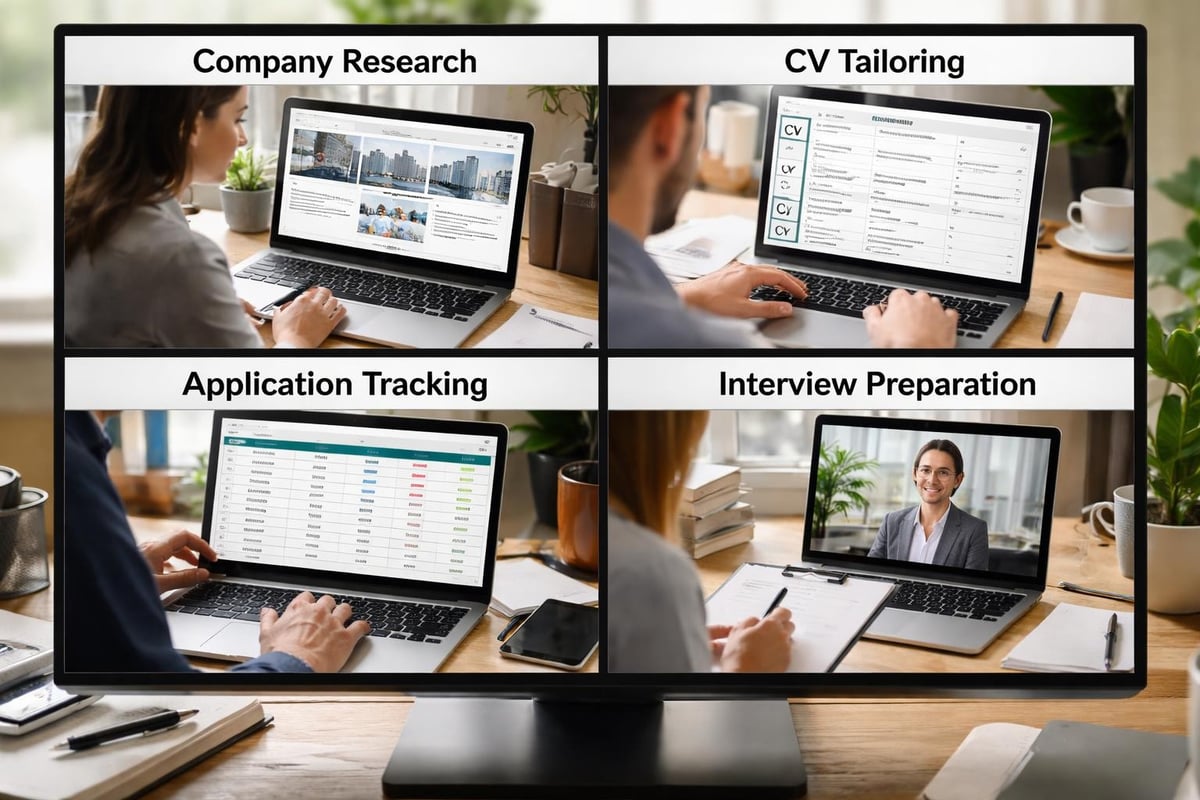
Identify 8-12 target organisations where your skills align with their strategic direction. Research each thoroughly, understanding their challenges, recent developments, and leadership team. This intelligence allows you to tailor applications with precision.
This systematic approach ensures nothing falls through the gaps whilst providing valuable data to refine your strategy over time.
The Cover Letter Advantage
Many professionals question whether cover letters still matter. The answer is unequivocally yes, particularly at senior levels. A well-crafted bespoke cover letter provides context that your CV cannot, explaining why you’re pursuing this specific opportunity and how your background aligns with their needs.
Effective cover letters for professionals should:
- Reference specific company initiatives or challenges
- Connect your experience directly to the role requirements
- Demonstrate research and genuine interest
- Highlight 2-3 key achievements relevant to the position
- Maintain a professional tone whilst showing personality
Avoid regurgitating your CV content. Instead, use the cover letter to tell a compelling story about why this opportunity represents the logical next step in your career trajectory.
Leveraging Professional Networks
Job hunting for a professional relies heavily on relationships and reputation. The most desirable opportunities rarely appear on public job boards.
Strategic Networking Approaches
Networking for professionals isn’t about collecting contacts; it’s about cultivating meaningful relationships with individuals who understand your expertise and value. Quality connections in your sector are worth far more than quantity of superficial links.
Identify key individuals in your target organisations and sector:
- Decision-makers: Those who can directly hire or influence hiring decisions
- Sector influencers: Thought leaders whose recommendations carry weight
- Peer professionals: Colleagues at similar levels who may learn of opportunities
- Former colleagues: People who’ve witnessed your capabilities firsthand
Reach out with value-first communication. Share relevant insights, congratulate achievements, or offer a perspective on industry developments. This positions you as a thoughtful professional rather than someone who only networks when job hunting.
The Guardian’s overlooked job hunting tips emphasise that informational interviews remain one of the most effective strategies for professionals. These low-pressure conversations build relationships whilst providing market intelligence and potentially leading to opportunities.
Digital Professional Presence
Your online presence functions as a continuous background check. Employers routinely review LinkedIn profiles, professional publications, and digital footprints before interviewing candidates.
Ensure your LinkedIn profile mirrors your CV positioning whilst expanding on your expertise. Recommendations from credible colleagues, thought leadership content, and engagement with sector discussions all enhance your professional brand. For guidance on this, contact John Logan at John@johnloganbmc.co.uk to discuss LinkedIn optimisation strategies.
Your online presence should support your CV by reinforcing your expertise and professional reputation. LinkedIn remains the most important platform for most professionals, whilst participation in industry forums, publications or professional websites can further strengthen your credibility and visibility.
Navigating the Interview Process
Securing an interview represents significant progress in job hunting for a professional. Interview preparation at senior levels requires depth and strategic thinking.
Research and Preparation
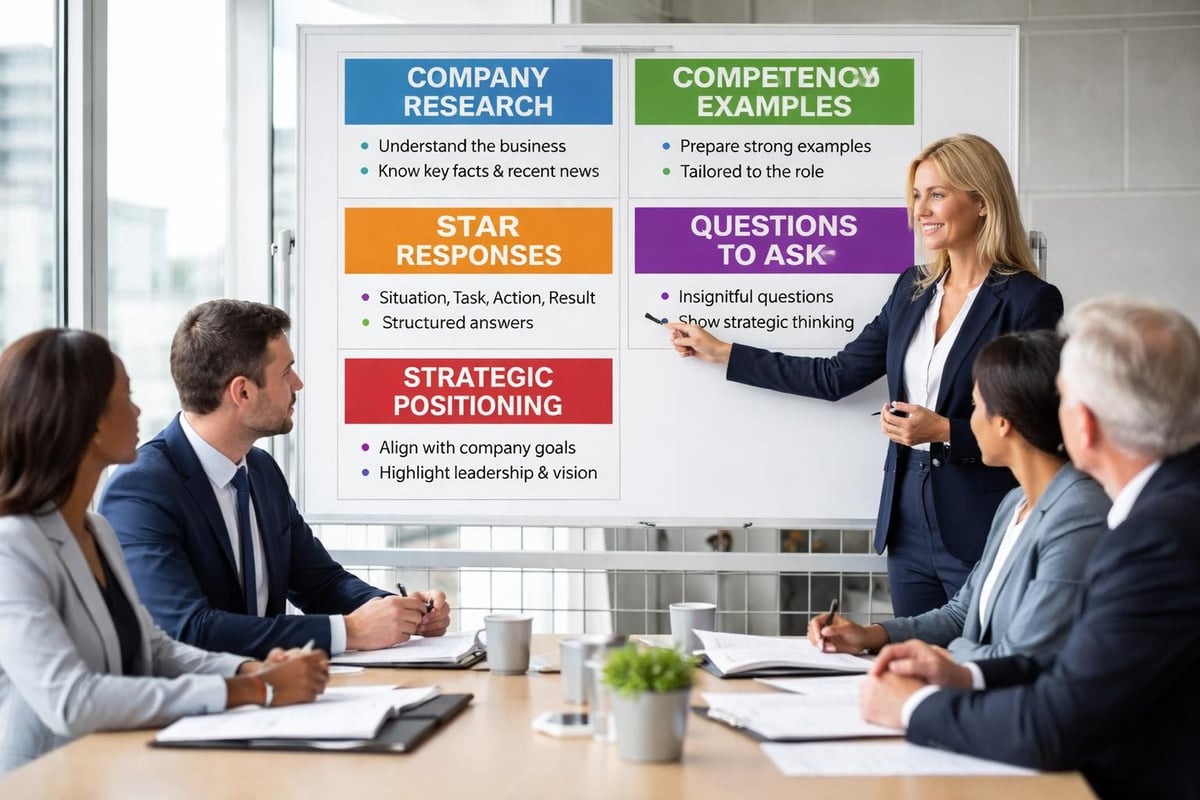
Surface-level company knowledge won’t suffice. Interviewers expect professionals to understand:
- Recent financial performance and strategic direction
- Competitive positioning and market challenges
- Leadership team backgrounds and priorities
- Organisational culture and values
- How the specific role contributes to broader objectives
Prepare examples that demonstrate your capabilities across key competency areas. Use the STAR method (Situation, Task, Action, Result) to structure responses, ensuring you provide concrete evidence rather than theoretical answers.
Handling Career Gaps and Transitions
Job hunting for a professional often involves explaining career decisions, gaps, or transitions. Frame these positively and confidently.
If you’ve taken time away from employment, focus on what you accomplished during that period: consulting projects, professional development, industry involvement, or personal circumstances handled responsibly. Most importantly, demonstrate that you’re current, engaged, and ready to contribute immediately.
For career transitions, emphasise transferable skills and explain the strategic rationale behind your move. Employers appreciate professionals who make considered decisions aligned with long-term goals.
Managing the Hidden Job Market
Research suggests that 70% to 85% of professional positions are filled through relationships and referrals rather than advertised vacancies. Accessing these opportunities requires proactive strategies.
Direct Approaches
Identify organisations where you could add significant value, even if they’re not actively advertising. A successful speculative approach demonstrates genuine understanding of the organisation, explains the value you can bring and invites further discussion without directly asking for a job. Well-researched approaches often create opportunities before vacancies are publicly advertised.
These approaches work best when addressing decision-makers directly. Generic HR submissions rarely progress, but a well-researched letter to a department head can open unexpected doors.
Recruiter Relationships
Specialist recruiters in your sector can be valuable allies when job hunting for a professional. However, these relationships require strategic management.
Building strong relationships with specialist recruiters takes time. Clear communication, realistic expectations and regular contact help recruiters understand your experience and career goals, making it easier for them to identify suitable opportunities on your behalf.
Remember that recruiters work for employers, not candidates. Whilst they can facilitate introductions, you must still demonstrate your value convincingly.
Salary Negotiation and Offer Management
Job hunting for a professional culminates in offer negotiations. This stage requires confidence, research, and strategic thinking.
Establishing Your Value
Before entering negotiations, research thoroughly using:
- Salary surveys: Industry-specific data for comparable roles
- Professional networks: Insight from peers in similar positions
- Recruiter intelligence: Market rates from specialist consultants
- Company financials: Understanding of organisational capacity
When discussing salary, frame the conversation around value delivery rather than personal needs. Articulate what you’ll contribute and how that justifies your expectations.
Consider the complete package, not just base salary. Benefits, bonuses, equity, flexibility, and development opportunities all contribute to overall value. Professional roles often offer negotiation scope across multiple elements.
Salary negotiations should consider the complete employment package rather than focusing solely on basic salary. Bonuses, flexible working arrangements, professional development opportunities, pension contributions and additional benefits can all have a significant impact on the overall value of an offer.
Maintaining Momentum and Resilience
Job hunting for a professional can extend over months. Maintaining focus, motivation, and professional standards throughout the process is essential.
Structured Approach
Treat job hunting as a project requiring dedicated time and systematic execution. Allocate specific hours each week to:
- Research and identify opportunities
- Tailor applications and supporting documents
- Network and nurture professional relationships
- Follow up on applications and expressions of interest
- Develop skills and stay current in your field
According to JobLeads’ successful job seeker strategies, professionals who maintain structured schedules during job searches report lower stress levels and achieve better outcomes than those with ad-hoc approaches.
Professional Support
Consider investing in professional support that accelerates your success. A specialist CV writer brings an objective perspective and expertise in presenting professional credentials effectively.
If you’re unsure which option best suits your career stage, you can also explore my CV writing services to compare the different support packages available for professionals, managers and executives.
When to seek professional help:
- Your current CV isn’t generating interviews
- You’re unclear about how to position a career transition
- You’ve been out of the job market for several years
- You’re targeting significantly more senior positions
- You want to ensure ATS optimisation whilst maintaining impact
The investment in professional CV writing services typically delivers returns through faster placement and potentially higher salary outcomes.
Common Pitfalls to Avoid
Even experienced professionals make critical errors when job hunting. Awareness of these pitfalls helps you avoid them.
The Overqualification Trap
Being “overqualified” is a genuine concern in job hunting for a professional. It signals to employers that you might leave quickly, expect higher compensation than budgeted, or struggle to adapt to a different seniority level.
Address this proactively by:
- Clearly articulating why this role aligns with your goals
- Demonstrating understanding of the scope and level
- Showing flexibility and realistic salary expectations
- Explaining the strategic fit within your career plan
Application Fatigue
Submitting numerous applications without tailoring creates fatigue and reduces effectiveness. Each application should be purposeful and customised.
Better to submit five excellent, tailored applications weekly than twenty generic ones. Quality signals professionalism and genuine interest, both of which influence employer perception from the first interaction.
Neglecting Online Reputation
Employers research candidates extensively. Outdated LinkedIn profiles, unprofessional social media content, or contradictions between your CV and online presence create doubt.
Regularly audit your digital footprint from an employer perspective. Ensure consistency across platforms and that your online presence reinforces your professional positioning.
Guidance from Aviation Job Search’s simple job hunting tips highlights that professionals often overlook basic elements like updating references or maintaining skills currency, both of which matter significantly at senior levels.
Failing to Follow Up
Professional job hunting requires persistence balanced with respect. Following up on applications demonstrates genuine interest without becoming pestering.
After submitting an application, wait one to two weeks, then send a brief, professional enquiry expressing continued interest and asking about the timeline. If you’ve interviewed, follow up within 24 hours with a thank-you message that reinforces key points from your conversation.
Frequently Asked Questions
How long should job hunting for a professional typically take?
The duration varies significantly based on seniority, sector, and market conditions. For mid-level professionals, expect 3-6 months for a quality outcome. Senior executives might require 6-12 months or longer. Factors influencing timeline include how selective you are, market demand for your expertise, and whether you’re employed whilst searching. Maintaining patience and quality standards throughout the process yields better long-term results than accepting the first offer simply to end the search.
Should I include all my work history on my CV when I have 20+ years of experience?
No. Focus on the most recent 10-15 years in detail, with earlier roles summarised briefly if they add relevant context. Employers care most about recent, relevant accomplishments. Including every position from a lengthy career creates an unwieldy document that obscures your strongest selling points. Prioritise quality over comprehensiveness, ensuring every element supports your target role positioning.
How do I explain a career gap when job hunting for a professional?
Address gaps honestly but briefly, focusing on what you gained from the period rather than defensive explanations. Whether you took time for family, health, education, or were made redundant, frame it positively and pivot quickly to your readiness and capability now. Demonstrate continued sector engagement through professional development, consulting, volunteering, or industry involvement. Confidence in discussing gaps matters more than the gap itself in most cases.
Is it better to apply directly or through recruiters when targeting professional roles?
Both channels have merit. Apply directly when you’ve identified specific target companies and can make compelling, tailored approaches. Use recruiters for accessing their networks and unadvertised opportunities, particularly if they specialise in your sector. The most effective strategy combines direct applications to priority targets with recruiter relationships that expand your reach. Avoid exclusive arrangements unless the recruiter has demonstrated exceptional value and sector knowledge.
How can I ensure my CV passes ATS systems whilst remaining compelling to human readers?
This balance is crucial in job hunting for a professional. Use standard section headings (Experience, Education, Skills), avoid complex formatting like tables or text boxes that confuse parsers, and incorporate relevant keywords naturally throughout your content. Simultaneously, write with clear, engaging language that demonstrates impact through quantified achievements. The key is strategic keyword integration within compelling narratives rather than keyword stuffing. Professional CV writers specialising in ATS optimisation understand these technical requirements whilst crafting documents that captivate hiring managers.
If you’d like personalised advice about your own career documents, you can also book a consultation to discuss your experience, career objectives and the opportunities you’re targeting.
You can also read my client testimonials to see how professionals across a wide range of industries have secured interviews, promotions and successful career moves through a bespoke CV writing service.
With over 40 years in business, experience interviewing thousands of candidates and more than six years writing bespoke CVs for professionals across the UK, I understand exactly what employers expect from successful applications. Every CV is written from scratch through a detailed consultative process, ensuring it reflects each client’s achievements, experience and long-term career goals.
Job hunting for a professional in 2026 demands strategic thinking, quality applications, and persistent effort across multiple channels. By positioning yourself clearly, crafting compelling application materials, leveraging networks effectively, and maintaining professional standards throughout the process, you significantly increase your chances of securing the right opportunity. John Logan Consulting and Mentoring specialises in helping UK professionals create powerful CVs, cover letters, and LinkedIn profiles that open doors to better opportunities. With decades of recruitment experience and a completely bespoke, consultative approach, every document is crafted to position you confidently for your next role, typically within two focused pages that capture attention and demonstrate your unique value.