

Stepping out of higher education and into the professional world comes with a unique challenge: how do you translate years of academic effort into a document that proves you’re worth interviewing?
As someone who has spent decades reviewing applications and advising candidates, I can tell you that graduate CV writing requires a fundamentally different mindset than applying for senior roles. You aren’t selling a decade of industry achievements. You are selling potential, agility, transferable skills, and immediate value.
The challenge? Standing out when your practical experience feels limited to part-time gigs, university group projects, or brief placements.
Here is how you bridge that gap, navigate recruitment systems, and write a graduate CV that actually lands interviews.
What Recruiters Really Want from a Graduate Application
When I open a graduate CV, I’m not looking for a seasoned veteran. I know you don’t have 10 years of corporate strategy under your belt—and I don’t expect you to.
Instead, recruiters and hiring managers look for indicators of future success:
- Trainability: Can you absorb complex information and adapt quickly?
- Execution: Do you follow through on commitments and deliver quality work?
- Collaboration: How do you handle conflict or work under pressure in group settings?
Stop Separating “University” from “Professional Experience”
The single biggest mistake I see graduates make is treating their degree as a standalone academic exercise. Every module, dissertation chapter, society committee, and weekend retail job offers hard evidence of your professional capabilities.
Real-World Insight:
Working a busy weekend shift at a retail store isn’t “just customer service”—it’s crisis management, commercial awareness, and resilience under pressure. Serving as treasurer for a university society isn’t a hobby—it’s budget management, governance, and stakeholder communication.
Strategic Structure: Designing Your CV for Impact
Your layout needs to guide the recruiter’s eyes directly to your highest-value assets. Unlike a mid-career professional who leads with a employment timeline, a graduate CV should prioritize education, core competencies, and applied projects.

The Ideal Graduate CV Blueprint
[ Contact Details & LinkedIn Profile ]
↓
[ Tailored Personal Statement (3–4 sentences) ]
↓
[ Education & Relevant Academic Projects ]
↓
[ Key Skills & Technical Proficiencies ]
↓
[ Work Experience (Workplace & Part-Time Roles) ]
↓
[ Extracurriculars, Volunteering & Achievements ]
Key Elements to Get Right:
Contact Info:
Name, location (city/region is fine), professional email, and a clean LinkedIn profile link. Skip the photo—UK hiring practices discourage them to reduce unconscious bias.
The Personal Statement:
This is your 5-second elevator pitch. Ditch generic phrases like “Motivated, hard-working graduate seeking an entry-level role.” Instead, connect your background directly to the value you offer:
“Economics graduate with hands-on expertise in data visualization and quantitative modeling built through dissertation research on consumer habits. Seeking to leverage analytical modeling skills within an agile business intelligence team.”
Education:
Lead with your degree, classification (or target classification), and university. Don’t just list module names—highlight technical tools used, research methodologies, or top-performing individual projects.
How to Frame “Limited” Experience (The STAR Method)
If you feel your work experience is thin, the trick is framing. Shift your focus from what duties you were assigned to what outcomes you delivered.
Whenever you detail a project, part-time job, or volunteer role, structure it using the STAR method:
- Situation: What was the context or challenge?
- Task: What were you responsible for achieving?
- Action: What specific steps did you take? (Use strong action verbs!)
- Result: What was the measurable outcome?
Transforming Duty-Based Text into Achievement Statements
❌ Weak (Duty-Based) | ✅ Strong (Outcome & Action-Driven) |
“Helped manage social media for the university drama society.” | “Coordinated a digital marketing campaign for 3 society events, increasing ticket sales by 25% year-over-year.” |
“Worked as a sales assistant at a clothing store.” | “Exceeded monthly sales targets by 15% through proactive customer engagement and deep product knowledge.” |
“Wrote a dissertation on machine learning.” | “Engineered a Python-based predictive model for dissertation research, analyzing 10,000+ data points with 92% accuracy.” |
Beating the Applicant Tracking System (ATS)
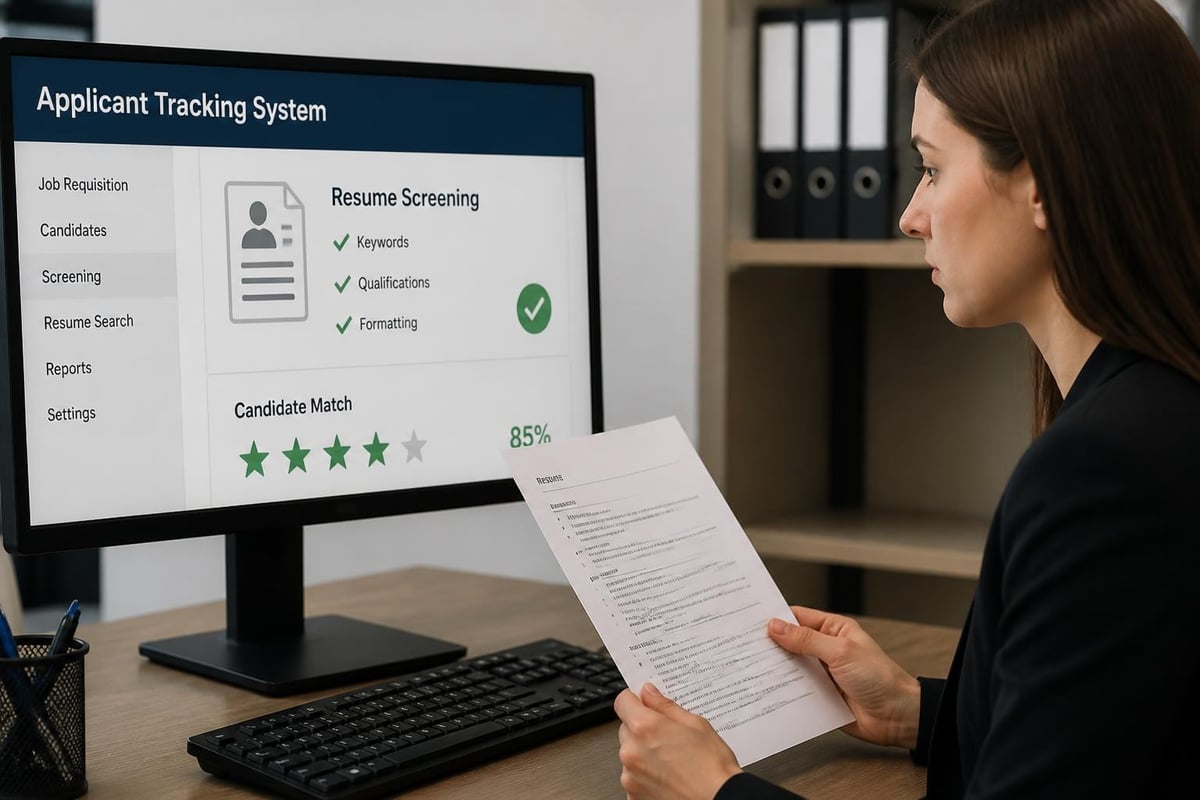
Most large corporate graduate schemes rely on Applicant Tracking Systems (ATS) to parse and filter applications before a human recruiter ever sees them.
To ensure your CV makes it past the automated gatekeepers without losing human appeal, follow these rules:
Mirror the Job Description:
Scrutinize the job ad. If they ask for “stakeholder management” or “data analysis in Excel (VLOOKUPs, Pivot Tables),” use those exact terms in your skills section.
Keep Formatting Clean:
Avoid complex multi-column tables, graphics, text boxes, or unusual header/footer designs—ATS software often misinterprets them, resulting in scrambled text.
Stick to Standard Headings:
Use conventional labels like Education, Work Experience, and Skills.
Save Standard File Types:
Unless stated otherwise, submit your document as a clean PDF or Word (.docx) file named clearly: FirstName_LastName_CV.pdf.
Sector-Specific Tailoring
One size never fits all. Tailor your focus depending on the industry culture:
- Finance & Corporate Schemes: Highlight numerical accuracy, commercial awareness, Excel capabilities, analytical software (R, Python, SPSS), and top-tier academic performance.
- Tech & Engineering: Put your technical stack front and center (programming languages, frameworks, methodologies like Agile). Include a link to your GitHub or live portfolio.
- Legal & Professional Services: Focus on precision, written communication, research capability, mooting experience, pro bono work, and commercial acumen.
- Creative & Marketing: Emphasize campaign metrics, content creation, software proficiency (Adobe Creative Cloud, Google Analytics), and personal projects or portfolio sites.
Common Graduate CV Red Flags to Avoid
Over my years of reviewing applications, these preventable mistakes knock out otherwise qualified graduates:
- The Bloated Document: A graduate CV rarely needs to exceed two pages. Edit ruthlessly.
- Outdated Information: Leave off your childhood accomplishments and high school GCSEs (unless specific subjects are explicitly required). Your degree is now your flagship academic qualification.
- Vague Skill Claims: Stating you have “great communication skills” means nothing without evidence. Show, don’t tell.
- Unexplained Gaps: If you took time out post-graduation to travel, care for family, or focus on personal development, state it briefly and positively. Recruiters appreciate clarity over mystery.
Final Thoughts: Positioning Yourself for Success
A standout graduate CV isn’t about padding out a thin work history with buzzwords; it’s about translating your academic accomplishments and transferable life skills into a narrative of readiness and potential.
Treat your CV as a live document. Maintain a master file of all your projects and experiences, and then curate custom, laser-focused versions for every role you target.
Need a Partner in Your Career Search?
Crafting an ATS-compliant, high-impact CV that gets noticed takes time and insider perspective. If you want expert eyes on your application, John Logan Consulting and Mentoring works one-on-one with graduates to craft tailored CVs that highlight your unique strengths and open doors to top-tier career opportunities.
Graduate Recruitment: The Unfiltered FAQs
1. “My degree isn’t a First or a 2:1. Am I dead in the water?”
Not at all—unless you try to hide it. Background checks mean honesty is non-negotiable, but a single grade doesn’t define your value. Shift the spotlight to where you shone: did you pull a top mark on your dissertation? Did you ace specific technical modules that directly apply to the job? Frame your story around growth, practical skill, and execution. Many top employers care far more about what you can do today than a aggregate score from two years ago.
2. “I spent university working in a pub/supermarket. How do I make that sound ‘corporate’?”
You don’t need to dress it up in ridiculous jargon like “beverage allocation specialist.” Recruiters see right through that. Instead, highlight the real, high-pressure realities of front-line work: resolving high-stress conflict, managing inventory under strict deadlines, handling cash float accuracy, or training new hires during peak hours. That isn’t just “part-time work”—that’s stress tolerance, commercial responsibility, and human communication in action.
3. “How on earth do I prove ‘leadership’ when no one has ever paid me to manage a team?”
Leadership at 21 isn’t about having a title; it’s about stepping up when things get messy. Did you take the reins when a university group project was falling apart to make sure you hit the deadline? Did you organize a charity event, handle the budget, and convince people to show up? Did you captain a local sports team through a losing streak? That is leadership. Focus on initiative, accountability, and getting people across the finish line.
4. “Is the one-page CV rule real, or can I go to two pages?”
The “one-page rule” is an American corporate trend that made its way across the internet, but in the UK and European graduate markets, two pages is the sweet spot. Trying to squeeze three years of university, modules, projects, society roles, and part-time work onto a single page leaves your layout cramped and forces you to cut out crucial context. Give your achievements room to breathe—just don’t let it spill onto page three.
5. “Will an Applicant Tracking System (ATS) auto-reject me if I use a nice design?”
ATS software isn’t evil, but it is blind to style. If you use fancy multi-column tables, visual skill bars (like “8/10 in Python”), or place text inside floating graphic boxes, the parser will scramble your text into gibberish—and that gets you rejected. Keep the formatting clean, stick to classic headings, and let the substance of your writing do the heavy lifting. Save the visual flair for your portfolio or LinkedIn profile.
Ready to Stop Applying and Start Getting Interviewed?
Let’s Build a CV That Actually Opens Doors
Sending out dozens of applications and hearing nothing back isn’t just frustrating—it’s a waste of your potential. You’ve put in the work to get your degree; now let’s make sure employers actually see what you’re capable of.
At John Logan Consulting and Mentoring, I skip the generic advice and work with you one-on-one to craft a sharp, ATS-ready graduate CV that highlights your real-world value.
Take a look ay my templates and writing Style
Ready to get serious about your career launch? Claim Your 1-on-1 Graduate CV Audit Here — let’s turn your academic journey into your first big job offer.