

Send me your CV for a free review to John@johnlogan.co.uk. I’ll look through it myself and give you honest, constructive feedback as a professional CV writer.
Your CV is often the only chance you have to make a first impression with a potential employer. In today’s competitive job market, where recruiters spend an average of just six seconds reviewing each application, the quality of your CV writing can determine whether you secure an interview or end up in the rejection pile. The right CV writing advice can transform a mediocre document into a powerful career tool that showcases your achievements, demonstrates your value, and positions you as the ideal candidate. Whether you are applying for your first professional role or targeting senior leadership positions, strong CV writing can significantly improve your interview success.
Understanding What Employers Actually Want
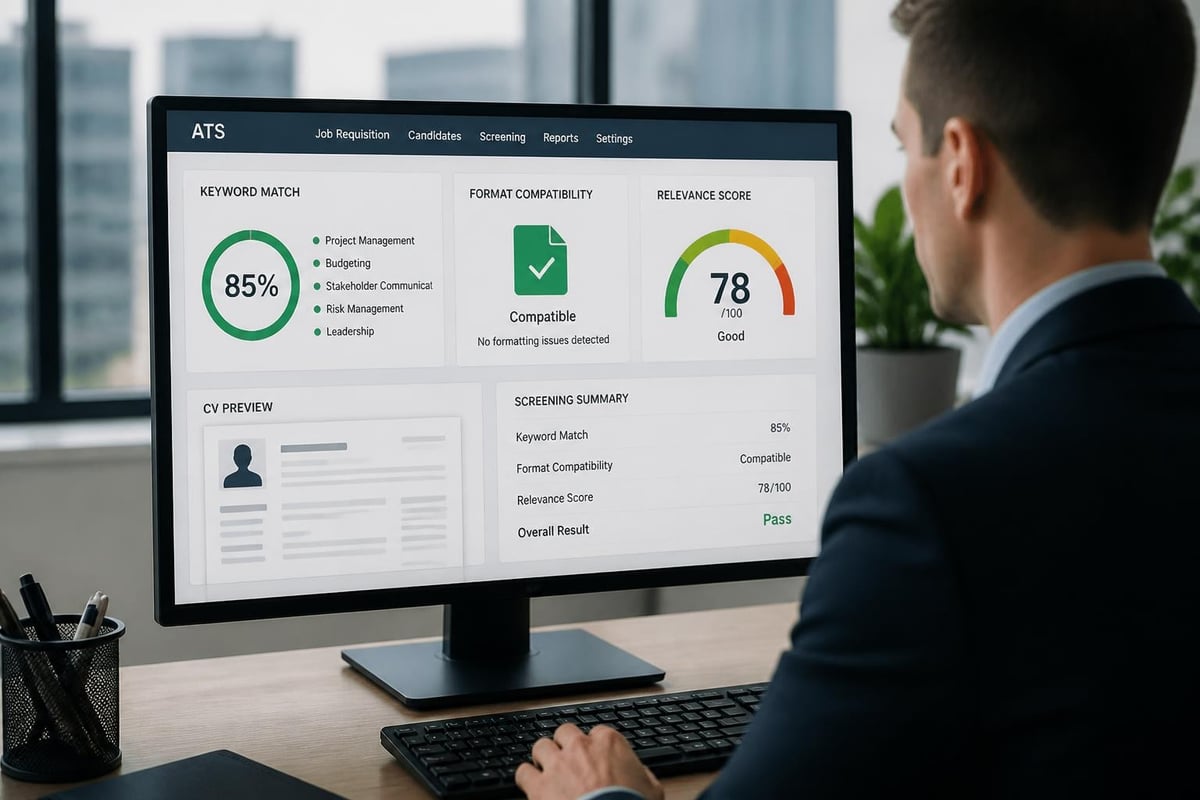
Modern CV writing advice must acknowledge the dual audience your document serves: both automated Applicant Tracking Systems (ATS) and human recruiters. This reality shapes every decision you make about structure, content, and formatting.
The ATS Challenge
Applicant Tracking Systems filter CVs before human eyes ever see them. Your CV needs strategic keyword placement, clean formatting, and standard section headings to pass these digital gatekeepers.
Key ATS considerations include:
Using standard fonts like Arial, Calibri, or Times New Roman
Avoiding tables, text boxes, headers, and footers
Including relevant industry keywords naturally within your experience descriptions
Saving your CV as both .docx and PDF formats
Using conventional section headings like “Professional Experience” and “Education”
What Recruiters Notice First
Once your CV passes the ATS, recruiters conduct a rapid assessment. The best CV writing advice emphasises clarity and impact in those crucial opening seconds.
Recruiters prioritise:
Professional summary or profile that immediately communicates your level and specialism
Recent, relevant experience with quantifiable achievements
Clear career progression showing growth and increased responsibility
Education and qualifications appropriate to the role
Clean, professional formatting that guides the eye naturally
Your CV should answer three fundamental questions within seconds: Who are you professionally? What value do you bring? Why should I interview you?
Structuring Your CV for Maximum Impact
The structure of your CV determines how effectively you communicate your professional story. Sound CV writing advice recognises that one size doesn’t fit all, but certain principles apply universally.
Choosing the Right Format
Three main CV formats serve different purposes:
Reverse chronological works best for candidates with consistent career progression in a single field. This format lists your most recent position first and works backwards, making it easy for recruiters to follow your journey.
Skills-based suits career changers or those with employment gaps, focusing on transferable competencies rather than chronological work history.
Hybrid combines chronological experience with a prominent skills section, offering flexibility for professionals with diverse backgrounds.
Effective quantification approaches:
Percentages showing improvement or growth
Monetary values for savings, revenue, or budget responsibility
Volume metrics like customers served, units produced, or projects delivered
Time savings achieved through process improvements
Team sizes managed or stakeholders engaged
Even non-commercial roles offer quantification opportunities. Teachers can cite class sizes, pass rates, or curriculum developments. Administrative professionals can reference stakeholder numbers, events coordinated, or systems implemented.
The Essential Sections
Contact Details
Include your name, phone number, professional email address and LinkedIn profile.
Professional Profile
Summarise your experience, expertise and career focus in a short introduction that quickly explains your value to employers.
Key Skills
Highlight the most relevant technical, leadership and industry-specific skills related to your target role.
Professional Experience
Focus on measurable achievements, responsibilities and career progression, prioritising recent and relevant positions.
Education
Include degrees, professional qualifications and certifications relevant to your career and industry.
Additional Information
Add professional memberships, languages, technical tools or other relevant information that supports your application.
Most UK employers prefer reverse chronological formats, as they provide clear context and demonstrate career trajectory. How long your CV should be depends on your experience level, but two pages remains the gold standard for most professionals.
Strong CV writing focuses on achievements rather than responsibilities. Employers want evidence of impact, results and progression rather than a list of daily tasks. Quantifying achievements with figures, percentages and measurable outcomes helps demonstrate value clearly.
Tailoring Your CV for Every Application
Perhaps the most valuable CV writing advice is this: never send the same CV twice.
Creating a Master CV
Start by developing a comprehensive master document containing all your experience, achievements, skills, and qualifications. This repository becomes your source material for tailored applications.
Your master CV should include:
Every position you’ve held with detailed responsibilities and achievements
All certifications, training courses, and professional development
Complete project histories with outcomes and metrics
Full skills inventory across technical, soft, and industry-specific areas
Volunteer work, committee memberships, and professional affiliations
The Tailoring Process
For each application, create a targeted version by:
Analysing the job description for required skills, experience levels, and key responsibilities. Highlight recurring themes and specific terminology used.
Mapping your experience to their requirements, prioritising the most relevant achievements and skills. Reorder bullet points to feature the most pertinent information first.
Mirroring their language by incorporating keywords and phrases from the job description naturally throughout your CV. This satisfies both ATS algorithms and demonstrates you understand the role.
Adjusting your profile to align with the specific position, emphasising aspects of your background most relevant to this opportunity.
Many professionals seeking a CV rewrite service discover their existing documents lack the flexibility needed for effective tailoring.
Avoiding Common CV Mistakes
Even experienced professionals make fundamental errors that undermine their applications. Understanding what to avoid is as important as knowing what to include.
Format and Presentation Errors
Visual clarity matters. Dense paragraphs, inconsistent formatting, and cluttered layouts exhaust readers before they absorb your content.
Critical formatting mistakes include:
Using multiple font styles or sizes inconsistently
Creating walls of text without bullet points or white space
Including unprofessional email addresses like “partyanimal@email.com“
Submitting poorly named files such as “CV final final FINAL.docx”
Adding photographs unless specifically requested
Including salary information or references on the CV itself
Content Errors That Derail Applications
Beyond formatting, content mistakes can be even more damaging:
Generic personal statements that could apply to anyone fail to differentiate you. “Hardworking professional seeking new opportunities” tells recruiters nothing about your specific value.
Irrelevant information wastes precious space. Your Saturday job from 15 years ago or hobbies like “socialising with friends” add no professional value.
Dishonesty or exaggeration will be discovered during interviews or reference checks, destroying your credibility completely.
Spelling and grammatical errors suggest carelessness and poor attention to detail. A single typo can eliminate you from consideration.
Unexplained gaps in employment create suspicion. Brief, honest explanations for career breaks demonstrate transparency.
Understanding common CV mistakes to avoid helps you create a document that enhances rather than hinders your prospects.
Optimising for Different Career Stages
Effective CV writing advice must acknowledge that different career stages demand different approaches. A graduate’s CV should look fundamentally different from a senior executive’s document.
Early Career Professionals
Recent graduates and early-career professionals face the challenge of limited work experience. Compensate by emphasising:
Academic achievements including dissertation topics, final year projects, and relevant coursework
Transferable skills gained through part-time work, volunteering, and extracurricular activities
Internships and placements with detailed descriptions of responsibilities and learning outcomes
Technical proficiencies particularly software, languages, or specialised tools
Professional memberships and certifications that demonstrate commitment
For students, CV writing advice tailored to university students addresses the specific challenges of entering the job market with limited professional history.
Mid-Career Professionals
With 5-15 years of experience, your CV should demonstrate clear progression and deepening expertise:
Prioritise recent roles with detailed achievements while summarising earlier positions more concisely.
Senior Leaders and Executives
Executive CVs require a strategic rather than tactical focus:
Strategic achievements rather than operational tasks
Board-level impact including financial performance and organisational transformation
Thought leadership through publications, speaking engagements, or industry recognition
Governance experience with specific board roles and committee memberships
P&L responsibility with specific revenue, budget, or team sizes managed
Senior professionals may extend to three pages when necessary to capture the breadth of their achievements and influence.

The Cover Letter Connection
No discussion of CV writing advice is complete without addressing cover letters. Whilst your CV provides the facts of your career, your cover letter supplies the context and personality.
Why Cover Letters Still Matter
Many candidates question whether cover letters are necessary in 2026. The answer is unequivocally yes. Recruiters use cover letters to assess:
Your written communication skills
Your genuine interest in the specific role
Your understanding of the organisation and its challenges
Your personality and cultural fit
Your motivation for applying
A well-crafted bespoke cover letter complements your CV by providing narrative context to your career journey and explaining why you’re the ideal candidate for this particular opportunity.
Technical Optimisation and Keywords
Modern CV writing advice must address technical optimisation, particularly keyword strategy that satisfies ATS requirements whilst remaining readable for humans.
Strategic Keyword Placement
Keywords should appear naturally throughout your CV in multiple contexts:
Skills section: List technical competencies and industry-specific terminology
Professional profile: Incorporate high-priority keywords that define your specialism
Experience descriptions: Use keywords within achievement statements and responsibility summaries
Job titles: Ensure your titles match industry-standard terminology even if your official title differed
Balancing ATS and Human Readers
The challenge lies in satisfying algorithmic requirements without creating awkward, keyword-stuffed prose.
Effective balance techniques:
Use keywords in context within complete sentences
Include both acronyms and full terms (e.g., “CRM” and “Customer Relationship Management”)
Vary your language whilst covering the same concepts
Prioritise industry-standard terminology over company-specific jargon
Review your keyword density, ensuring natural distribution rather than clustering
Most importantly, write for humans first. A CV that reads awkwardly will fail even if it passes the ATS.
Special Circumstances and Sectors
Different career situations and sectors require adapted approaches to CV writing advice.
Career Changers
Transitioning to a new industry or function requires emphasising transferable skills over industry-specific experience:
Highlight relevant competencies that apply across sectors
Reframe achievements to focus on universally valued outcomes like leadership, problem-solving, or revenue generation
Address the transition briefly in your profile, explaining your motivation and relevant preparation
Emphasise learning agility through examples of quickly mastering new concepts or systems
Military to Civilian Transitions
Service personnel face unique challenges translating military experience into civilian terms. Military CV writing requires careful translation of ranks, responsibilities, and achievements into language that civilian employers understand whilst retaining the professionalism and leadership that military service develops.
Technical and Creative Fields
Different sectors have different expectations:
Technical roles demand detailed skills inventories, certifications, and specific technology platforms. Consider adding a “Technical Proficiencies” section listing programming languages, software, methodologies, and tools.
Creative positions may benefit from portfolio links and project highlights. Ensure any links are professional and current.
Academic roles typically require comprehensive publication lists, research experience, and teaching philosophies.
Frequently Asked Questions
How long should my CV be in 2026?
For most UK professionals, two pages remains the optimal length. Graduates may use one page if they lack substantial experience, whilst senior executives might extend to three pages when necessary to capture significant achievements.
Should I include a photograph on my UK CV?
No. Unless you’re applying for acting, modelling, or similar roles where appearance is directly relevant, photographs are unnecessary and can introduce unconscious bias.
How do I explain employment gaps on my CV?
Address gaps briefly and honestly in your cover letter rather than on the CV itself. If the gap is recent and significant, consider adding a single line under that period stating “Career break for family commitments” or “Sabbatical for professional development.”
What’s the best file format to send my CV?
Submit both PDF and Word (.docx) versions unless the employer specifies otherwise. PDFs preserve your formatting across different systems, whilst Word documents are often required for ATS compatibility.
How can I make my CV stand out without using gimmicks?
Focus on achievement-focused content with quantified results, tailored specifically to each role. Use strong action verbs, vary sentence structure, and ensure impeccable formatting with consistent spacing and alignment.
Send me your CV for a free review to John@johnlogan.co.uk. I’ll look through it myself and give you honest, constructive feedback as a professional CV writer.
Many professionals choose to work with a professional CV writer to ensure their CV is ATS-friendly, achievement-focused and aligned to their target roles.
Strong CV writing can significantly improve interview opportunities, particularly in competitive markets where recruiters review applications quickly. If you would like honest feedback on your current CV, send it to John@johnlogan.co.uk for a free professional review.