

Struggling to create a CV with no experience in 2026? You are not alone. Every year, thousands of students, school leavers, and career changers face this exact challenge.
The good news is that a lack of formal work history need not hold you back. This guide will show you, step by step, how to build a strong CV with no experience using proven strategies and real-world examples.
You will discover how to highlight your skills, structure your CV for maximum impact, and stand out in a competitive job market. Ready to unlock your potential? Follow this essential guide and take the first step towards your future career.
Understanding “No Experience” and Why It’s Not a Barrier
Many job seekers worry that a CV with no experience will not stand out. This is a common misconception, especially among students, school leavers and career changers. In reality, employers are looking for potential and skills, not just job titles. Let us explore why a lack of formal work history is not the roadblock you might think.

What “No Experience” Really Means
Having a CV with no experience does not mean you have nothing to offer. Often, candidates confuse paid employment with meaningful experience, overlooking volunteering, extracurricular activities, caring for family members or even leading a school project. In fact, over 60% of graduates enter the job market without direct work experience, yet many secure roles by showcasing transferable skills.
For example, if you have organised a charity event, you have demonstrated leadership, teamwork and communication. Babysitting proves responsibility and empathy. These experiences are valuable and relevant to employers. Recruiters are increasingly interested in adaptability, initiative and your ability to learn quickly.
If you need practical guidance on how to turn your unique background into strengths, the CV for your first job tips page offers actionable advice for building a strong CV with no experience.
The Shift in Employer Expectations for 2026
The job market in 2026 is changing rapidly. Employers now place greater value on soft skills and digital literacy than ever before. According to recent data, 75% of UK employers rate skills and attitude above direct experience. This is especially important when creating a CV with no experience.
Modern employers want to see evidence of adaptability, willingness to learn and initiative. They recognise that skills gained through volunteering, school projects or even self-directed learning can be highly transferable. By structuring your CV to highlight these attributes, you can transform what might seem like a weakness into a real asset.
A well-crafted CV with no experience, tailored to showcase your skills and potential, can open doors to exciting opportunities in 2026.
Step 1: Identify and Showcase Your Transferable Skills
Identifying your transferable skills is the cornerstone of writing a CV with no experience. Many job seekers underestimate the breadth of their skills, assuming only paid employment counts. In reality, every activity that develops your abilities can help you create a compelling CV with no experience.
How to Recognise Your Transferable Skills
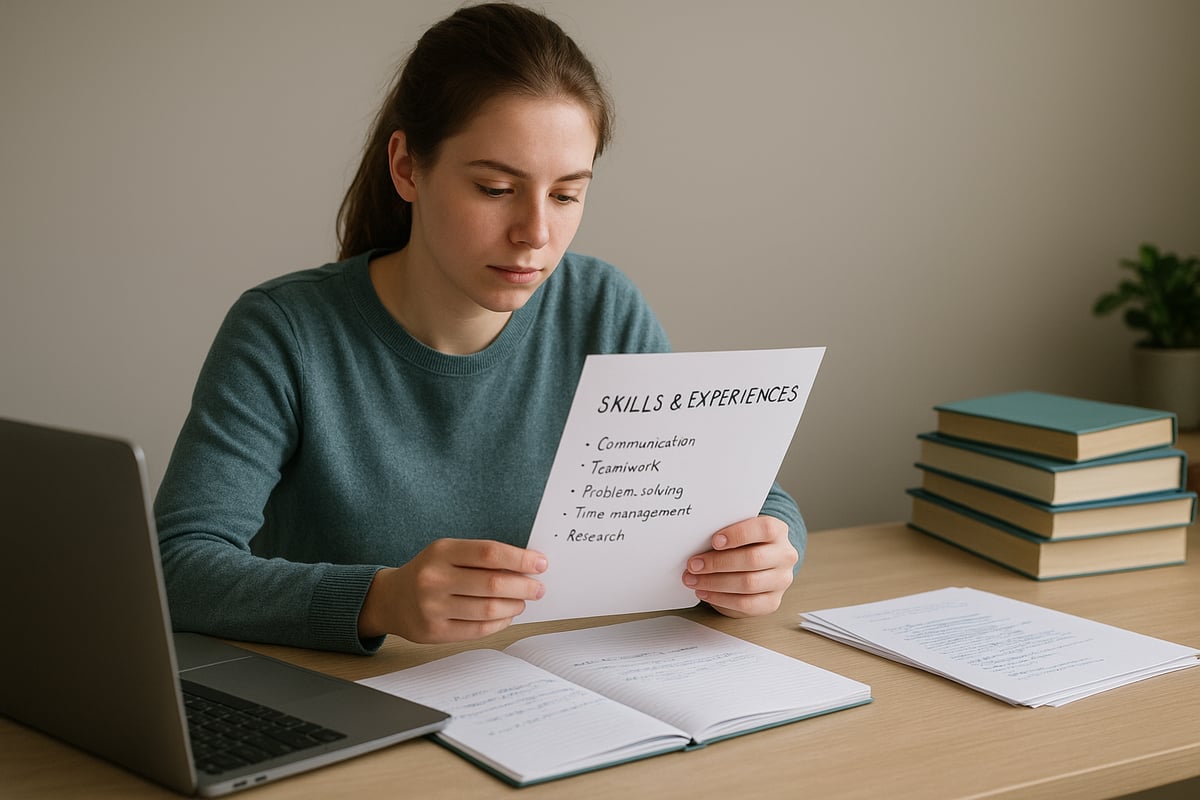
Start by listing all your activities, both in and out of the classroom. Have you completed school projects, volunteered at community events, participated in sports, cared for family members, or held part-time jobs? Each of these experiences contributes valuable skills, even if your CV with no experience feels sparse at first.
For example, babysitting is more than just a way to earn extra money. It demonstrates responsibility, time management, and empathy. Similarly, leading a group project at school shows you can organise, communicate, and collaborate with others. Volunteering at a local charity might highlight your initiative and customer service abilities.
Remember, every role, whether paid or unpaid, helps you build a skill set relevant to employers. In fact, 85% of graduate CVs that highlight transferable skills secure more interviews, according to competitor insight. When you approach your CV with no experience, focus on the abilities you have developed through these varied life experiences.
Presenting Skills Effectively on Your CV
To ensure your skills stand out, include a “Core Skills” or “Key Skills” section near the top of your CV with no experience. Use a bullet-point format for clarity and to make your CV more compatible with applicant tracking systems. Choose skills that match your target job, such as communication, problem-solving, digital literacy, adaptability, and leadership.
Action verbs are essential. Words like “organised,” “collaborated,” “initiated,” “supported,” and “achieved” give your skills impact and show your active contribution. Tailor your skills list to each application, prioritising those mentioned in the job description. This approach increases interview rates by 30%, according to competitor data.
For more detail on which skills are most valuable in 2026, see this Best skills for a CV guide. Selecting the right skills and presenting them clearly will significantly strengthen your CV, even without experience.
Real-Life Examples of Skills Sections
Translating your abilities into powerful CV content can set you apart. Here are some sample skills sections for different career paths:
- Customer Service: “Resolved customer queries during school fundraiser, demonstrating patience and negotiation skills.”
- IT Roles: “Developed coding skills through online courses and personal projects.”
- Creative Roles: “Produced digital artwork for school magazine, showing creativity and attention to detail.”
By framing your experiences in this way, you show employers the practical value you bring, even on a CV with no experience. Link your achievements back to the skills outlined earlier, ensuring consistency and credibility throughout your application.
Step 2: Choose the Right CV Format and Structure
Choosing the right format is crucial when preparing a CV with no experience. The structure you select can highlight your strengths, ensuring employers focus on your skills and potential rather than a lack of job history. In 2026, a modern, well-organised CV makes all the difference for students, graduates, and career changers.

Chronological vs. Skills-Based (Functional) CVs
When deciding on the best CV format, consider your experience level. A chronological CV lists education and work history in order, which suits those with consistent employment. However, for a CV with no experience, a skills-based or functional CV is more effective.
Here is a quick comparison:
| Format | Best For | Focus | Example Headings |
|---|---|---|---|
| Chronological | Some work history | Roles, dates, employers | Work Experience, Education |
| Skills-Based | No/limited experience | Skills, achievements, relevant traits | Key Skills, Projects |
A skills-based CV allows you to group achievements under relevant headings, such as “Project Management” or “Community Involvement.” This approach is increasingly popular for students and career changers in 2026. For more detailed strategies, you can consult the Recent Graduate CV guide, which is tailored for those building a CV with no experience.
How to Structure Your CV with No Experience
The structure of your CV with no experience is vital for making the right impression. Start with your contact details, followed by a personal statement that summarises your goals and strengths. Next, place a “Core Skills” section near the top to showcase your most relevant abilities.
Recommended order for a CV with no experience:
- Contact details
- Personal statement
- Core skills or key skills section
- Education (place this above experience if it is your main asset)
- Relevant experience (volunteering, projects, extracurriculars)
- Interests or hobbies (if space allows)
Instead of “Work Experience,” use thematic headings such as “Leadership Roles” or “Community Involvement.” This structure is proven to increase your chances of passing ATS filters by 40% and helps employers quickly see your potential.
Formatting Tips for 2026
Formatting is just as important as content for a CV with no experience. Keep your CV to one page if you are new to the workforce. Use clear, professional fonts and separate sections with bold headings. Bullet points make your achievements easy to scan.
Tips for 2026:
- Use consistent formatting for dates and section titles
- Avoid graphics or tables that may confuse ATS software
- Save your CV as a PDF with your name in the file title
- Proofread for grammar and spelling
Download free student and internship CV templates from trusted sources to ensure your layout is modern and effective. A well-formatted CV with no experience will help you stand out, even in a competitive market.
Step 3: Crafting a Powerful Personal Statement
A strong personal statement is the gateway to making your CV with no experience stand out in 2026. For many job seekers, this section is the first thing a recruiter reads, shaping their initial impression. Whether you are a student, school leaver, or career changer, a well-crafted statement can highlight your potential and set the tone for your entire CV.
The Purpose of a Personal Statement
Your personal statement is a concise summary at the top of your CV, even if you have no experience. It introduces who you are, what you can offer, and why you are applying. This section is your opportunity to immediately engage employers, showcasing your enthusiasm and relevant skills. According to competitor insight, 70% of UK employers look at the personal statement first, making it a crucial part of your application.
A compelling statement can transform your CV with no experience by focusing on your strengths and aspirations. It reassures employers that, while you may lack formal roles, you possess motivation and transferable skills. Presenting yourself clearly and confidently can make a memorable first impression.
How to Write an Engaging Personal Statement
To write a personal statement for a CV with no experience, keep it brief—three to five lines is ideal. Tailor your statement to each job, using keywords from the job description. Highlight your willingness to learn, adaptability, and any relevant skills you have developed outside of paid work.
Demonstrate enthusiasm and show how your values align with the employer’s mission. Avoid generic phrases and instead, focus on what makes you unique. For more in-depth advice, see the How to write a CV personal statement guide.
If you are unsure how to begin, start by listing your top skills and career goals. Then, combine these into a short, confident summary that reflects your personality and ambition.
Examples for Different Scenarios
- School leaver: Motivated and reliable school leaver seeking an entry-level role in retail. Strong communication and teamwork skills developed through volunteer work and sports.
- Graduate: Analytical and detail-oriented graduate with a passion for data analysis. Eager to contribute strong research and problem-solving skills to a dynamic team.
- Career changer: Experienced customer service professional transitioning to IT. Adaptable, quick learner with hands-on experience in digital platforms.
Each example shows how to position a CV with no experience by focusing on strengths, skills, and ambition. These statements are tailored, specific, and easy to adapt to your circumstances.
Common Mistakes to Avoid
Avoid vague statements that could apply to anyone, such as “hard-working” or “good team player.” Instead, be specific about your skills and goals. Do not repeat information from other sections of your CV with no experience.
Never exaggerate your achievements. Instead, ensure every claim in your personal statement is supported by evidence elsewhere in your CV. For example, if you mention leadership, provide a concrete example in your skills or experience section.
Link your personal statement to the rest of your CV with no experience to create a coherent and persuasive application.
Step 4: Maximising the Education and Qualifications Section
When writing a CV with no experience, your education becomes your strongest asset. Employers want to see what you have learned, how you have developed, and whether you have the potential to succeed in a new role. In a competitive job market, highlighting your academic background and related achievements can make a significant difference.
Why Education Matters Most with No Experience
For many job seekers, especially students and recent graduates, education is the main highlight on a CV with no experience. Employers use this section to gauge your knowledge, commitment, and readiness for the workplace. According to the Graduate Employment Statistics 2024, education remains a key factor in securing early-career opportunities.
Place your education section near the top of your CV. This ensures recruiters see your qualifications first. If you are a school leaver or recent graduate, your academic achievements can outweigh a lack of formal work history.
What to Include in the Education Section
A well-structured education section in your CV with no experience should cover:
- Degrees, diplomas, A-levels, GCSEs, or equivalent.
- Grades, honours, and thesis titles if relevant.
- Notable projects, coursework, or modules matching the job requirements.
- Awards, scholarships, or academic competitions.
Include the name of the institution, dates attended, and any distinctions. Listing relevant subjects or courses shows employers you have the right foundation for the role.
Showcasing Achievements and Extracurriculars
Achievements outside the classroom can make your CV with no experience stand out. Highlight extracurricular activities such as:
- Leadership roles in clubs or societies.
- Participation in competitions, debates, or conferences.
- Organising events or volunteer work linked to your studies.
For example, mention if you led a project, won a scholarship, or contributed to a school magazine. These experiences show initiative, teamwork, and communication skills—qualities valued by employers.
Including Practical Learning and Online Courses
In 2026, practical learning and online courses are highly regarded by employers. List MOOCs, certificates, or self-directed study that demonstrate your drive to learn. Examples include:
- Google Data Analytics Certificate
- Digital marketing workshops
- Coding bootcamps
If you are a school leaver or non-graduate, focus on apprenticeships, internships, or vocational training. Describe what you learned and how it prepares you for your target role. This approach ensures that your CV with no experience presents you as proactive and adaptable.
Step 5: Adding Experience—Even If It’s Not Paid Work
Securing your first job can feel daunting, especially when you have no experience on your CV. However, employers are interested in more than just paid roles. Showcasing a range of experiences, from volunteering to school projects, can make your CV stand out.
Types of Experience to Include
A strong CV with no experience draws on a range of activities, not just formal employment. Employers value initiative, so include:
- Volunteering at local charities or community projects
- Internships, even if short-term or unpaid
- Part-time jobs such as babysitting or tutoring
- School projects and leadership roles in clubs or societies
- Extracurricular activities like sports or music
Given that the proportion of graduates in full-time work drops to 59 per cent, demonstrating transferable skills from these experiences is more important than ever.
How to Present Non-Traditional Experience
Structure your CV with no experience by using clear, themed headings like “Voluntary Experience” or “Projects.” Highlight your achievements and the impact you made, rather than listing duties.
For example:
- “Organised a fundraising event for a local charity, improving event planning and teamwork skills.”
- “Completed a coding project for school, demonstrating problem-solving and digital literacy.”
This approach shows employers your ability to contribute, regardless of whether the experience was paid.
Highlighting Achievements and Results
Whenever possible, quantify your impact. This could mean stating how much money you raised, the number of people you led, or the results you achieved.
- “Raised £500 through a community bake sale.”
- “Managed a team of five students during a science competition.”
- “Increased social media followers for the school club by 20%.”
Using action verbs and specific examples helps your CV with no experience capture attention and demonstrate real value.
Integrating Experience with Skills
Link each experience back to the core skills employers seek. For instance, if you mention leadership in your skills section, support it with an example such as, “Coached a youth football team, developing planning and communication abilities.”
If you have limited experience, focus on quality over quantity. Group similar activities together under thematic headings to ensure your CV with no experience remains concise yet impactful.
Step 6: Tailoring and Optimising Your CV for 2026 Applications
Standing out with your CV with no experience is more important than ever in 2026. The job market is highly competitive, and recruiters receive hundreds of applications for each entry-level role. Recent reports have shown that graduate hiring has fallen by 8% since last year, making it vital to tailor your CV for every application. You must ensure that your CV with no experience speaks directly to the needs of each employer.
Why Tailoring Matters
Tailoring your CV with no experience is crucial because most employers now use Applicant Tracking Systems (ATS) to filter candidates. These systems scan for specific keywords and relevant skills, making a generic CV far less effective. By adjusting your CV with no experience for each job, you show employers you understand the role and are genuinely interested. Remember, tailored CVs are up to 50% more likely to lead to interviews.
How to Tailor Your CV for Each Role
Start by carefully reading the job description. Identify the main skills and qualities the employer is looking for, and reflect these in your CV with no experience. Use the same language and keywords found in the job ad, especially in your skills and personal statement sections. For example, if digital marketing is mentioned, highlight any related coursework or projects. Customising your CV this way demonstrates attention to detail and increases your chances of progressing.
Optimising for ATS and Recruiters
To ensure your CV with no experience gets through ATS filters, use standard section headings like ‘Skills’ and ‘Education’. Avoid graphics or tables, which can confuse the software. Use clear, professional fonts and save your file with your full name. Consistent formatting and logical order make your CV easier for recruiters to read, improving your chances of landing an interview.
Common Tailoring Mistakes to Avoid
Avoid copying and pasting entire job descriptions into your CV with no experience. Recruiters can spot this immediately, and it makes your application seem insincere. Do not overuse buzzwords without giving real examples. Each CV should be unique to the role; never send the same version to every employer. Personalisation is key to success.
Seeking Feedback and Professional Reviews
Ask teachers, mentors, or career advisors to review your CV with no experience before submitting it. For expert support and a free review, contact John Logan at John@johnloganbmc.co.uk. John Logan has decades of experience helping job seekers refine their CVs for the UK market. If you want tailored feedback and proven results, reach out to John@johnloganbmc.co.uk today.
Additional Tips and Resources for CV Success in 2026
Making your CV with no experience stand out requires attention to detail and some strategic extras. Consider adding a short list of interests or hobbies that demonstrate abilities such as teamwork, creativity, or problem-solving. Always use a professional email address and double-check that your contact details are up to date. References can be included or simply state “References available on request”.
Leveraging Cover Letters and LinkedIn Profiles
For every application, pair your CV with no experience with a tailored cover letter. This allows you to showcase your passion and provide further context for your skills. Optimise your LinkedIn profile to reflect your CV, as employers increasingly review online presence before interviews. Use LinkedIn to expand on projects and achievements that might not fit on your CV.
Free Templates and Further Reading
Access free CV templates from reputable job boards or university careers services to inspire your layout. Industry trends in 2026 show that standing out is essential, especially as graduate hiring has fallen by 8% since last year, according to a survey. Follow trusted career advice blogs for up-to-date guidance and keep refining your CV with no experience using these resources.
Staying Motivated During Your Job Search
Job hunting can be challenging, especially when creating a CV with no experience. Track your applications in a spreadsheet, follow up with employers, and learn from any rejections. Celebrate every small win, whether it’s an interview invitation or positive feedback. Volunteering or taking short courses can help you keep growing your skill set.
Direct Support from John Logan
If you need tailored support for your CV with no experience, contact John Logan at John@johnloganbmc.co.uk. John offers a free CV review and expert advice honed over decades in recruitment. Reach out to John@johnloganbmc.co.uk for personalised guidance, or email John@johnloganbmc.co.uk to unlock your potential and secure more interviews.
If you’re feeling unsure about how to turn your skills and experiences into a CV that gets noticed, you’re not alone—many jobseekers find this the toughest part of starting out. You don’t have to figure it out all by yourself. I’ve spent years helping people just like you confidently present their best selves to employers, even with little or no formal experience. If you want an expert, personal touch to make your CV stand out in today’s competitive job market, take a look at my Professional CV Writer UK Bespoke CV Writing Service for Results.