
Applying for jobs in 2025 can feel overwhelming, especially when many candidates are unsure about the difference between a cover letter and a CV. It is easy to blur the lines between these two documents, leading to confusion and missed opportunities.
Understanding the cover letter and CV differences is essential for anyone looking to stand out in today’s competitive market. Knowing when and how to use each document gives you a strategic edge.
This guide will walk you through clear definitions, main differences, surprising similarities, proper usage, common mistakes, and expert tips for success. Read on for practical advice to optimise your next job application.
What is a CV?
Understanding the differences between cover letters and CVs starts with the CV itself. CV stands for “Curriculum Vitae”, a Latin phrase meaning “course of life”. In the UK, Europe, and many global regions, a CV is the standard document for job applications. Its primary role is to present a comprehensive, factual record of your education, professional experience, and achievements.
A CV is required for almost all job applications in the UK, whether you are applying for a corporate role, an academic post, or an international opportunity. For example, academic CVs can easily extend to five or more pages, whereas standard UK CVs are typically two pages. According to TopCV, a CV is essential for 99% of UK job applications. Think of the CV as the foundation of your application, providing clear proof of your qualifications and experience.
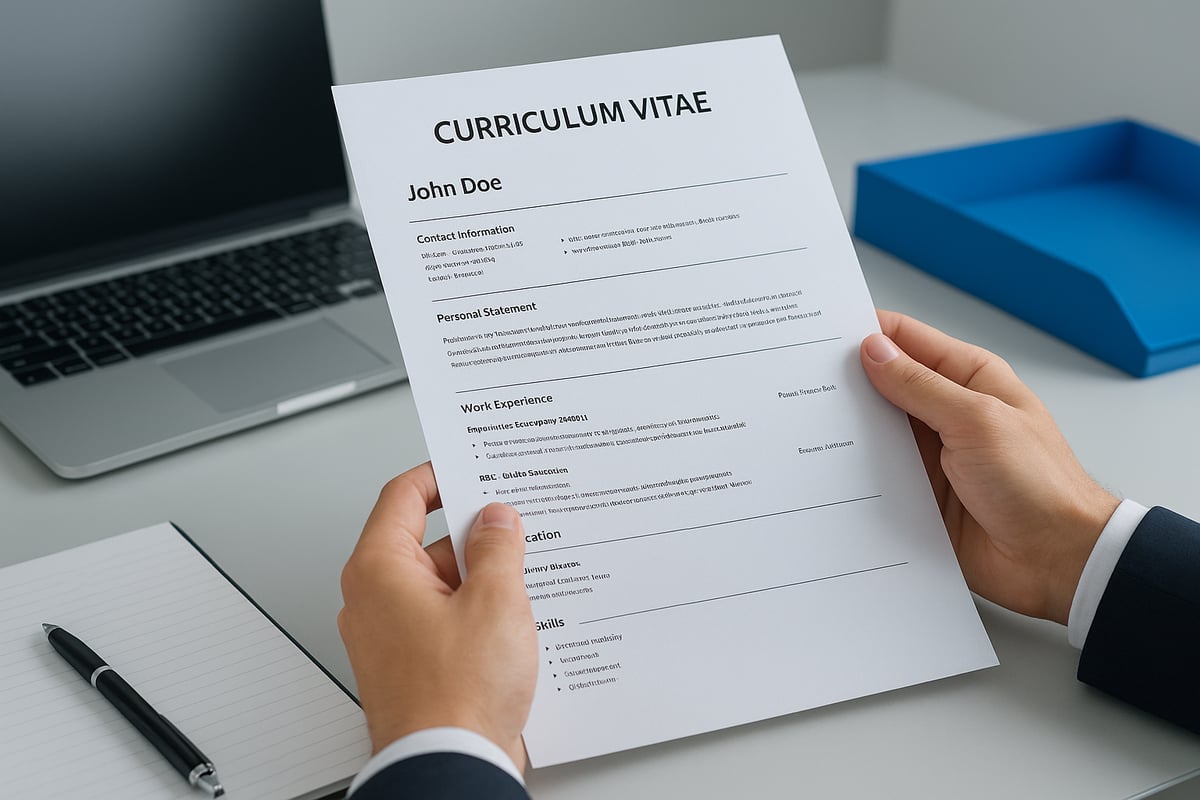
Definition and Purpose
A CV is designed to showcase your career journey in a structured, easy-to-read format. It should include sections such as:
Contact information
Personal profile or summary
Work experience
Education
Skills
Certifications
Publications (for academic/research roles)
Bullet points and clear headings help break up information, making it easy for both humans and applicant tracking systems (ATS) to scan your credentials. Quantifiable achievements, like “increased sales by 25%”, make your impact clear.
ATS-friendly formatting is now crucial, as 75% of CVs are rejected by these systems for poor structure. Tailoring your CV for each application, rather than using a generic template, is essential. For more on crafting a strong CV, see What makes a successful CV. This helps clarify the cover letter and CV difference by highlighting the CV’s factual, structured nature.
Typical Structure and Content
CVs are used in a wide range of settings, from academic and research positions to medical and international roles. In the UK, Europe, Asia, and Africa, employers expect a CV rather than a resume. For example, a research grant application will require an academic CV detailing publications and grants, while a business role might focus on work experience and skills.
The cover letter and CV difference is especially important to understand in the UK, where 90% of employers request a CV as the core document. Unlike a resume, which is shorter and more common in the US and Canada, a CV is detailed and comprehensive. Although CV formats evolve with technology and employer needs, they remain the centrepiece of most job applications.
When and Where CVs Are Used
The key argument in the cover letter and CV difference is that a CV is about breadth and factual accuracy. It is not a personal narrative or a persuasive pitch; it is a structured record of your professional and academic history. For example, you should list all relevant roles over the past 10 to 12 years, highlighting key responsibilities and achievements.
A well-structured CV significantly increases your chances of securing an interview. Employers rely on the CV to verify your qualifications and career progression, making it an indispensable part of any application.
What is a Cover Letter?
Job seekers often misunderstand a cover letter, yet it plays a pivotal role in the application process. While many focus on the cover letter and CV difference, the cover letter stands out as a unique, persuasive document.
It is not just an attachment—it is your personal introduction, helping you connect with employers on a more individual level. Understanding its purpose and how it complements your CV is essential for success in 2025-2026.

Definition and Purpose
A cover letter is a concise, one-page document that accompanies your CV when applying for jobs. The cover letter and CV difference is clear—a cover letter provides a personalised narrative, introducing you to the employer and explaining your motivation for applying.
Its main function is to persuade, not just inform. You use it to highlight why you are a strong fit for the specific role, addressing your enthusiasm and interest.
According to a LinkedIn survey cited by TopCV, 49% of hiring managers report that a strong cover letter has directly led to an interview. For example, candidates can use the cover letter to address a career break or share a specific motivation for joining a company.
The cover letter is optional, but it often becomes the deciding factor in competitive job markets.
Structure and Tone
The typical cover letter follows a clear structure: an introduction, a body that highlights your skills and fit, and a closing with a call to action. Unlike a CV, it is written in whole paragraphs and should reflect a persuasive, enthusiastic, and professional tone.
The cover letter and CV difference is further seen in style. While a CV is factual, a cover letter lets your personality shine through. Tailor the tone to the industry; for instance, keep it formal for law roles and more conversational for start-ups.
Most hiring managers expect a cover letter. Only 6% consider it unnecessary, according to TopCV. For a step-by-step approach to structure and tone, see this How to write a cover letter guide.
What to Include in a Cover Letter
A strong cover letter should always reference the job title and company. The cover letter and CV difference is especially clear in the content—you should highlight two or three achievements that are directly relevant to the role, explaining why they matter.
Share your motivation for applying and demonstrate how you align with our cultural fit. Whenever possible, address the letter to a specific person rather than using a generic greeting.
For example, you might write, “My experience managing a team of 10 aligns with your requirements.” End with a call to action, such as, “I look forward to discussing my application.” Tailored cover letters, supported by industry consensus, are proven to improve interview rates.
When and How to Use Cover Letters
Understanding the cover letter and CV difference also means knowing when to use each document. You should include a cover letter with your CV for most formal job applications, unless the employer specifically says otherwise.
Cover letters are particularly important for competitive positions and when you want to stand out. For example, you might send your CV as an attachment and place your cover letter in the body of an email.
Even if a cover letter is optional, including one often gives you an edge over other candidates. Employers see cover letters as a sign of genuine interest and effort, making them a valuable tool in your application strategy.
Key Differences Between a CV and a Cover Letter
Understanding the cover letter and CV difference is essential for anyone navigating the 2025-2026 job market. While both documents are integral to an application, they serve distinct purposes and are structured differently. Let us break down the main contrasts and how each supports your career goals.
Format and Length
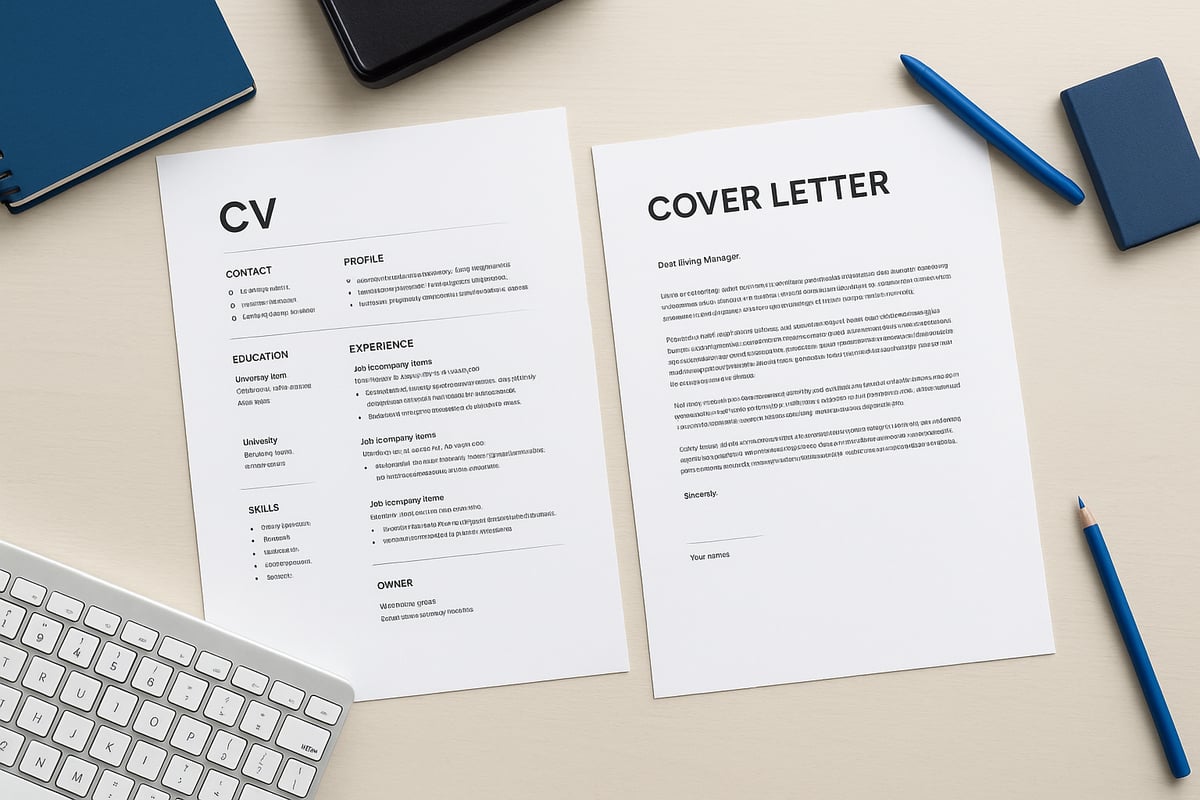
The most immediate cover letter and CV difference is their format and length. A CV typically spans two to three pages, especially for experienced professionals or academic roles, and uses bullet points, clear headings, and structured sections. In contrast, a cover letter is concise, usually limited to one page, and written in paragraphs.
Consider this example: an academic CV may list publications and research in detail, while the accompanying cover letter succinctly introduces the candidate’s motivation. Recruiters spend mere seconds scanning CVs, so clarity is paramount, while cover letters must be brief and direct.
Document | Typical Length | Format | Structure |
|---|---|---|---|
CV | 2–3 pages | Bullet points | Sectioned, factual |
Cover Letter | 1 page | Paragraphs | Narrative, flowing |
Each format is designed for a specific function, reinforcing the cover letter and CV difference.
Purpose and Function
The cover letter and CV difference is most pronounced in their core purpose. A CV answers the question, “What have you done?” by presenting your factual work history, education, and qualifications. The cover letter, however, tackles “Why does it matter to us?” by explaining your motivation, relevance, and fit for the specific role.
For instance, your CV might list your project management experience, but your cover letter would articulate why that experience aligns with the employer’s needs. This is why both documents are considered complementary, not interchangeable. For more on the value of cover letters, see Are cover letters important and why.
Content and Focus
Another key cover letter and CV difference lies in their content and focus. The CV provides a comprehensive record of education, work history, skills, certifications, and achievements. The cover letter, on the other hand, focuses on motivation and personality, demonstrating how you address the employer’s challenges.
For example, a CV might state that you managed projects, while the cover letter expands on the impact and relevance of those projects. According to a LinkedIn/TopCV survey, 49% of hiring managers have been persuaded by a strong cover letter, demonstrating its unique role in the application process.
Tone and Style
The tone and style further highlight the cover letter and CV difference. CVs adopt a formal, factual, and neutral tone, avoiding the use of personal pronouns. Cover letters, however, are conversational, persuasive, and tailored, using “I” and “you” to build a personal connection.
For example, while a CV lists achievements factually, the cover letter explains the meaning behind them and shows enthusiasm for the role. This humanises your application and helps employers connect with your profile.
Use in the Application Process
In the application process, the CV serves as the foundation, providing a comprehensive record of your professional journey. The cover letter serves as the introduction and pitch, setting the stage for the CV that follows. Typically, the cover letter comes first, either in the body of an email or as the first attachment, followed by the CV.
Both documents are required for a complete application, and together, they maximise your chances of success. Understanding the cover letter and CV difference ensures you present a compelling, well-rounded candidacy.
Similarities and How They Work Together
Understanding the cover letter and CV difference is only half the story. Equally important is how these documents support each other to create a strong first impression. Both are essential tools for showcasing your suitability for a role and maximising your chances of success.
Overlapping Elements and Functions
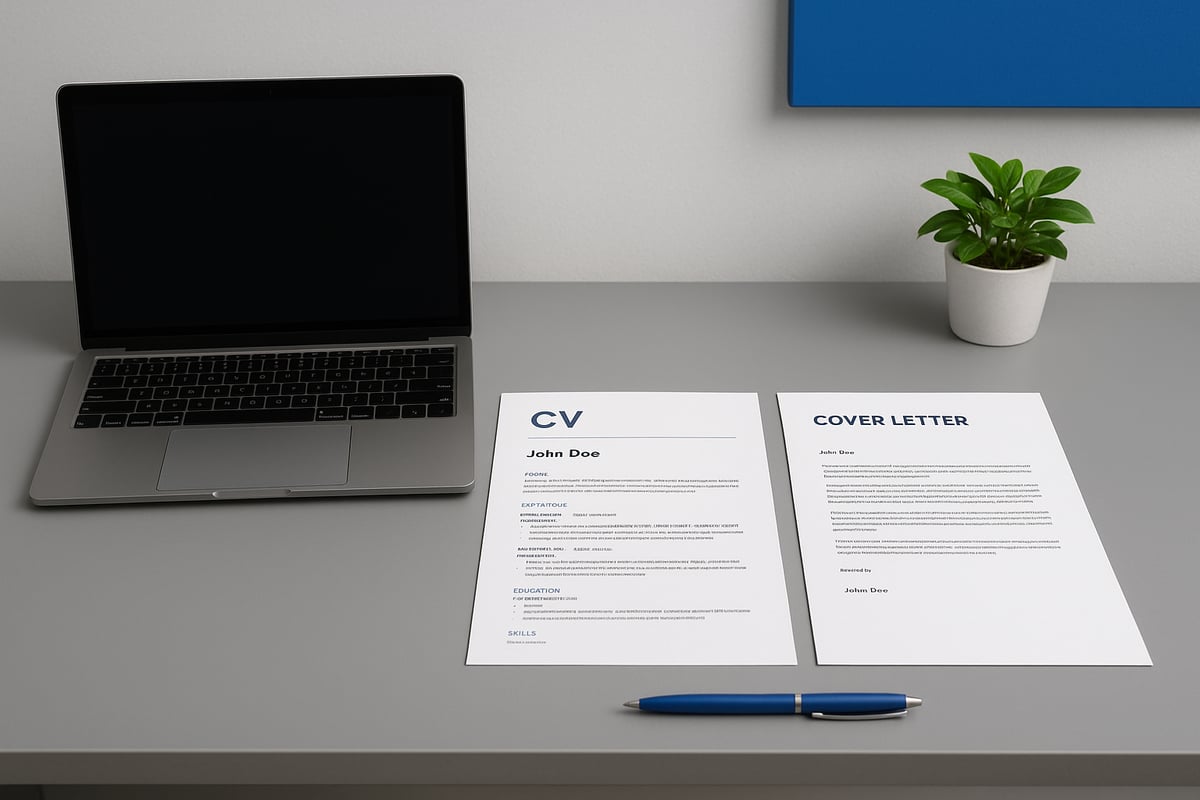
Both a CV and a cover letter aim to persuade the employer that you are the right candidate. They showcase achievements, experience, and skills in a professional, tailored manner. For example, leadership experience might appear in both documents, but each frames it differently.
Consistency is vital. Ensure your tone, style, and facts align across both documents. According to TopCV, applications that combine a strong CV and cover letter form a holistic candidate profile. When considering the cover letter and CV difference, remember both must be error-free and tailored to each job.
Aspect | CV | Cover Letter |
|---|---|---|
Format | Structured, bullet points | Narrative, paragraphs |
Content | Achievements, skills | Motivation, relevance |
Tone | Formal, factual | Persuasive, personal |
How They Complement Each Other
The CV provides the evidence, while the cover letter tells the story behind your achievements. For instance, your CV might list “Project Manager,” but your cover letter explains the impact of your projects and your motivation for applying.
Employers expect both documents for a complete application. Submitting both increases your likelihood of progressing to interview stage. If you want to explore these distinctions further, see this detailed CV vs resume: key distinctions guide.
The cover letter and CV difference is most powerful when each document adds unique value.
Common Misconceptions
A frequent error is mistaking one document for the other or simply repeating CV content in the cover letter. Copying and pasting bullet points is a missed opportunity. Each should add something new, which is why understanding the cover letter and CV difference is crucial for success.
Practical Guide: When and How to Use Each Document in 2025-2026
In 2025, understanding the cover letter and CV difference is essential for anyone navigating the UK job market. Each document plays a pivotal role, and knowing when and how to use them can significantly impact your chances of success. Let us break down the practical steps to optimise your application.
When to Use Both vs. One
For most UK job applications in 2025-2026, both a CV and a cover letter are required. This is especially true for graduate schemes, academic roles, and competitive positions. Including both documents demonstrates your professionalism and attention to detail.
There are exceptions. At job fairs or during quick online submissions, you may only need to provide a CV. Internal referrals can sometimes bypass the cover letter, but this is rare. Remember, the cover letter and CV differ in their unique functions: the CV showcases your credentials, while the cover letter delivers your narrative and motivation.
Research shows 90% of UK employers expect both documents. Even if a cover letter is optional, submitting one can set you apart from other candidates and boost your interview chances.
Order of Submission and Best Practices
Submitting your application in the right order reflects your understanding of the cover letter and CV difference. The cover letter should come first, either as the body of your email or as the first attachment, followed by your CV. This sequence allows employers to read your tailored introduction before reviewing your qualifications.
Customise both documents for each job. Address your cover letter to the hiring manager and adapt your CV to include keywords from the job description. ATS systems often scan both, so ensure your formatting and content are optimised. For step-by-step guidance on persuasive cover letters, see this How to Create a Compelling Cover Letter in 2025 article.
Consistency and relevance across both documents will increase your chances of passing digital and human screening.
Common Mistakes and How to Avoid Them
Misunderstanding the cover letter and CV difference leads to frequent errors. Common mistakes include submitting only a CV, using a generic or copy-pasted cover letter, and repeating CV content verbatim in the cover letter. Not tailoring your documents or making formatting errors can also harm your application.
To avoid these pitfalls:
Always submit both documents unless instructed otherwise
Personalise each application
Use the hiring manager’s name instead of generic greetings
Proofread carefully
Customised, well-presented applications consistently outperform generic ones. Recognising the cover letter and CV difference and applying best practices will help you stand out in 2025.
CV vs Cover Letter vs Resume: International Differences and FAQs
Understanding the global job application landscape is crucial for anyone seeking opportunities in 2025-2026. The cover letter and CV difference becomes even more significant when you consider the international expectations around terminology and document style.
CV vs Resume: Key Distinctions
A CV, or Curriculum Vitae, is the standard document for job applications in the UK, Europe, and academia. It is typically two or more pages, offering a detailed account of your education, work experience, and achievements. In contrast, a resume is the norm in the US and Canada, usually limited to one page and tailored specifically for each role.
Here is a quick comparison:
Feature | CV (UK/Europe) | Resume (US/Canada) |
|---|---|---|
Length | 2+ pages | 1 page |
Detail | Comprehensive | Selective |
Use | All roles, academia | Industry roles |
Focus | Career history | Skills and achievements |
UK employers expect a CV to follow certain conventions. If you want to ensure your CV meets modern standards, review the 6 Universal Rules for Writing Your CV. Understanding these conventions is a vital part of mastering the cover letter and cv difference.
Where the Cover Letter Fits In
A cover letter is required in most international applications, whether you use a CV or a resume. It acts as the narrative introduction, highlighting your motivation and fit for the specific role. For global job seekers, the cover letter bridges the gap between the factual CV or resume and your personal story.
Employers worldwide expect a cover letter as part of a comprehensive application, especially for competitive positions.
Frequently Asked Questions
Can you use a CV as a cover letter? No, they are separate documents with distinct purposes. Is a resume the same as a CV? Not in the UK or Europe. Which comes first: cover letter or CV? Always the cover letter.
Does a CV include a cover letter? No, each is a standalone document. For example, a graduate wondering if one document is enough will find that applications missing any required part are often rejected.
Statistically, 80% of US employers prefer resumes, while 90% of UK employers request a CV. To avoid costly mistakes, always check local employer expectations. Grasping the cover letter and CV difference helps prevent errors and ensures your application stands out.
Expert Tips for Writing CVs and Cover Letters in 2025-2026
Writing a successful job application in 2025-2026 means understanding the cover letter and CV difference and applying expert techniques for both documents. By focusing on clarity, structure, and personalisation, you can ensure your application stands out in a competitive market.
Writing a Strong CV
To master the cover letter and CV difference, start by quantifying your achievements. Use figures and data, such as “Increased sales by 30%,” to provide measurable results. Structure your CV with clear headings and bullet points, and maintain a simple formatting style for Applicant Tracking Systems (ATS).
Prioritise relevant, recent experience at the top. Proofread carefully for grammar and consistency. Tailor each CV to the specific job by matching keywords from the job description. For more on current best practices, see the Top 7 CV Writing Trends for 2025.
Quantify achievements with data
Use clear, ATS-friendly formatting
Customise content for each application
Proofread for accuracy
A well-crafted CV not only demonstrates your qualifications but also improves your chances of progressing to an interview.
Writing a Standout Cover Letter
Understanding the cover letter and CV difference means knowing that your cover letter is your personal pitch. Personalise it for each role, referencing the job title and key requirements. Highlight two or three achievements from your CV and explain their relevance to the employer.
Maintain an enthusiastic yet professional tone, demonstrating genuine interest in the company. Limit your cover letter to three or four concise paragraphs. For step-by-step guidance, explore How to Write a Modern Cover Letter.
Address the letter to the hiring manager
Reference specific achievements
Show enthusiasm for the company
End with a clear call to action
A tailored, compelling cover letter helps you stand out from other applicants.
Community Insights and Trends for 2025
In 2025, the cover letter and CV difference is shaped by new trends. AI-driven screening tools are becoming standard, meaning both documents must be keyword-rich and personalised. Storytelling and authenticity are increasingly valued, according to online communities and industry experts.
Staying updated with these trends ensures your applications remain competitive and effective.
Now that you know precisely how a CV and cover letter work together to boost your job applications, you might be wondering how to put these insights into action for your own career. If you want your documents to stand out in 2025-2026 and truly reflect your strengths, working with a seasoned professional can make all the difference. I’ve helped countless clients across the UK create bespoke, high-impact CVs and cover letters that open real doors. If you’re ready to elevate your applications and see measurable results, explore my Professional CV Writer UK Bespoke CV Writing Service for Results today.
UK Government Careers Advice (National Careers Service)
LinkedIn Career Blog – How to Make Your Resume Stand Out