

Transitioning from military service to civilian employment represents one of the most significant career challenges veterans face. An army resume sample serves as an essential reference point for understanding how to translate operational experience, leadership roles, and technical expertise into language that civilian recruiters and hiring managers genuinely understand. The difficulty lies not in the quality of your experience, but in the presentation: military terminology, rank structures, and operational frameworks rarely translate directly into the commercial sector without careful adaptation. Whether you served in the British Army for three years or three decades, crafting a CV that showcases your value proposition requires strategic thinking, precise language, and a deep understanding of what employers outside the armed forces actually seek. Many service leavers also benefit from specialist Ex-Military CV support designed specifically for military-to-civilian career transitions.
Understanding the Fundamental Differences Between Military and Civilian CVs
Military service records and career documentation follow a completely different structure from civilian CVs. Your personal file contains comprehensive details about deployments, training courses, qualifications, and performance reports, but this format doesn’t align with how commercial organisations evaluate candidates.
Civilian employers typically spend between 6 and 30 seconds on an initial CV scan. They’re looking for immediately recognisable job titles, quantifiable achievements, and relevant skills that match their specific vacancy. Military ranks, unit designations, and operational codes mean nothing to most HR professionals.
Civilian employers assess CVs very differently from the military. They focus on measurable achievements, commercial impact, recognisable job titles and transferable skills rather than duties, postings or rank structures. Translating military experience into language that employers immediately understand is essential if you want your experience to resonate outside the armed forces.
The most effective army resume sample demonstrates how to bridge this gap systematically. Your CV should maintain the professionalism and attention to detail expected in military service whilst adopting the language and priorities of civilian business.
Translating Military Ranks Into Civilian Job Titles
One critical aspect often overlooked in basic army resume sample documents is how to present rank and responsibility level. Simply stating you were a Sergeant or Warrant Officer provides no context for civilian readers.
Instead, translate your rank into recognisable management levels. A Section Commander typically managed 8-12 personnel, equivalent to a Team Leader or Supervisor. A Company Sergeant Major oversaw 100-120 soldiers, comparable to an Operations Manager. A Commanding Officer held responsibilities similar to a Senior Manager or Director.
This translation requires thoughtful consideration of your actual responsibilities, not just your rank. Two soldiers holding the same rank might have vastly different scopes depending on their role, unit, and operational context.
Crafting Achievement-Focused Content for Your Army Resume Sample
Military personnel excel at following procedures and completing tasks, but civilian CVs demand a different emphasis. Your CV must showcase what you achieved, not just what you did.
The STAR method (Situation, Task, Action, Result) provides an excellent framework for converting military experience into achievement statements. However, many army resume sample documents fail to emphasise the Result component sufficiently.
Weak example: “Responsible for vehicle maintenance across the squadron”
Strong example: “Managed preventative maintenance programme for 45 vehicles, achieving 98% operational availability whilst reducing breakdown incidents by 34% over 18 months”
The second example quantifies the scope (45 vehicles), demonstrates performance (98% availability), and shows improvement (34% reduction). These metrics matter enormously to civilian employers.
Quantifying Military Achievements Effectively
Numbers provide credibility and scale. Review your service history and identify quantifiable elements across different categories:
Military achievements can usually be quantified through team leadership, budget responsibility, project delivery, operational performance and training outcomes. Providing measurable evidence of your contribution helps employers understand both the scale of your responsibilities and the results you achieved.
Every army resume sample worth referencing includes specific numbers. If you can’t recall exact figures, reasonable estimates (clearly marked as approximate) prove more valuable than vague descriptions.
When working with a professional CV writer, these achievement statements undergo careful refinement to ensure they resonate with civilian hiring managers whilst maintaining complete honesty and accuracy.
Addressing Technical Skills and Qualifications Translation
Military service provides extensive technical training, but civilian employers don’t automatically understand military qualifications. Your army resume sample must translate specialisations into recognised industry standards.
A Class 1 HGV licence remains directly transferable. Combat Medical Technician training aligns with civilian paramedic or emergency medical qualifications. Signals specialists possess IT, telecommunications, and network security skills highly valued across multiple sectors.
Many military qualifications and specialisms have direct civilian applications, but employers often need these connections explained clearly. Logistics experience translates naturally into supply chain and operations roles, intelligence work develops analytical and risk assessment skills, communications appointments strengthen project management and stakeholder engagement capabilities, whilst engineering roles often transfer directly into technical and maintenance positions. Explaining these relationships helps employers recognise the value of your military background.
Don’t assume employers will make these connections independently. Your CV must explicitly state how your military specialisation provides value in civilian contexts.

Additionally, highlight any civilian-recognised qualifications gained during service: NVQs, City & Guilds certifications, degree programmes, or professional memberships. These credentials bridge the military-civilian divide effectively.
Structuring Your CV for Maximum Impact
The optimal structure for an army resume sample differs from traditional military documentation. Civilian CVs typically follow this format:
Professional Profile – A compelling 4-6 line summary positioned immediately below your contact details. This section must capture your value proposition succinctly, highlighting your years of service, key specialisations, and target civilian sector.
Key Skills – A bullet-pointed list of 8-12 relevant competencies tailored to your target roles. Balance hard skills (technical abilities, certifications) with soft skills (leadership, communication, problem-solving).
Professional Experience – Your career history presented in reverse chronological order. Each role requires a brief context statement followed by 4-6 achievement bullets.
Education and Qualifications – All relevant training, certifications, and educational achievements, with military qualifications translated into civilian equivalents where possible.
Optimising Length and Format
British civilian CVs typically span two pages. Military careers often involve numerous postings, courses, and temporary duties, but your CV shouldn’t list everything.
Focus on the most recent 10-15 years unless earlier experience directly supports your target role. Consolidate similar positions held at different units rather than listing each posting separately.
Presentation plays an important role in how your CV is received. Clear section headings, consistent formatting, professional fonts and a logical structure make it easier for recruiters to assess your experience quickly. Simplicity also improves compatibility with Applicant Tracking Systems and ensures your achievements remain the focus of the document.
The visual presentation matters significantly. A cluttered, poorly formatted army resume sample undermines the professionalism your military service represents.
Tailoring Your Army Resume Sample for Specific Sectors
Different civilian sectors value different aspects of military experience. A generic CV rarely succeeds as effectively as one tailored to your target industry.
Security and Emergency Services
Former military personnel transition naturally into police forces, fire services, private security, and emergency response organisations. These sectors understand military backgrounds and value discipline, physical fitness, and crisis management capabilities.
Emphasise operational experience, decision-making under pressure, security clearances held, and any specialist training (close protection, counter-terrorism, emergency response).
Logistics and Supply Chain
Military logistics provides excellent preparation for civilian supply chain roles. Highlight experience managing complex inventories, coordinating multi-location operations, and maintaining equipment readiness under challenging conditions.
Quantify the scale of operations managed: number of vehicles maintained, value of inventory controlled, personnel supervised, or geographical areas covered.
Project Management and Operations
Military planning and operational delivery align closely with civilian project management. Reference experience coordinating multi-phase operations, managing diverse stakeholder groups, working within strict timeframes and budgets, and adapting plans to changing circumstances.
Consider obtaining civilian project management certifications (PRINCE2, APM, Agile) to strengthen your credentials further. These qualifications signal your commitment to civilian professional development.
Different sectors place value on different aspects of military experience. Security organisations often focus on operational expertise and security clearances, logistics employers value planning and supply chain management, whilst project management and engineering roles prioritise coordination, technical knowledge and delivery capability. Tailoring your CV to emphasise the most relevant strengths significantly improves its effectiveness.
When drafting your CV personal statement, ensure it speaks directly to your target sector rather than offering generic military experience descriptions.
Common Pitfalls in Army Resume Sample Documents
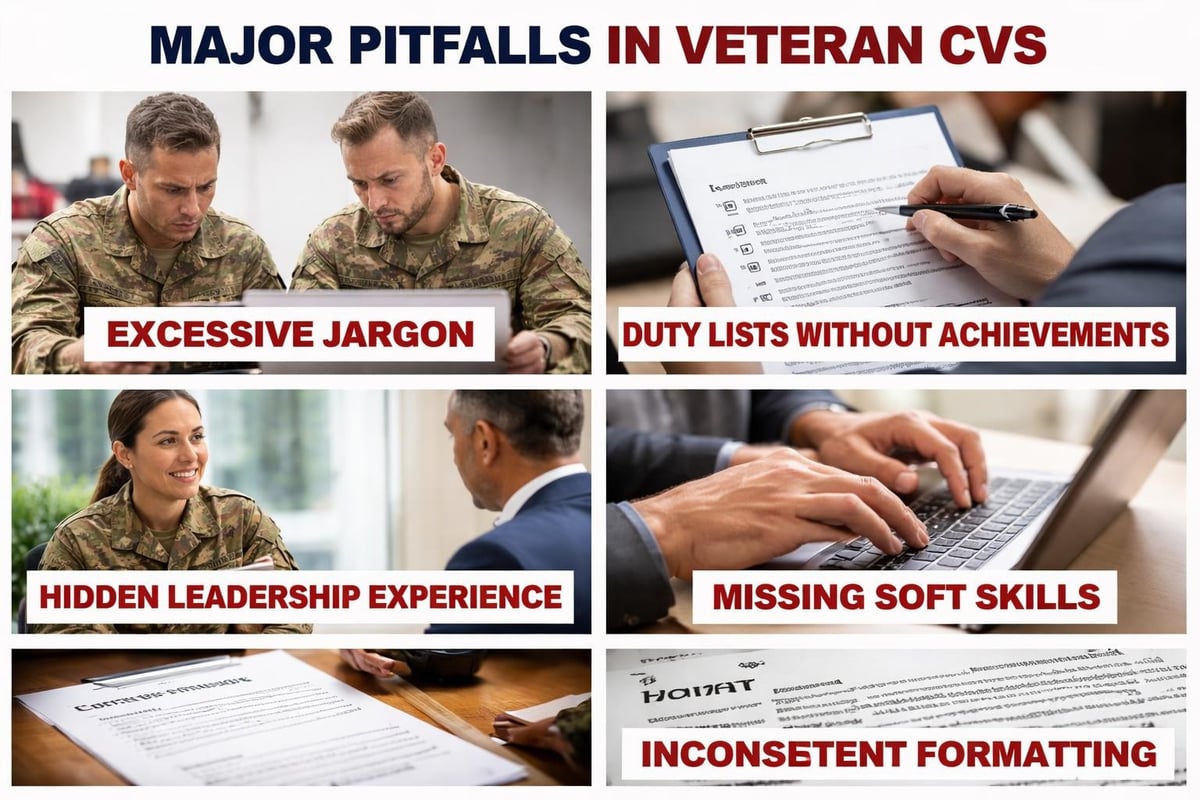
Many veterans struggle with specific aspects of CV creation that undermine otherwise strong applications. Understanding these common mistakes helps you avoid them.
Excessive military jargon – Acronyms, unit designations, and operational terminology confuse civilian readers. Every army resume sample should be comprehensible to someone with zero military knowledge.
Duty-focused rather than achievement-focused – Listing responsibilities tells employers what you were supposed to do, not what you actually accomplished. Focus ruthlessly on outcomes and results.
Underselling leadership experience – Many veterans downplay their management responsibilities. If you led teams, managed budgets, or coordinated operations, these represent significant leadership credentials.
Ignoring transferable soft skills – Military service develops resilience, adaptability, communication skills, and problem-solving abilities. These competencies matter enormously but often go unstated.
Formatting inconsistencies – Inconsistent date formats, varied bullet styles, or changing tenses create an unprofessional impression that contradicts military attention to detail.
Addressing Employment Gaps and Career Changes
Some veterans worry that military service creates unexplained gaps or makes career changes appear dramatic. Address these concerns proactively.
Military service isn’t a gap; it’s employment. Present it as such, using job-title translations that clearly convey your role. If you’re changing sectors entirely, your professional profile must explain this transition explicitly and positively.
If you’ve undertaken any civilian work, volunteering, or professional development during career transition periods, include these activities to demonstrate ongoing engagement with the civilian employment market.
Supplementing Your CV With Essential Application Documents
No army resume sample exists in isolation. Your job application package requires additional supporting documents that strengthen your candidacy significantly.
A bespoke cover letter addresses the specific role and organisation, explaining why your military background provides relevant value. Generic cover letters achieve nothing; tailored letters that reference the job description and company objectives demonstrate genuine interest and effort. Each package I provide includes two bespoke cover letters carefully crafted to support your target applications, with additional letters available as required.
LinkedIn profiles represent increasingly important selection tools. Recruiters search LinkedIn actively, and a well-optimised profile significantly increases your visibility. Ensure your LinkedIn presence mirrors your CV in content whilst taking advantage of the platform’s multimedia capabilities to showcase commendations, qualifications, and recommendations.
References matter particularly for veterans. Where possible, include civilian references even if from voluntary roles or professional development contexts. If only military references are available, provide context about their current civilian position or explain their military rank in recognisable terms.
Adapting Federal Army Resume Sample Formats for UK Applications
Some veterans research US military resume guidance and encounter federal resume formats. These documents, exemplified by resources like the, follow specific requirements for American federal government positions.
British civilian CVs differ substantially from US federal resumes. Federal formats run 4-5 pages and include extensive detail about every position, precise duty hours, supervisor contact information, and comprehensive salary history. UK employers find this approach excessive and off-putting.
Maintain the two-page convention for British applications. Focus on achievements rather than comprehensive duty lists. Omit salary history unless specifically requested. Provide references upon request rather than including detailed referee information initially.
The core principle of translating military experience into civilian language remains constant across formats, but structural expectations vary significantly between US federal positions and UK commercial roles.
Leveraging Professional Support for Career Transition Success
Creating an effective army resume sample that genuinely opens doors requires understanding both military experience and civilian recruitment practices. Many veterans benefit enormously from professional CV writing support during this critical transition.
Professional services provide an objective external perspective, identifying strengths you might overlook and translating experience into compelling commercial language. This consultative process examines your complete career journey, understands your target roles, and crafts positioning that resonates with civilian hiring managers.
The investment proves particularly valuable when you consider the cost of prolonged job searches or accepting roles below your capability level. A professionally written CV typically pays for itself many times over through faster placement and stronger salary negotiation positions.
When selecting CV support, ensure the writer understands military backgrounds specifically and offers a genuinely bespoke service rather than template-based approaches. The consultation should be detailed and collaborative, with opportunities to refine drafts until the final document authentically represents your value proposition.
Frequently Asked Questions
How long should my army resume sample CV be?
British civilian CVs should typically span two pages. Military careers often involve numerous positions and qualifications, but conciseness matters more than comprehensiveness. Focus on the most recent 10-15 years and most relevant achievements rather than cataloguing every posting, course, or temporary duty. If you have extensive experience, consolidate similar roles and prioritise quality over quantity. Employers spend minimal time on initial CV reviews, so impactful two-page documents outperform exhaustive longer versions.
Should I include all my military qualifications on my CV?
Include qualifications that hold civilian relevance or demonstrate transferable skills. Security clearances, driving licences, technical certifications, and formal educational qualifications definitely belong on your CV. Internal military courses with no civilian equivalent might be excluded unless they demonstrate relevant competencies. When listing military qualifications, translate them into civilian language wherever possible. For example, instead of listing a specific military course code, describe it as “Advanced Leadership and Management Training” or “Technical Engineering Qualification equivalent to NVQ Level 3.”
How do I explain operational deployments to civilian employers?
Present deployments as project assignments or operational roles with specific objectives, timeframes, and outcomes. Focus on achievements delivered, challenges overcome, and skills demonstrated rather than geographical locations or military operations. For example: “Led 12-person team delivering critical infrastructure assessment across multiple sites, completing comprehensive evaluation 3 weeks ahead of schedule despite challenging conditions.” This approach emphasises leadership, project delivery, and performance without requiring military operational knowledge.
What if I’m changing sectors completely from my military specialisation?
Career change CVs require a strong emphasis on transferable skills rather than technical specialisations. Your professional profile must explicitly acknowledge and explain the sector change, demonstrating awareness and enthusiasm for your target field. Highlight any relevant civilian qualifications, volunteering, or professional development undertaken in preparation. Emphasise universal competencies like leadership, problem-solving, adaptability, and communication that apply across all sectors. Consider how your military experience provides unexpected advantages in your target field and articulate these connections clearly.
Should I mention reasons for leaving military service?
Brief, positive explanations work best. Common acceptable reasons include “Career transition into civilian sector,” “Completion of service commitment,” or “Seeking new professional challenges in [target sector].” Avoid lengthy explanations or negative comments about military service. Your CV should focus on what you offer employers, not why you left previous positions. If asked about transition reasons during interviews, prepare honest, professional responses that emphasise positive career development rather than problems or dissatisfaction.
Maximising Your CV’s Performance in Applicant Tracking Systems
Modern recruitment increasingly relies on Applicant Tracking Systems (ATS) that scan, parse, and rank CVs before human review. Your army resume sample must satisfy both technological systems and human readers.
ATS software searches for keywords matching the job description. Review target vacancies carefully and incorporate relevant terminology naturally throughout your CV. If the role requires “stakeholder management,” ensure this exact phrase appears in your key skills or achievement statements if genuinely applicable.
Applicant Tracking Systems look for relevant keywords, recognised section headings and clear formatting. Reviewing job descriptions carefully and incorporating appropriate terminology naturally throughout your CV improves visibility whilst maintaining readability for human recruiters. The strongest CVs balance ATS optimisation with compelling, achievement-focused content.
However, don’t sacrifice readability for ATS optimisation. Many CVs pass ATS screening but fail to impress human reviewers due to keyword-stuffed, awkward language. Balance remains essential.
Testing your CV through free ATS checkers provides useful feedback, though these tools vary in accuracy. The most reliable approach involves having your CV reviewed by recruitment professionals who understand both ATS requirements and effective civilian CV construction.
Building Your Civilian Professional Brand Beyond the CV
Your army resume sample CV represents just one element of your professional brand. A successful career transition requires broader strategic positioning.
LinkedIn optimisation extends your reach significantly. Recruiters actively search LinkedIn for candidates with military backgrounds and specific skill sets. An incomplete or poorly optimised profile wastes this opportunity. Your headline should immediately convey your target civilian role rather than military rank. Your summary should mirror your CV professional profile whilst taking advantage of the longer format to provide additional context.
Networking proves invaluable during a career transition. Attend industry events, join professional associations relevant to your target sector, and connect with other veterans who’ve successfully transitioned. Many organisations actively seek veteran talent and participate in military hiring initiatives.
Consider volunteering or project work in your target sector while job searching. This approach demonstrates commitment, builds civilian references, provides recent relevant experience, and expands your professional network. Even unpaid work adds credibility to career change narratives.
Professional development through courses, certifications, or qualifications signals serious intent to civilian employers. Research qualifications valued in your target sector and invest strategically in credentials that strengthen your positioning.
Sector-Specific Guidance for Common Veteran Career Paths
Different civilian sectors require tailored approaches to CV presentation and application strategy. Understanding these nuances improves outcomes significantly.
Construction and Engineering
The construction sector values military engineering experience highly. Emphasise project management capabilities, technical qualifications, health and safety awareness, and experience managing teams under challenging conditions. Obtain CSCS cards and relevant civilian construction qualifications. Highlight any infrastructure projects, building work, or facilities management experience from military service.
Transport and Logistics
Logistics roles suit military backgrounds exceptionally well. Quantify the scale and complexity of supply chains managed, fleet sizes maintained, or geographical areas covered. Civilian logistics employers value planning skills, attention to detail, and ability to maintain operations under pressure. Consider CIPS qualifications or transport management certifications to strengthen applications.
Technology and Cybersecurity
Military signals, communications, and intelligence personnel possess skills in high demand across technology sectors. Translate military systems experience into civilian technology terminology. Highlight security clearances, problem-solving capabilities, and technical certifications. The technology sector values continuous learning, so demonstrate ongoing professional development through courses, certifications, or self-directed learning.
Education and Training
Military instructors and training specialists transition effectively into civilian learning and development roles. Emphasise curriculum development, performance assessment, competency-based training delivery, and the ability to adapt teaching methods to diverse learners. Consider civilian teaching qualifications or training certifications to strengthen positioning.
Understanding Civilian Recruitment Timescales and Processes
Military recruitment follows structured, predictable timescales. Civilian hiring varies enormously by sector, organisation size, and role level.
Some positions fill within weeks; others remain open for months. Don’t interpret extended processes as rejection or disinterest. Civilian organisations often juggle recruitment alongside other priorities, leading to delays.
Civilian recruitment processes often involve multiple stages, including CV screening, initial conversations, formal interviews, assessments and reference checks. Timelines vary significantly between employers, so maintaining several active applications simultaneously is often the most effective approach during a career transition.
This process might span 4-12 weeks, depending on organisation efficiency and role complexity. Maintain multiple applications simultaneously rather than waiting for outcomes from individual applications.
Follow up professionally if you haven’t heard back within stated timeframes, but avoid appearing desperate or demanding. A polite email expressing continued interest and requesting process updates strikes the appropriate balance.
Understanding that civilian recruitment operates differently from military selection processes reduces frustration and helps maintain perspective during your transition journey.
As a former Royal Navy veteran who successfully transitioned into civilian leadership and business ownership, I understand the challenges service leavers face when presenting military experience to civilian employers. My approach focuses on translating achievements, leadership responsibilities and specialist expertise into language that recruiters immediately understand and value.
You can also book a consultation to discuss your career goals and military-to-civilian transition requirements.
Translating military service into a compelling civilian CV requires strategic thinking, precise language, and deep understanding of what commercial employers genuinely value. The most effective army resume sample documents balance military professionalism with civilian communication styles, quantify achievements clearly, and position veterans confidently for their next career phase. If you’re navigating this transition and want expert support crafting a CV that truly opens doors, John Logan Consulting and Mentoring provides completely bespoke, consultative CV writing services. With decades of recruitment experience and a proven track record helping clients across all sectors, I’ll work with you to showcase your military achievements in language that civilian employers understand and value, typically delivering a powerful two-page CV that positions you competitively for your target roles.