

Transitioning from military service to civilian employment represents one of the most significant career challenges faced by service leavers across the United Kingdom. The army resume format differs fundamentally from standard civilian CVs, requiring careful translation of military terminology, ranks, and operational achievements into language that resonates with civilian hiring managers. Understanding how to bridge this gap between military and civilian professional communication is essential for securing interviews and advancing your post-service career. Whether you’ve served in the British Army, Royal Navy, Royal Air Force, or Royal Marines, mastering the civilian resume format ensures your valuable experience receives the recognition it deserves in the competitive job market of 2026.
Understanding the Core Differences Between Military and Civilian Resume Formats
The army resume format traditionally emphasises rank, unit structure, and operational deployments in ways that make immediate sense within military circles but often confuse civilian recruiters. Civilian employers seek clear evidence of transferable skills, measurable achievements, and direct relevance to their business needs.
Military CVs frequently include extensive detail about specific operations, chain of command positions, and technical military classifications that hold limited meaning outside the armed forces. The chronological resume format remains the most effective structure for most service leavers, as it demonstrates career progression and increasing responsibility over time.
Key Structural Elements to Modify
When adapting your army resume format for civilian applications, several fundamental changes prove necessary:
Successfully adapting a military CV for civilian employment requires more than changing terminology. Military ranks, technical language and operational responsibilities need to be translated into recognisable business language that clearly demonstrates leadership, project delivery, operational management and measurable achievements. The objective is to make your experience immediately understandable and relevant to civilian employers.
The transition requires more than simple word substitution. You must reframe your entire professional narrative to highlight skills that civilian organisations actively seek, such as team leadership, budgetary responsibility, training delivery, logistics management, and strategic planning.
Choosing the Right Resume Format for Your Military Background
Three primary resume formats serve different purposes for service leavers, each with distinct advantages depending on your career trajectory and target roles. Understanding which format best showcases your military experience ensures your CV receives proper consideration from applicant tracking systems and human reviewers alike.
Chronological Format Benefits
The chronological army resume format lists your military positions in reverse order, starting with your most recent role. This approach works exceptionally well for service leavers whose military progression demonstrates clear career advancement and whose target civilian roles align closely with their military specialisations.
There are three main CV formats available to service leavers. Chronological formats work well for candidates with clear career progression, functional formats focus more heavily on transferable skills, whilst combination formats balance skills and experience. For most military personnel transitioning into civilian employment, a combination format provides the strongest overall presentation.
Functional Format Applications
The functional army resume format prioritises skills over chronological work history, grouping your achievements under relevant competency headings such as Leadership, Operations Management, Training and Development, and Strategic Planning. This format benefits service leavers who are changing career direction significantly or who have employment gaps.
However, many civilian recruiters view functional formats with suspicion, as they can obscure career progression and make it difficult to verify employment dates and continuity. Use this format selectively and ensure you still include a brief chronological employment section.
Combination Format Advantages
The combination format merges the strengths of both chronological and functional approaches, offering a skills summary section followed by a detailed chronological employment history. For most military personnel transitioning to civilian careers, this represents the optimal choice.
The combination army resume format allows you to lead with your most impressive and relevant competencies, whilst still providing the chronological context that recruiters expect. This dual approach addresses both applicant tracking system requirements and human reviewer preferences.
Translating Military Terminology into Civilian Language
The single most critical aspect of adapting your army resume format involves converting military-specific language into terminology that civilian hiring managers immediately understand. This translation process requires careful consideration of how your military duties align with civilian business functions.
Common Military-to-Civilian Translations
British Army ranks and roles translate to civilian equivalents based on responsibility scope, team size, budgetary authority, and strategic involvement. A Lance Corporal managing a four-person fire team demonstrates supervisory experience equivalent to a civilian Team Leader position. A Captain responsible for company-level operations (100+ personnel) holds responsibility comparable to a civilian Operations Manager or Project Director.
Military terminology often requires careful interpretation for civilian audiences. Operational deployments can be presented as major projects or assignments, mission planning translates into project planning and strategic coordination, whilst logistics and personnel management responsibilities often align closely with supply chain, operations and leadership roles. The key is ensuring employers understand the value and relevance of your experience without needing military knowledge.
The guidance on civilianising military positions emphasises making your duties immediately comprehensible to someone with no military background whatsoever. If your grandmother wouldn’t understand the term, it needs translating.
Quantifying Military Achievements
Numbers provide powerful evidence of your capabilities in any army resume format. Civilian employers particularly value quantifiable achievements that demonstrate tangible impact.
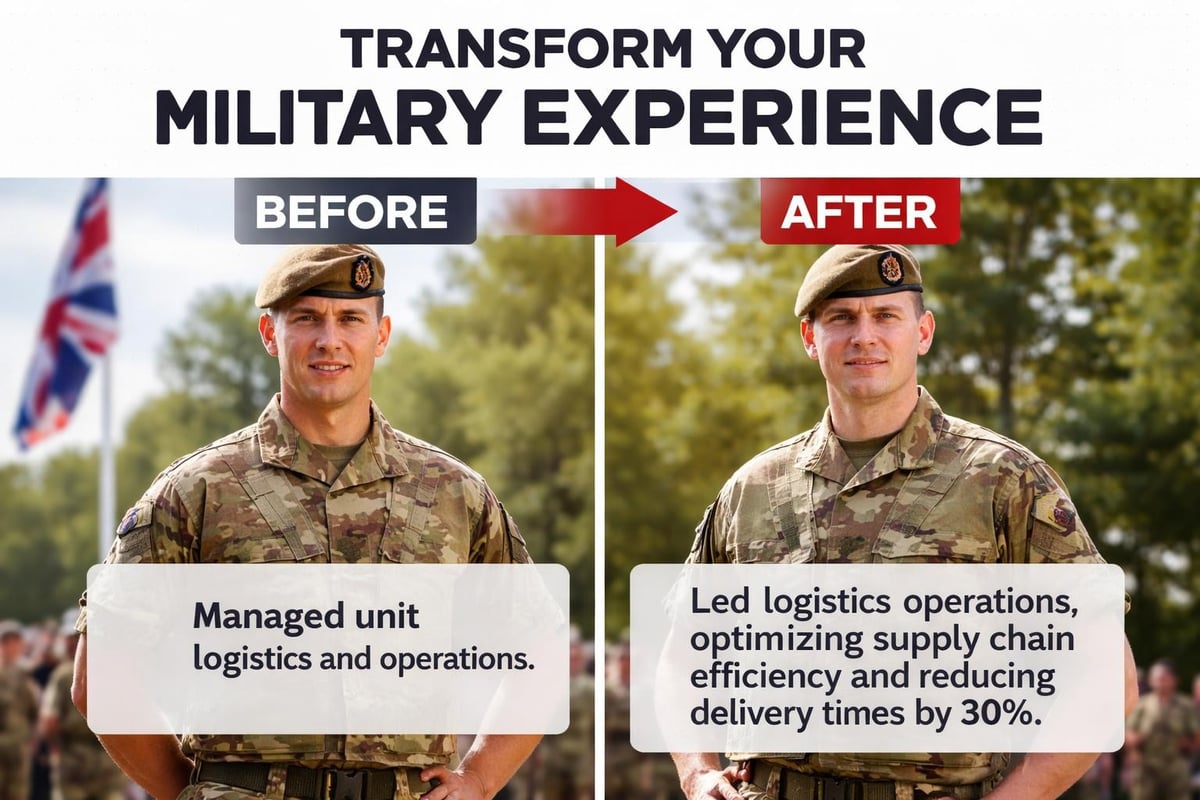
Transform vague military descriptions into specific, measurable accomplishments:
Replace: “Responsible for unit equipment maintenance” With: “Managed preventative maintenance programme for £2.3M worth of specialist equipment, achieving 98% operational readiness rating”
Replace: “Led soldiers during operational deployment” With: “Directed 12-person team through 6-month operational deployment, completing 47 missions with zero safety incidents”
Replace: “Conducted training for junior ranks” With: “Designed and delivered 15 specialist training courses, qualifying 127 personnel in critical operational skills”
Replace: “Managed unit administration” With: “Oversaw administrative functions for 150-person organisation with £400K annual operating budget”
These transformations maintain accuracy whilst making your contributions immediately meaningful to civilian recruiters who lack military context.
Essential Sections for an Effective Army Resume Format
Structuring your military CV according to civilian expectations whilst maintaining the substance of your service experience requires careful section organisation. Each component serves a specific purpose in communicating your value to potential employers.
Professional Summary Section
Your professional summary sits immediately below your contact details and provides a 3-4 sentence overview of your military background translated into civilian value. This section should never include phrases like “seeking an opportunity” or “looking for a challenging position.”
Instead, focus on what you bring: “Operations professional with 12 years’ British Army experience managing complex logistics operations across multiple international deployments. Proven expertise in team leadership, strategic planning, and high-pressure decision-making. Successfully led teams of up to 30 personnel, managing budgets exceeding £500K whilst maintaining 100% safety compliance.”
Core Competencies Grid
A competencies section using bullet points or a simple grid format allows applicant tracking systems to quickly identify relevant keywords whilst giving human reviewers an immediate skills snapshot. Select 8-12 competencies that directly relate to your target civilian roles.
Examples include:
Strategic Operations Planning
Team Leadership & Development
Budget Management & Cost Control
Risk Assessment & Mitigation
Project Delivery
Performance Management
Training Programme Design
Supply Chain Operations
Quality Assurance
Stakeholder Engagement
Change Management
Emergency Response Coordination
These terms work effectively within both military contexts and civilian business environments, making them ideal bridges in your army resume format.
Professional Experience Entries
Each position in your military career deserves its own entry, formatted consistently with civilian CV standards. Include your military rank translated to a civilian equivalent title, the unit or organisation name (which can remain in military form if well-known, like “British Army” or specific regiment names), location, and dates of service.
Each section of a military CV should be adapted to meet civilian expectations. Job titles should be translated into recognisable management or specialist positions, achievements should focus on measurable outcomes and skills should be aligned with the requirements of the target industry. This approach makes military experience more accessible and relevant to civilian employers.
Education and Professional Development
Military personnel accumulate substantial training throughout their careers, but not all courses warrant inclusion in your civilian CV. Focus on qualifications and certifications that hold civilian recognition or directly relate to your target industry.
Include formal academic qualifications, vocational certifications (such as HGV licences, first aid qualifications, or trade certifications), and significant military training that translates to civilian contexts (project management courses, leadership programmes, or technical specialisations).
Avoid listing routine military-specific courses that hold no meaning outside the armed forces. A three-day army briefing course on radio procedures doesn’t strengthen your civilian CV, whilst a 12-week military project management qualification certainly does.
Optimising Your Army Resume Format for Applicant Tracking Systems
Modern recruitment processes rely heavily on applicant tracking systems (ATS) that scan CVs for relevant keywords before human eyes ever see your application. Your army resume format must satisfy both digital scanning algorithms and human reviewers to succeed in 2026’s competitive job market.
Keyword Integration Strategies
Applicant tracking systems search for specific terms that match job description requirements. Service leavers must incorporate civilian industry terminology throughout their CVs whilst maintaining readability and natural language flow.
Begin by carefully analysing job advertisements in your target sector. Identify recurring terms, required qualifications, and sought-after skills. These keywords should appear naturally throughout your professional summary, competencies section, and experience entries.
Effective keyword optimisation involves aligning your CV with the language employers use in job descriptions whilst maintaining natural and professional writing. Relevant terminology should be incorporated throughout the document in a way that supports both Applicant Tracking Systems and human readers without appearing forced or repetitive.
Formatting Technical Requirements
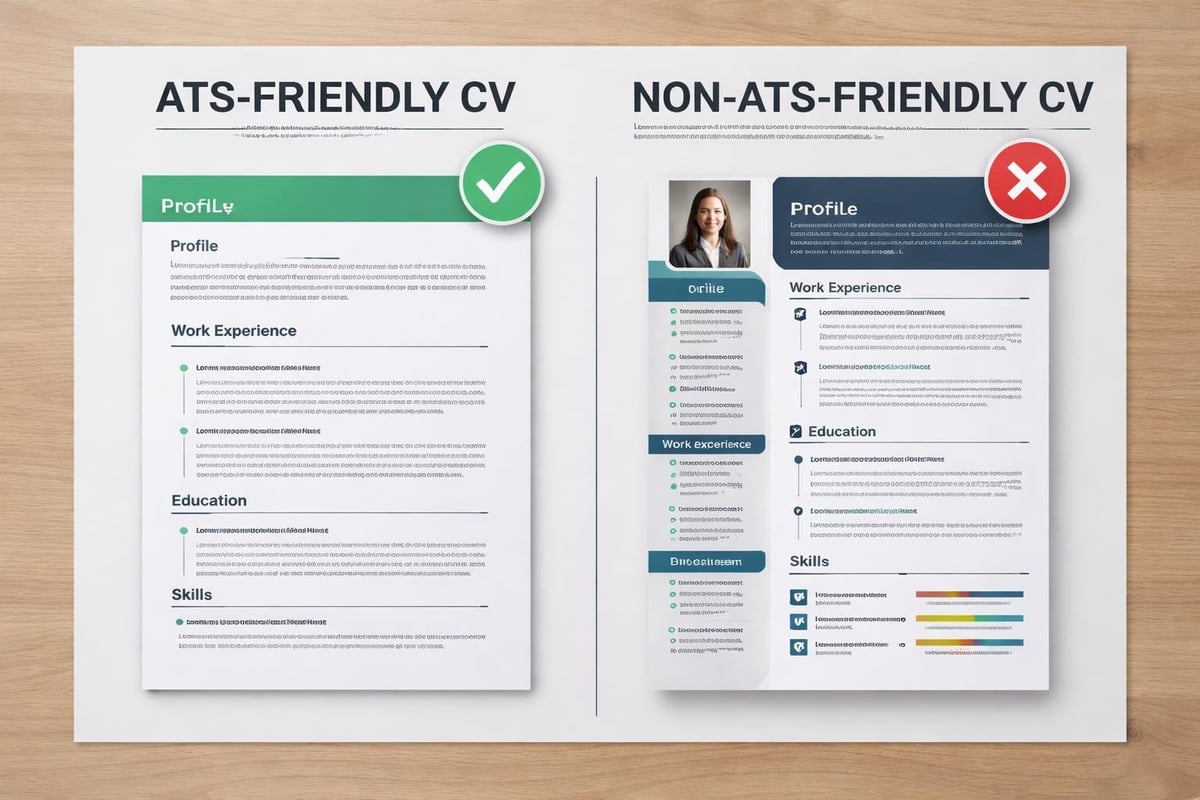
Applicant tracking systems struggle with complex formatting, graphics, tables, and unusual fonts. Your army resume format should prioritise clean, simple presentation over visual creativity.
Choose standard fonts like Arial, Calibri, or Times New Roman in 10-12 point size. Use clear section headings with simple formatting (bold or slightly larger font size). Avoid headers, footers, text boxes, images, and graphics that ATS software cannot parse correctly.
Save your CV in both Microsoft Word (.docx) and PDF formats, using whichever the application system requests. Some ATS platforms handle PDFs poorly, whilst others prefer them.
Addressing Common Army Resume Format Challenges
Service leavers encounter specific obstacles when adapting their military experience to civilian resume standards. Understanding these challenges and their solutions prevents common mistakes that undermine otherwise strong applications.
Managing Employment Gaps
Military careers sometimes include periods between postings, training courses, or medical recovery that appear as employment gaps in civilian resume terms. Address these transparently without drawing excessive attention to them.
Brief gaps (under three months) require no explanation in your CV itself, though you should prepare to discuss them if asked during interviews. Longer gaps benefit from brief explanatory notes, particularly if you engaged in productive activities during those periods.
For example: “Career Development Period (Jan 2024 – Jun 2024): Completed Advanced Leadership Qualification and Professional Development Programme whilst preparing for next posting.”
Handling Security-Classified Experience
Many military roles involve classified operations that cannot be detailed in civilian CVs. You can acknowledge such an experience without compromising security requirements.
Instead of omitting classified work entirely (creating apparent gaps or understating your achievements), use appropriately vague language: “Led tactical operations in support of national security objectives” or “Managed sensitive intelligence gathering operations requiring Top Secret clearance.”
Focus on the transferable skills these roles developed rather than specific operational details. Leadership, decision-making under pressure, analytical thinking, and stakeholder management all apply broadly without revealing classified information.
Demonstrating Civilian Sector Knowledge
Employers sometimes worry that military personnel lack understanding of civilian business environments, particularly regarding commercial pressures, customer service orientation, and profit-driven decision-making. Your army resume format should counter these concerns proactively.
Incorporate business language throughout your CV. Reference budget management, cost efficiency, stakeholder satisfaction, performance metrics, and quality standards using civilian terminology. Where possible, relate your military achievements to business outcomes that civilian employers value.
If you’ve completed civilian qualifications, undertaken industry research, or engaged with your target sector during resettlement, highlight these activities to demonstrate commercial awareness and genuine interest in your new career direction.
Professional Support for Military CV Writing
Transitioning from military service to civilian employment represents a significant undertaking, and professional guidance can substantially improve your outcomes. Working with an experienced CV writer who understands both military backgrounds and civilian recruitment requirements provides considerable advantages.
Every CV I create follows a completely bespoke approach, with no templates or generic structures. During our detailed one-to-one consultation, we’ll explore your military background thoroughly, identifying the experiences and achievements that resonate most strongly with your target civilian roles. I’ll help you translate your service into compelling civilian language whilst ensuring your CV remains ATS-optimised and professionally formatted.
The consultative process ensures nothing important gets lost in translation. Together, we’ll review each section, refining the language until it authentically represents your capabilities whilst speaking directly to civilian employer needs. My background in recruitment and career coaching means I understand exactly what hiring managers seek and how to position your military experience accordingly.
Additionally, bespoke cover letters prove particularly valuable for service leavers, allowing you to address your transition directly, explain your motivation for specific roles, and provide context that CVs alone cannot convey. Each cover letter I create is tailored to the specific position you’re targeting, strengthening your application considerably.
Frequently Asked Questions About Army Resume Format
Should I include my full military service history or just recent positions?
For military careers spanning 10+ years, focus your detailed descriptions on the most recent and relevant 10-12 years of service. Earlier positions can be summarised briefly under a “Previous Military Experience” section with basic details only. This approach keeps your CV concise whilst demonstrating your full career progression. Civilian employers care most about your recent, senior-level experience that best demonstrates the capabilities you’ll bring to their organisation.
How do I explain military awards and commendations in civilian terms?
Translate military honours into civilian language that conveys their significance without military jargon. Instead of listing “Mentioned in Dispatches,” explain it as “Received formal commendation from senior command for exceptional performance under operational conditions.” For medals, briefly note the achievement they recognise: “Operational Service Medal (Afghanistan) – Awarded for meritorious service during 2023 operational deployment.” Focus on 2-3 most significant awards rather than comprehensive medal lists.
Can I use my military email address on my CV?
No. Always use a professional personal email address on civilian CVs, preferably a simple format like firstname.lastname@provider.co.uk. Military email addresses signal you haven’t yet mentally transitioned to civilian employment and may become invalid after your service ends. Similarly, ensure your phone number remains accessible after discharge and consider establishing a LinkedIn profile using civilian professional standards before beginning your job search.
What if my military role has no direct civilian equivalent?
Focus on the transferable skills and achievements rather than job title translation. Combat roles, for example, emphasise leadership under pressure, rapid decision-making, team coordination, risk assessment, and operational planning. These capabilities apply across sectors from emergency services to project management to operations coordination. Structure your experience entries around what you accomplished and the skills you developed, rather than trying to force exact civilian job title matches.
How far back should my army resume format go?
Generally, 15 years of detailed experience provides sufficient depth for most civilian roles. Earlier military service can be acknowledged briefly without detailed descriptions. However, if older experience includes particularly relevant qualifications, significant achievements, or specialised training that directly relates to your target role, include those specific elements even from earlier career periods. The key is relevance rather than strict chronology.
Sector-Specific Army Resume Format Considerations
Different civilian industries prioritise different aspects of military experience. Tailoring your army resume format to emphasise the most relevant elements for each sector significantly improves your application success rates.
Corporate and Business Services
Roles in corporate environments, business services, consultancy, and professional services particularly value strategic thinking, project delivery, stakeholder management, and commercial awareness. Corporate employers value evidence of financial accountability, project delivery, stakeholder engagement and leadership capability. Military personnel often possess extensive experience managing resources, improving operational performance, leading teams and delivering results under pressure. Presenting these achievements in commercial language helps employers recognise their relevance and value.
Use business terminology throughout, incorporating phrases like “delivered against objectives,” “managed stakeholder expectations,” “optimised resource allocation,” and “drove performance improvements.”
Logistics and Supply Chain
Military logistics experience translates exceptionally well to civilian supply chain roles.
Military logistics experience often exceeds the complexity of many civilian supply chain environments. Managing inventory, coordinating transport operations, overseeing procurement activities and maintaining operational readiness all provide highly transferable skills that are valued across logistics, distribution and supply chain management sectors.
Quantify the scale of operations you managed: number of items controlled, value of inventory, size of supply networks, or frequency of movements.
Security and Emergency Services
Former military personnel naturally suit roles in security management, emergency response, health and safety, and related protective services. Your army resume format should highlight:
Many former military personnel also transition successfully into policing, where specialist Police Officer CVs can help align military experience with police recruitment requirements.
Many military responsibilities have direct civilian applications. Operational planning supports security management, risk assessment aligns with health and safety functions, emergency response experience strengthens crisis management capabilities and security clearances can provide significant advantages when applying for sensitive or regulated positions.
Emphasise relevant certifications, clearance levels (where appropriate), and specific training in security operations, emergency response, or protective services.
Technical and Engineering Sectors
Military technical specialists, engineers, and tradespeople possess highly transferable skills for civilian technical roles. Focus your CV on:
Technical and engineering employers are particularly interested in qualifications, systems knowledge, technical problem-solving and project delivery experience. Military engineers and technical specialists frequently possess strong maintenance, compliance, fault diagnosis and operational management capabilities that transfer effectively into civilian technical environments when described using industry-recognised terminology.
Where military equipment has no direct civilian equivalent, describe it in generic technical terms that convey complexity without requiring military knowledge to understand.
Enhancing Your Army Resume Format Beyond the Basics
Once you’ve mastered the fundamental elements of civilian CV structure and military-to-civilian translation, several advanced strategies can further strengthen your application materials.
Incorporating Testimonials and References
Brief testimonial quotes from military superiors or civilian professional contacts add powerful third-party validation to your capabilities. A single sentence from a Commanding Officer or civilian manager carries significant weight: “Consistently delivered exceptional results under challenging operational conditions – highest performing officer in the battalion.”
Place these strategically within relevant experience sections or in a dedicated testimonials section. Always obtain permission before using someone’s words in your CV materials.
Addressing Transferable Soft Skills
Military service develops numerous soft skills that civilian employers highly value, but service leavers sometimes take for granted or fail to articulate effectively. Your army resume format should explicitly highlight capabilities such as:
Military service develops a range of highly valued personal qualities including resilience, adaptability, communication, integrity and leadership. Rather than listing these skills in isolation, the strongest CVs demonstrate them through specific examples that show how they contributed to successful outcomes, effective teamwork and operational performance.
Don’t simply list these qualities. Demonstrate them through specific examples within your achievement statements.
Regional Considerations Across the UK
Employment markets vary considerably across different UK regions, with London, the South East, Scotland, and Northern Ireland each presenting distinct opportunities and sector strengths. Research your target region’s dominant industries and tailor your army resume format accordingly.
Scotland’s energy sector, London’s financial services, the Midlands’ manufacturing base, and Northern Ireland’s aerospace industry each seek different capability combinations. Adjust your keyword emphasis and achievement selection to align with regional employer priorities.
Continuous CV Evolution
Your CV shouldn’t remain static once created. As you gain civilian work experience, complete additional qualifications, or target different role types, your army resume format should evolve accordingly.
Initially, your military experience dominates your CV by necessity. Over time, as you accumulate civilian employment history, military service gradually becomes a smaller (though still valuable) component of your professional story. Plan for this evolution rather than clinging indefinitely to a purely military-focused CV structure.
You can also read my client testimonials to see how former service personnel have successfully secured civilian employment, or book a consultation to discuss your military-to-civilian career transition and future employment goals.
Translating military service into compelling civilian CV content requires strategic thinking, careful language selection, and thorough understanding of both military capabilities and civilian employer expectations. The right army resume format positions your valuable experience effectively whilst addressing the specific concerns civilian recruiters often hold about military candidates. Working with an experienced professional CV writer ensures nothing gets lost in translation whilst your application materials maintain the highest standards throughout your transition. John Logan Consulting and Mentoring provides the personalised, consultative support that transforms military experience into interview-winning CVs, helping service leavers across the UK successfully navigate their career transitions with confidence and clarity.