
Send me your CV for a free review to John@johnlogan.co.uk. I'll look through it myself and give you honest, constructive feedback as a professional CV writer.
Transitioning from military service to civilian employment represents one of the most significant career changes anyone can undertake. The challenge isn't a lack of skills or experience; rather, it's communicating that expertise in a language civilian recruiters understand. A military to civilian resume service exists precisely to bridge this gap, transforming operational achievements, command responsibilities, and technical competencies into compelling career narratives that resonate with hiring managers across industries. For veterans and service leavers in the UK, this professional support can mean the difference between prolonged job searches and swift placement in rewarding roles.
Military personnel accumulate extraordinary skills throughout their service careers. From leadership under pressure to technical expertise in complex systems, veterans bring capabilities that civilian employers desperately need. Yet these same professionals often struggle to translate their experience effectively.
The disconnect stems from language. Military terminology, rank structures, and operational frameworks don't map directly onto civilian job descriptions. When a CV lists "Section Commander responsible for tactical deployment operations" or "Led logistics coordination for multi-national exercises," civilian recruiters may recognise leadership but miss the specific competencies their organisations require.
Key translation barriers include:
A quality military to civilian resume service addresses each barrier systematically. The process involves more than simple word replacement; it requires understanding both military operational structures and civilian industry requirements to create authentic connections between experience and opportunity.
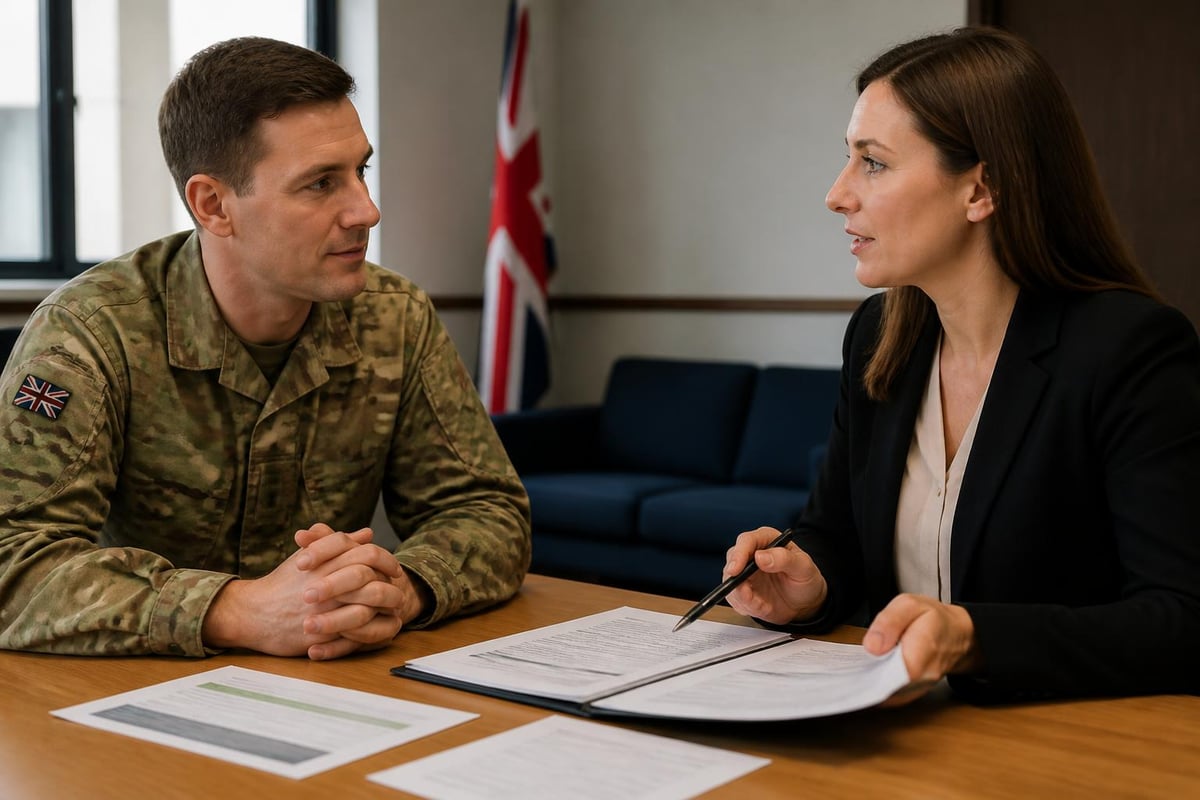
Effective translation begins with identifying transferable skills. A Royal Signals technician hasn't just "maintained communications equipment"; they've "managed critical infrastructure supporting 500+ users with 99.8% uptime." An infantry section commander hasn't simply "led soldiers"; they've "directed cross-functional teams of 8-12 personnel in high-pressure environments requiring rapid decision-making and resource allocation."
According to guidance on translating military skills into civilian qualifications, the emphasis should shift from duties to demonstrable outcomes. Numbers, percentages, and quantifiable results speak universally across military and civilian contexts.
A military to civilian resume service structures documents to showcase experience through civilian lenses whilst maintaining authenticity. The format matters as much as content.
Your opening statement establishes immediate context. Rather than leading with rank and regiment, effective summaries highlight competencies and career objectives.
Weak approach:
"Former Warrant Officer Class 2 with 15 years' service in the Royal Logistics Corps seeking civilian opportunity."
Strong approach:
"Strategic logistics professional with 15 years' experience managing multi-million-pound supply chains, leading teams of 30+ personnel, and delivering complex projects in challenging environments. Proven track record in process optimisation, stakeholder management, and operational planning."
The second version communicates value immediately. Civilian recruiters understand logistics, team leadership, and project delivery. They may not understand WO2 or the significance of specific corps experience without additional context.
This section requires the most careful translation work. Each role should follow a structure familiar to civilian employers whilst accurately representing military service.
| Military Listing | Civilian Translation |
|---|---|
| Platoon Sergeant | Operations Team Leader |
| Responsible for soldier welfare and training | Managed performance development and wellbeing for 30-person team |
| Conducted daily briefings | Facilitated daily operational planning meetings with cross-functional stakeholders |
| Maintained equipment readiness | Ensured 98% availability of critical assets through preventative maintenance programmes |
The effective strategies for conveying military experience emphasise showing rather than telling. Instead of stating you're a leader, demonstrate leadership through specific achievements with measurable outcomes.
Military service develops both hard and soft skills. Your CV must present both categories clearly.
Technical skills might include:
Transferable skills encompass:
Working with a professional CV writer ensures these skills connect directly to target role requirements rather than appearing as generic lists. Through a consultative process that examines your journey and goals, every skill mentioned serves a strategic purpose in positioning you for specific opportunities.

Not all CV services understand military transition challenges equally. When evaluating providers, consider several critical factors.
Template-driven services fail military clients particularly badly. Your experience doesn't fit predetermined structures, and generic questionnaires can't capture the nuance of translating operational roles into civilian contexts.
Effective military to civilian resume services begin with detailed conversations. They ask about specific responsibilities, achievements, team sizes, budgets managed, and operational outcomes. They explore your target industries and roles to ensure every element of your CV speaks directly to those opportunities.
Modern recruitment relies heavily on Applicant Tracking Systems (ATS). These software platforms scan CVs for keywords, qualifications, and experience markers before human recruiters ever see them.
Military to civilian resume services must understand both ATS requirements and how to incorporate keywords naturally. A CV optimised for "logistics coordinator" roles includes relevant terminology around supply chain management, inventory control, vendor relationships, and process improvement without sacrificing readability or authenticity.
Quality services demonstrate their effectiveness through client outcomes. Look for testimonials from other veterans who've successfully transitioned, particularly into sectors you're targeting. Five-star reviews matter less than specific stories of interview success and job placements.
Different industries value different aspects of military experience. A military to civilian resume service tailors emphasis based on your target sector.
Veterans from Royal Logistics Corps, Royal Navy supply roles, or RAF movements specialists possess directly transferable expertise. CVs for this sector should emphasise:
Quantify everything possible: tonnage moved, cost savings achieved, personnel supervised, geographical scope of operations.
Military personnel routinely manage complex projects under challenging conditions. Translating military experience into civilian job qualifications requires framing operations in project management language.
Military context: "Planned and executed three-month deployment exercise involving 200 personnel across two locations."
Civilian translation: "Delivered complex multi-site project coordinating 200+ stakeholders, managing £500K budget, and achieving all objectives within tight 12-week timeline despite logistical constraints."
Veterans with signals intelligence, cybersecurity, or technical trades backgrounds enter civilian markets with highly valued skills. However, security classifications often prevent detailed description of specific systems or missions.
Focus instead on methodologies, frameworks, and outcomes. Describe your approach to threat assessment, incident response, system hardening, or network management without revealing classified details. Mention any civilian-recognised certifications (CompTIA Security+, CISSP, etc.) prominently.
Every military role involves leadership to some degree. For those targeting management positions, your CV must demonstrate progression and increasing responsibility.
| Rank/Role | Civilian Equivalent Focus |
|---|---|
| Junior NCO | Team supervision, technical expertise, direct personnel management |
| Senior NCO | Multi-team coordination, strategic planning, training programme development |
| Junior Officer | Project leadership, resource allocation, cross-functional collaboration |
| Senior Officer | Strategic leadership, organisational change, senior stakeholder engagement |
The guidance on writing strong military-to-civilian resumes emphasises demonstrating leadership through specific team achievements, not just position titles.
Even well-intentioned self-written CVs often fall into predictable traps. A military to civilian resume service helps you avoid these mistakes.
Your CV should be comprehensible to someone with no military background. Every acronym should either be spelled out or translated into civilian equivalent.
Problematic: "Served as 2IC for Bn HQ, coordinating with J3 for operational planning and J4 for CSS requirements."
Improved: "Served as Deputy Commander for Battalion Headquarters (400+ personnel), coordinating operational planning and logistical support across multiple departments."
Military job descriptions often emphasise responsibilities. Civilian employers care more about what you accomplished within those responsibilities.
Duty-focused: "Responsible for training 30 soldiers in weapon systems and tactical procedures."
Achievement-focused: "Developed and delivered comprehensive training programme that improved unit qualification rates by 35% and reduced safety incidents by 50% over 18 months."
Military personnel often underestimate the scale of their responsibilities when compared to civilian equivalents. A section commander managing eight people and £2 million worth of equipment holds significant responsibility that translates well to civilian team leadership roles.
Be specific about:
Military careers sometimes include training periods, operational deployments, or secondments that create apparent gaps or unclear progression. Your CV should account for all periods and show how each experience contributed to your development.
A professional military to civilian resume service structures your career narrative to show logical progression and continuous skill development, even when assignments varied significantly.
Your CV represents just one component of successful job applications. Supporting documents and online presence require equal attention.
Every application should include a tailored cover letter. For veterans, these letters provide space to address the transition directly, explain motivation for specific sectors or roles, and emphasise the most relevant aspects of military experience.
According to professional CV writer services, cover letters should complement rather than duplicate CV content. Use them to tell your transition story, explain interest in the specific organisation, and highlight one or two key achievements particularly relevant to the role.
Civilian recruiters increasingly search LinkedIn before reviewing CVs. Your profile must communicate your civilian-ready professional identity whilst acknowledging military service.
Key optimisation areas include:
Many veterans find roles through connections rather than advertised positions. Your CV should position you effectively when networking contacts pass it to hiring managers.
Ensure your document clearly communicates what you're looking for. A generic CV suggesting you're open to "any opportunity" weakens your positioning. Tailored versions targeting specific sectors or roles demonstrate focus and professionalism.
Q: How long should my military to civilian CV be?
A: For most veterans, two pages represents the ideal length. This provides sufficient space to detail relevant experience, translate achievements effectively, and include necessary context without overwhelming recruiters. Senior officers with extensive careers might require three pages, but brevity and relevance should guide decisions. Every line should serve a purpose in demonstrating your suitability for target roles.
Q: Should I include all my military postings and assignments?
A: Include positions relevant to your civilian career objectives. If you served 20 years across multiple roles, focus on the last 10-15 years and positions that demonstrate progression or develop skills applicable to target roles. Earlier career roles can be summarised briefly unless they contain particularly relevant experience. Quality and relevance matter more than comprehensive chronological coverage.
Q: How do I handle classified or sensitive information on my CV?
A: Never include classified information, regardless of how impressive the work might seem. Instead, describe your role, responsibilities, and methodologies at an appropriate security level. Focus on frameworks, team sizes, outcomes, and transferable skills rather than specific operations or systems. A military to civilian resume service experienced with defence sector clients understands these constraints and can help you communicate value whilst respecting security requirements.
Q: What if I lack civilian qualifications or certifications?
A: Many military qualifications don't translate directly, but civilian employers increasingly recognise military training as equivalent to formal education. Include military professional development courses, technical training, and leadership programmes, explaining civilian equivalents where possible. Consider pursuing recognised civilian certifications in your target field during transition. Project management, IT certifications, or sector-specific qualifications strengthen your CV and demonstrate commitment to civilian career development.
Q: Should I mention my security clearance on my CV?
A: If you hold current security clearance (SC or DV) relevant to target roles, include it prominently. Many defence contractors, government agencies, and security-conscious organisations value active clearances highly, as obtaining them involves significant time and cost. However, if your clearance has lapsed or you're targeting sectors where it's irrelevant, brief mention in a "Clearances and Certifications" section suffices without highlighting it prominently.
The best time to engage a military to civilian resume service is earlier than most service leavers expect. Ideally, begin the process 6-12 months before your planned discharge date.
Early engagement allows time for:
Your CV development should occur alongside this broader transition planning. As you clarify career objectives and target sectors, your resume can evolve to emphasise most relevant experience.
UK armed forces provide resettlement support including career transition workshops and employment assistance. Whilst helpful, standard military resettlement programmes often lack the personalised, industry-specific guidance that professional military to civilian resume services provide.
Consider military-provided resources as foundations, supplemented by specialist civilian expertise. The combination ensures you benefit from service entitlements whilst accessing deeper industry knowledge and personalised career positioning.
If you've already left service without securing civilian employment, professional CV support remains valuable. Many veterans struggle initially because their self-written CVs don't effectively communicate their value. Investing in professional assistance can dramatically shorten job search timelines and improve offer quality.
How do you know if your military to civilian CV works? Several metrics indicate effectiveness.
Track applications submitted versus interviews secured. A well-crafted CV targeting appropriate roles should achieve interview rates of 15-25%. Lower rates suggest your CV isn't communicating value effectively to recruiters or passing ATS screening.
When recruiters contact you, do they demonstrate understanding of your background? Do they propose roles that genuinely match your experience and objectives? Quality recruiter engagement indicates your CV successfully translates military experience into civilian terms.
The journey from application to job offer typically spans 4-8 weeks across multiple opportunities. Significantly longer timelines might indicate CV issues preventing progression through screening stages, whilst very short timelines often reflect excellent CV-role alignment.
Military to civilian resume services represent an investment in your career transition. Prices vary considerably based on service depth, writer experience, and package inclusions.
Professional services typically include:
Some services bundle cover letter development, LinkedIn profile optimisation, or interview coaching. Evaluate packages based on your specific needs rather than simply choosing the most comprehensive option.
Consider the cost against potential salary differences. If professional CV support helps you secure a role 3-6 months sooner or at a salary £3,000-£5,000 higher than you might otherwise achieve, the investment pays for itself many times over.
Beyond immediate financial return, an effective CV positions you more strongly for future career progression. The translation work, achievement framing, and professional positioning continue benefiting you throughout your civilian career.
Translating military service into compelling civilian career narratives requires specialist expertise that understands both worlds deeply. With the right support, your transition from uniform to civilian employment can be swift, strategic, and successful. If you're preparing to leave service or have recently transitioned and need a CV that truly opens doors, John Logan Consulting and Mentoring offers the personalised, consultative approach that transforms military experience into civilian career success. Every CV is written from scratch, optimised for both ATS systems and human recruiters, and refined until it positions you confidently for your next chapter.
Send me your CV for a free review to John@johnlogan.co.uk. I'll look through it myself and give you honest, constructive feedback as a professional CV writer.