
How ATS Applicant Tracking Systems Work
⏱️ Article at a Glance
How Ats Works? An Applicant Tracking System (ATS) is automated software recruiters use to filter, rank, and parse applications before a human ever sees them.
Why Applications Get Binned: Up to 95% of CVs are filtered out—not due to lack of skill, but because of improper keyword matching, bad formatting, or simple layout errors.
The Solution: Adapting your core skills and summary for every job advert is essential to beating the algorithm and landing interviews.
💡 Written by John Logan, professional CV writer, Royal Navy veteran, and founder of John Logan BMC. Over 150+ 5-star reviews helping executives, management, graduates, and ex-police/forces transition into top-tier roles.
Understanding How Applicant Tracking Systems (ATS)Work: and How to Win
An Applicant Tracking System (ATS) is a specialised piece of software used by recruiters and companies around the world to help filter job applications. It scans and ranks candidates based on several factors, including:
Keywords matched directly from the job advert
Formatting and layout
Grammar and spelling accuracy
Because ATS algorithms look for exact terms, they can be remarkably specific—meaning even simple variations of a word are often ignored. To succeed, you must adapt your professional summary, core competencies, key skills, and cover letter for every single position you apply for.
The Myth vs. The Reality of ATS
Let’s start with a statement I hear all the time:
“ATS does not exist; it’s just a money-making piece of software.”
That is absolutely not true. Just have a look at any standard job being advertised on LinkedIn—not even a niche role, just an everyday position. It is more than possible for that single posting to receive over 100 applicants. That’s just from LinkedIn, without counting the other job platforms where the role is listed!
For one person to go through all of those CVs in a systematic, fair fashion and still be able to accurately compare CV #1 to CV #100 would be virtually impossible. It isn’t productive, and it certainly won’t yield the best hiring results.
Google’s Overview on ATS
ATS filters are software tools used by employers to automatically scan, sort, and rank job applications. They function by searching CVs for specific keywords, years of experience, and required skills to help recruiters manage high volumes of candidates. (Source: Google search for “What is ATS filtering”)
How Recruiters Use ATS in the Real World
Now let’s look at it from the recruiter’s side: how do they actually use it?
(I will almost guarantee there are a few people reading this who might disagree with me, and that’s fine—this is based on my hands-on experience over the last dozen or so years.)
When recruiters consult with an employer about a role, job adverts generally consist of four main parts. The section that directly concerns ATS filtering is where the advert clearly states criteria like:
Skills Required
Credentials Needed
Experience Required
This is where the employer specifies exactly what they require from an applicant—such as “Strategic Leadership”, “Minimum 3 years experience in Python Coding”, or “Must be flexible with shifts”. You can easily find 2 or 3 critical keywords in a single bullet point. The key to success is identifying those exact terms, because that is precisely what the ATS filter is searching for.
Why Do Employers Rely on ATS?
In my opinion, it comes down to two major drivers:
Efficiency and Volume: With so many candidates competing in a tough job market, the sheer volume of applicants is huge. ATS significantly improves recruitment productivity.
Specific Criteria Screening: Employers may need candidates who meet precise eligibility requirements without risk of non-compliance—for instance, requiring residency in the UK (you would be surprised by how many applications arrive from overseas). Alternatively, an employer might actively seek ex police or ex-military personnel and set those backgrounds as a distinct advantage.
The Bottom Line: It’s all about helping the recruitment agent or employer slim down 100+ applicants to a manageable shortlist—often just 5 candidates—ensuring that one of them is the person who ultimately gets hired. The competition is tough.
The Flip Side: Why Great Candidates Get Filtered Out
How many times have you sent off your CV and never heard anything back? How many times have you seen a job advert and thought, “That’s got my name written all over it”?
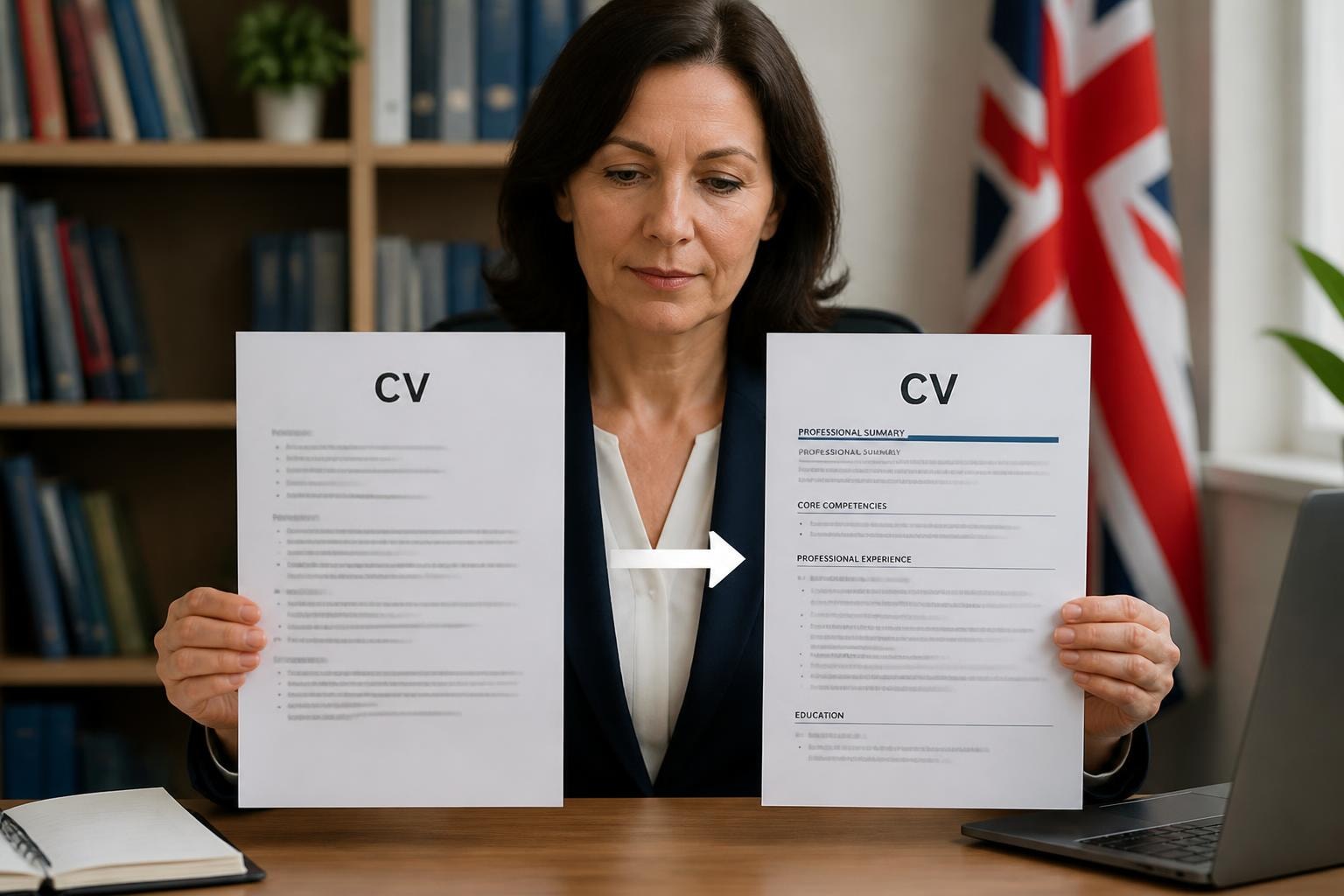
I hear it all the time. It’s usually not that your CV isn’t up to standard—it’s simply that you haven’t adapted it for ATS scanning.
As mentioned, ATS filtering isn’t just about matching keywords; it also flags poor document formatting, bad spelling, or improper layout. The system looks purely for the parameters the recruiter plugged into the filter.
A recruiter might instruct the software: “Give me the top 5 CVs that match all of the following criteria.” Out of 100 CVs, the software delivers those 5, and the remaining 95 are often binned without ever being seen by human eyes. Yes, it’s brutal—but it’s the reality of today’s digital recruitment world, and you have to adapt.
ATS is Your Friend, Not Your Enemy
Once you understand how the system works and how to adapt your CV for every position you apply for, everything clicks. It’s like a lightbulb moment. Spending 15 to 20 minutes tailoring your application to the specific role will leave you asking yourself, “Why haven’t I been doing this all along?”
I go through this in great detail when a client works with me. Not once has a client come back to say they failed to secure an interview after following my instructions—not once. You don’t need a total revamp every time, just strategic adjustments to key sections.
It’s no use having the most amazing CV in the world if it isn’t optimised for the role you’re targeting.
❓ Frequently Asked Questions About ATS & CV Writing
Q1: Does an ATS automatically reject CVs without human review?
A: Yes, in many cases. When a job advert receives hundreds of applications, recruiters set specific screening criteria within the software (such as exact keyword matches, required qualifications, or years of experience). If a CV fails to meet the minimum scoring threshold, it is automatically archived or filtered out, meaning a human eye may never see it.
Q2: Is a PDF or Word document better for an ATS?
A: Standard Microsoft Word files (.docx) are generally the safest and most reliable format for ATS parsing. While modern ATS platforms can read PDFs, some older or customized software struggles to parse text inside PDF layers correctly. Unless a job advert specifically requests a PDF, submitting a clean .docx file minimizes formatting glitches.
Q3: How do I know which keywords to include in my CV?
A: The exact keywords you need are listed directly in the job advert. Look closely at sections such as “Skills Required”, “Key Responsibilities”, or “Person Specification”. Pay attention to specific phrasing—such as “Project Management”, “Budget Ownership”, or specific software tools—and ensure those identical terms appear naturally within your professional summary and experience sections.
Q4: Can I use graphics, tables, or columns to make my CV look modern?
A: It is best to avoid them. Most ATS software parses text sequentially from top to bottom and left to right. Design elements like multi-column layouts, tables, text boxes, icons, and graphic skill bars often cause the parser to scramble or completely skip the text inside them, leading to an incomplete candidate profile.
Q5: Do I need a completely new CV for every job application?
A: No, you do not need to rewrite your CV from scratch every time. Instead, keep a master CV and spend 15 to 20 minutes tailoring key areas—such as your professional summary, bullet points under recent roles, and core skills section—to match the specific keywords and priorities highlighted in the job description.
Q6: How can working with a professional CV writer help me pass ATS checks?
A: A professional CV writer understands both sides of the hiring process: how ATS software indexes documents and what human recruiters look for once your CV passes the digital filter. Working with an experienced writer ensures your document is structurally compliant, keyword-optimized, and positioned to showcase your achievements effectively—whether you are an executive, manager, graduate, or ex-forces professional.
Transform Your CV with Professional Guidance
Whether you are an executive, a management professional, a recent graduate, or ex police transitioning into the civilian workforce, standing out from the crowd requires a strategy that satisfies both ATS software and human recruiters.
As a professional CV writer, I help clients across all industries craft targeted, high-impact CVs that get noticed.
Ready to Take the Next Step?
See Proven Results: Explore real-world CV examples and read client testimonials to see how tailored applications open doors.
Get Expert Insight: As John Logan, professional CV writer, I walk you through exactly how to optimise your application for any role.
Book Your Free Consultation: If you are continually being declined for roles you are qualified for, I urge you to get in touch. Book your free strategy call today and make a free consultation booking via Calendly to get started!