

Creating an ATS-friendly CV requires balancing technical optimisation with compelling content. By combining effective formatting, relevant keywords, measurable achievements and clear career positioning, you can significantly improve your chances of progressing through ATS screening and securing interviews.
Understanding Applicant Tracking Systems
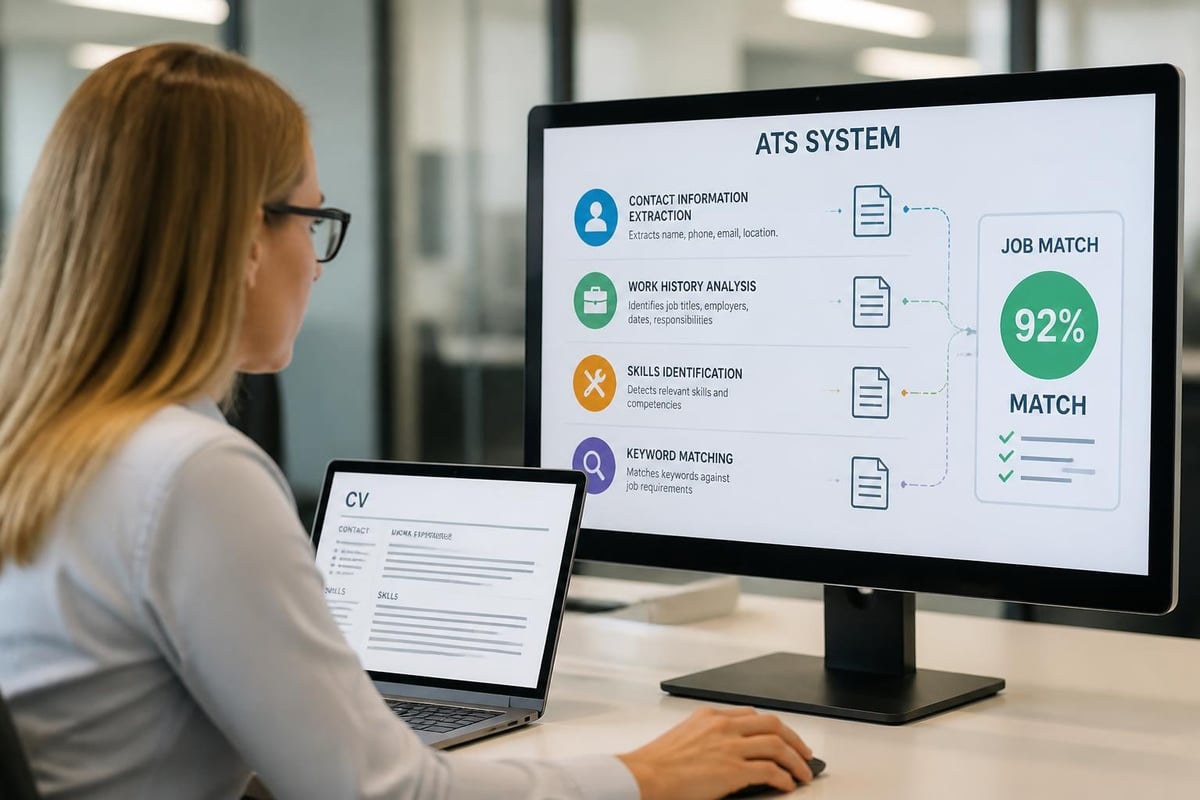
Applicant Tracking Systems are software applications that employers use to collect, sort, scan, and rank job applications. These systems have become the gatekeepers of modern recruitment, particularly at medium to large organisations. When you submit your CV online, it typically enters an ATS database where it’s parsed, analysed, and scored based on how well it matches the job requirements.
The software scans your CV for specific information including your contact details, work history, education, and skills. It then compares this information against the job description, looking for keyword matches and relevant qualifications. CVs that score highly are forwarded to recruiters, whilst those that don’t meet the threshold are filtered out. This automated process saves recruiters countless hours but creates a significant hurdle for job seekers who aren’t familiar with how to optimise their applications.
Modern ATS technology has evolved considerably since its introduction. Today’s systems can parse most standard CV formats, but they still struggle with certain design elements and unconventional structures. The key to success lies in understanding these limitations and creating a document that presents your experience clearly and effectively.
Essential Formatting Requirements
The foundation of an ats friendly cv begins with proper formatting. Standard fonts such as Arial, Calibri, or Times New Roman work best because they’re universally recognised by parsing software. Decorative or unusual fonts may look appealing to human eyes but often cause parsing errors that can result in your information being misread or overlooked entirely.
Your CV should maintain clear visual hierarchy through standard section headings. Use conventional labels like “Work Experience,” “Education,” and “Skills” rather than creative alternatives such as “My Journey” or “Where I’ve Been.” The ATS looks for these standard headings to categorise your information correctly.
Single-column layouts perform better than multi-column designs because ATS software typically reads from left to right and top to bottom. Complex layouts with text boxes, columns, or sidebars can confuse the parsing algorithm, causing information to be read in the wrong order or missed completely. Simple, clean formatting ensures your content is processed accurately.
File format matters significantly. Whilst PDFs are generally acceptable, Word documents in .docx format are often the safest choice because they’re easier for most systems to parse. Some older ATS platforms struggle with PDFs, particularly those created from design software rather than standard word processors. When in doubt, check the job posting for specific file format instructions.
Strategic Keyword Optimisation
Keywords are the currency of an ats friendly cv. The system searches for specific terms that match the job description, including technical skills, qualifications, industry terminology, and required competencies. Your CV must contain these keywords in context to score well and advance through the screening process.
Start by carefully analysing the job description. Identify the skills, qualifications, and experience requirements that appear multiple times or are emphasised as essential. These are your primary keywords. Look for both the spelled-out versions and acronyms of technical terms, as different systems search for different variations. For instance, include both “Search Engine Optimisation” and “SEO” if relevant to the role.
Integrate keywords naturally throughout your CV rather than stuffing them into a separate skills section. The context in which keywords appear matters. Demonstrating how you’ve applied a particular skill within your work experience carries more weight than simply listing it. Modern ATS platforms can recognise context and may even penalise obvious keyword stuffing.
Industry-specific terminology and job titles should match those used in the job description whenever accurate. If the employer uses “Project Manager” and your previous title was “Programme Coordinator” but you performed similar duties, consider noting both to ensure the ATS recognises the relevance whilst maintaining honesty about your actual role.
Structuring Your Work Experience
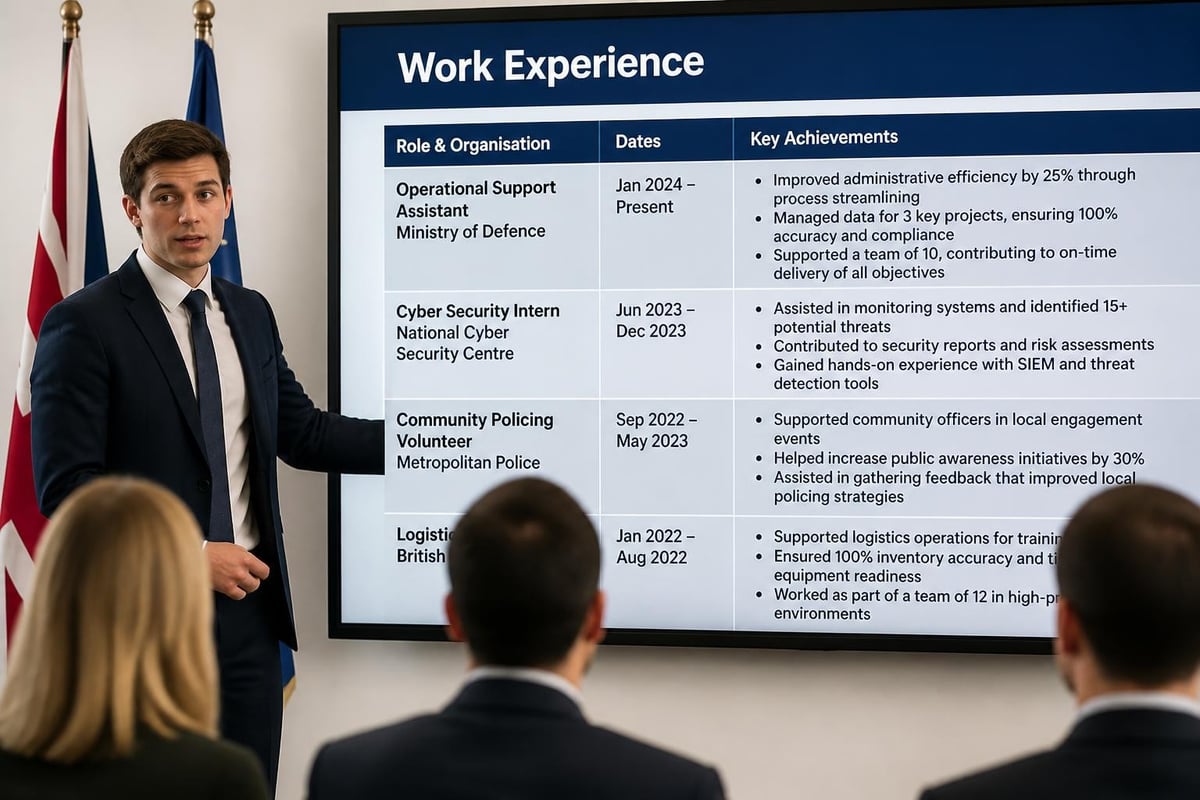
The work experience section is typically the most scrutinised part of your CV by both ATS and human reviewers. Present each role with a clear structure: job title, company name, location, and dates of employment. Use standard date formats such as “January 2023” or “Jan 2023” rather than numerical formats like “01/2023,” which can be misinterpreted.
Begin each role with a brief overview of your responsibilities, then use bullet points to highlight specific achievements and contributions. Quantify your accomplishments wherever possible using numbers, percentages, and concrete metrics. The ATS can recognise and extract these data points, whilst human recruiters appreciate the clarity and impact they provide.
Action verbs strengthen your work descriptions and help demonstrate your contributions. Start bullet points with strong verbs like “managed,” “developed,” “implemented,” or “achieved.” This approach makes your experience more dynamic and easier for the ATS to categorise according to your level of responsibility and impact.
Avoid using tables to format your work experience, as these often cause parsing errors. The ATS may read across rows instead of down columns, jumbling your information. Similarly, avoid headers and footers for critical information because some systems ignore these sections entirely. Keep all essential content within the main body of the document.
Common Formatting Pitfalls
Several formatting choices that enhance visual appeal can severely damage your CV’s ATS compatibility. Graphics, images, and logos should be avoided entirely because most systems cannot process visual elements. This includes your headshot, company logos, or decorative charts. The ATS will either skip over these elements or, in some cases, become confused and misparse surrounding text.
Special characters and symbols often cause problems during parsing. Whilst basic punctuation is fine, avoid using unusual bullets, dividers, or decorative elements. Stick to standard bullet points, hyphens, and basic punctuation marks. Even simple elements like horizontal lines created with underscores or equals signs can sometimes confuse older systems.
Text boxes and embedded tables pose significant risks. Information placed within these elements may be completely ignored by the ATS or read in an unpredictable order. If you need to present information in columns, use tabs or spaces rather than table structures. Better yet, stick to a straightforward single-column layout for maximum compatibility.
Headers and footers are another common problem area. Whilst they’re useful for page numbers or your name on multi-page documents, never place critical information like contact details or important skills exclusively in these sections. Many ATS platforms either cannot read header and footer content or process it separately from the main document, potentially causing vital information to be lost.
Tailoring for Specific Roles
A truly effective ats friendly cv is customised for each application rather than being a generic document sent to multiple employers. This doesn’t mean rewriting your entire CV for every role, but it does require thoughtful adjustments to emphasise the most relevant experience and incorporate role-specific keywords.
Review the job description thoroughly and adjust your professional summary or personal statement to align with the position’s key requirements. If the role emphasises leadership, ensure your summary highlights your management experience. If technical skills are paramount, lead with your expertise in those areas. This targeted approach helps your CV score higher in the initial ATS screening.
Reorder your skills and achievements to prioritise those most relevant to the position. If you have extensive experience across multiple domains, emphasise the aspects that directly relate to the job you’re pursuing. This strategic presentation ensures the most pertinent information appears prominently and matches the ATS search criteria.
Professional CV writing services understand these nuances and can help create a highly optimised document that balances ATS requirements with compelling presentation. Working with an experienced CV writer ensures your document uses the right keywords, structure, and formatting whilst still telling your unique career story in a way that resonates with human recruiters.
Technical Optimisation Details
Beyond basic formatting, several technical considerations affect how well your ats friendly cv performs. The filename itself should be professional and clear, ideally including your name rather than generic labels like “CV.docx” or “Resume.pdf.” Something like “John-Smith-Marketing-Manager-CV.docx” is both professional and informative.
Hyperlinks within your CV should be used sparingly and only when necessary. Whilst most modern ATS can handle links to your LinkedIn profile or professional portfolio, excessive linking can cause parsing issues. Include your LinkedIn URL and website if relevant, but don’t embed multiple links throughout the document. Standard text formatting works best.
Ensure your contact information is prominently displayed at the top of your CV in plain text. Include your full name, phone number, email address, and location (city and county). You don’t need to include your full postal address for privacy and space reasons, but your general location helps with geographic screening. Make certain this information isn’t inside a text box or header.
Special sections like publications, certifications, or professional memberships should use clear, standard headings. The ATS recognises conventional section titles and categorises information accordingly. If you have relevant certifications for the role, ensure the full certification name appears alongside any common acronyms to maximise keyword matches.
Education and Qualifications
Present your education clearly with the qualification name, institution, location, and dates. Use the official names of your degrees and qualifications rather than abbreviations unless both are commonly used. For instance, “Bachelor of Science (BSc) in Computer Science” captures both the formal name and the standard abbreviation.
List your highest qualification first and work backwards chronologically. If you have extensive work experience, your education section can be relatively brief, focusing on degree names, institutions, and dates. However, if you’re a recent graduate, you might expand this section to include relevant modules, projects, or academic achievements that demonstrate applicable skills.
Professional certifications and ongoing development should be included in a separate section if they’re substantial, or integrated with your education if brief. Industry-specific certifications often serve as important keywords for ATS screening, particularly in technical fields, healthcare, or finance where specific qualifications are mandatory.
Avoid including outdated or irrelevant qualifications unless they demonstrate continuous learning or are specifically requested in the job description. Your GCSEs typically aren’t necessary if you have higher qualifications, unless the employer specifically asks for them. Focus on credentials that strengthen your candidacy for the specific role.
Testing and Refinement
Before submitting your ats friendly cv, test it to ensure proper formatting. Copy the content and paste it into a plain text editor like Notepad. If the information appears in a logical order and remains readable, your CV will likely parse correctly. If text appears jumbled or out of sequence, you’ve identified formatting issues that need addressing.
Online ATS scanning tools can provide insights into how well your CV might perform, though their accuracy varies. These tools typically analyse keyword density, format compatibility, and structural elements. Whilst they’re not perfect replicas of actual employer systems, they can highlight obvious problems before you submit your application.
Ask a trusted colleague or professional to review your CV from both a content and formatting perspective. Sometimes a fresh pair of eyes can spot issues you’ve overlooked or suggest improvements to your presentation. This human review complements the technical optimisation and ensures your CV is compelling once it reaches a recruiter.
Keep your CV updated regularly rather than only when you’re actively job hunting. This practice ensures you don’t forget important achievements and makes the customisation process faster when you find a position worth pursuing. Maintaining a comprehensive master CV that includes all your experience allows you to quickly create targeted versions for specific applications.
File Submission Best Practices
When submitting your ats friendly cv through an online application system, follow the instructions precisely. If the system requests a Word document, provide a Word document. If it specifies a PDF, submit a PDF. Some employers test attention to detail through these requirements, and non-compliance might result in automatic rejection regardless of your qualifications.
Complete all fields in the online application form even if the information duplicates what’s in your CV. Many ATS platforms extract data from these form fields for initial screening before parsing your CV. Leaving fields blank or incomplete can reduce your ranking or eliminate you from consideration before your CV is even reviewed.
Never try to manipulate the ATS with hidden text, white text on a white background, or other deceptive tactics. Modern systems can detect these approaches, and they may result in your application being flagged or rejected. More importantly, such tactics are fundamentally dishonest and risk your professional reputation.
If the application allows for a cover letter, include one. Whilst not all ATS platforms parse cover letters, many do, and they provide additional opportunities for keyword matching and context around your application. A well-crafted cover letter complements your CV and demonstrates genuine interest in the position, giving you an advantage if your application reaches human review.
Industry-Specific Considerations
Different industries have varying expectations for CV presentation. Creative fields traditionally allowed more design freedom, but even these sectors increasingly use ATS for initial screening. Balance creative expression with technical functionality by keeping the core content ATS-friendly whilst using subtle design elements that won’t interfere with parsing.
Technical roles often require extensive skills sections with specific programming languages, frameworks, and tools. Organise these clearly under a dedicated “Technical Skills” heading and include both the full names and common acronyms. Group similar skills together logically, such as “Programming Languages,” “Databases,” and “Development Tools” rather than listing everything alphabetically.
Senior executive positions may require longer CVs that detail extensive leadership experience and strategic achievements. Whilst the two-page guideline remains ideal for most professionals, executives with 20-plus years of relevant experience may need additional space. However, the same ATS-friendly formatting principles apply regardless of length. Clear structure and keyword optimisation matter at every career level.
Career changers face unique challenges in creating an ats friendly cv because their previous job titles and industry terminology might not match the new field’s keywords. Address this by focusing on transferable skills and using the target industry’s language to describe your accomplishments. Your professional summary becomes particularly important for explaining your transition and highlighting relevant capabilities.
ATS Friendly CVs for Military Veterans
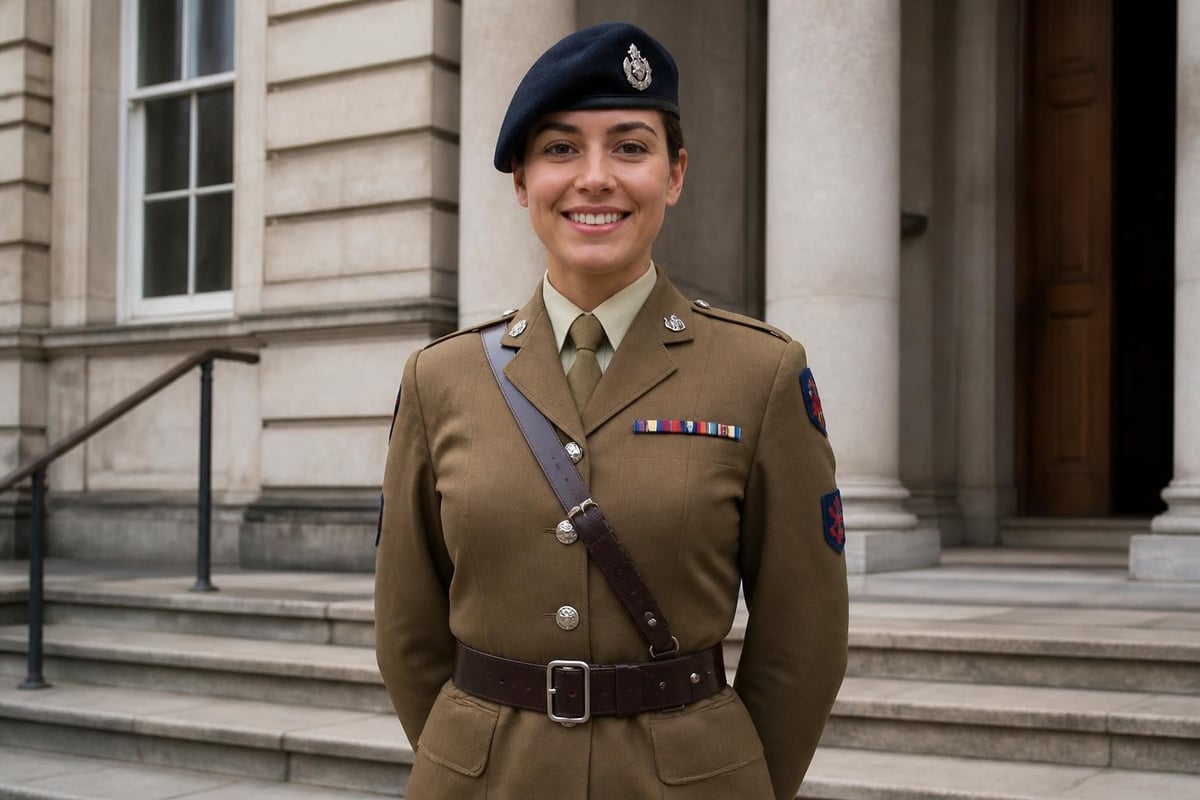
Military veterans and service leavers often possess extensive leadership, planning, logistics and operational experience. However, military terminology does not always translate effectively into civilian recruitment systems or ATS software.
An ATS-friendly CV helps ensure military achievements are described using language recognised by recruiters and applicant tracking systems, making transferable skills easier to identify and evaluate whilst improving the chances of securing interviews.
ATS Friendly CVs for Police Officers
Police officers possess highly transferable skills including leadership, investigation, stakeholder engagement, risk assessment, decision-making and operational management. However, many of these capabilities are described using policing terminology that ATS software and civilian recruiters may not fully recognise.
An ATS-friendly CV helps translate policing experience into language that aligns with civilian job descriptions, making key skills easier to identify and improving visibility within applicant tracking systems. This is particularly important for officers seeking promotion opportunities outside policing or transitioning into corporate, consultancy, compliance or security roles.
Common Questions About ATS Friendly CVs
How do I know if a company uses an ATS?
Most medium to large organisations use ATS platforms for recruitment, and many smaller companies have adopted them as well. If you’re applying through an online portal rather than directly via email, an ATS is almost certainly processing your application. The safest approach is to assume every application will go through an ATS and format accordingly. Creating an ats friendly cv is good practice regardless because the clear, well-structured format also appeals to human recruiters.
Should I include a skills section on my ATS friendly CV?
Yes, a dedicated skills section is valuable for ATS optimisation because it provides a concentrated area of keywords that the system can quickly scan and match against job requirements. However, don’t rely solely on this section. Demonstrate how you’ve applied these skills throughout your work experience to provide context and depth. The combination of a skills summary and practical application throughout your CV creates the strongest impression.
Can creative professionals use design elements in their CVs?
Creative professionals face a dilemma between showcasing design skills and maintaining ATS compatibility. The solution is creating two versions: an ATS-friendly version for initial submission through online systems, and a designed version for follow-up communications or when requested. Always submit the ATS-friendly version first unless explicitly told otherwise. Once you’ve passed the initial screening, you can share your designed portfolio pieces.
How often should I update my CV for ATS optimisation?
Update your CV whenever you gain new skills, complete significant projects, or achieve notable results in your current role. Additionally, review and adjust it each time you apply for a position to ensure the keywords and emphasis align with that specific job description. Regular maintenance keeps your CV current and makes the customisation process quicker and more effective when opportunities arise.
Will using a professional CV writer improve my ATS results?
Working with an experienced professional who understands ATS requirements can significantly improve your results. An experienced CV writer understands how to balance ATS optimisation with compelling content, ensuring your CV performs effectively with recruitment software whilst remaining engaging and persuasive for human recruiters.
## Ready to Create an ATS Friendly CV?
An ATS-friendly CV improves your chances of passing automated screening and reaching the recruiters making hiring decisions. The right balance of keyword optimisation, formatting and achievement-focused content can significantly improve interview opportunities.
I work with professionals across the UK through detailed one-to-one consultation, creating bespoke CVs that perform effectively with both ATS software and human recruiters.
Learn more about my Professional CV Writing Service, read my client testimonials and discover how a professionally written CV can help you secure more interviews and better career opportunities.
The Human Element
Whilst optimising for ATS is essential, never forget that a human will ultimately review your CV if it passes the initial screening. Your ats friendly cv must be both technically compatible and compelling to read. Dry, keyword-stuffed content might score well with software but will fail to impress recruiters who are looking for candidates who can communicate effectively and demonstrate genuine value.
Strike a balance between optimisation and readability by using natural language and complete sentences. Integrate keywords organically within descriptions of your actual achievements rather than forcing them into awkward constructions. The best CVs read smoothly whilst still containing the necessary terminology for ATS matching.
Your professional summary or personal statement should capture attention immediately. In two to three sentences, convey who you are professionally, what you offer, and what you’re seeking. This section is your elevator pitch in written form, and whilst it should include relevant keywords, it must also engage the reader and make them want to learn more about you.
Authenticity matters throughout your CV. Whilst you should present your experience in the best possible light, never misrepresent your qualifications or accomplishments. ATS systems are increasingly sophisticated at detecting inconsistencies, and human recruiters are skilled at identifying embellishment during interviews. Build your CV on a foundation of genuine achievements and honest representation.
Continuous Improvement
The job market and ATS technology continue evolving, which means your approach to creating an ats friendly cv must evolve as well. Stay informed about recruitment trends and best practices through professional resources and career development platforms. Understanding how employers evaluate candidates helps you position yourself more effectively.
Track your application success rate to gauge how well your CV performs. If you’re consistently not hearing back from positions for which you’re qualified, your CV may not be passing ATS screening effectively. Consider requesting feedback when possible, or seek professional advice to identify and address weaknesses in your presentation.
Regularly reviewing your CV performance helps identify opportunities for improvement. If applications consistently fail to generate interviews, it may indicate issues with keyword relevance, positioning, formatting or overall presentation. Professional feedback can often identify weaknesses that are difficult to spot yourself and provide practical recommendations for improvement.
Beyond the CV
Your ats friendly cv is just one component of a successful job search strategy. Supporting documents and online presence play crucial roles in your overall candidacy. Ensure consistency across all materials, from your LinkedIn profile to your cover letters and professional references. Employers increasingly cross-reference information across platforms, and inconsistencies raise concerns.
LinkedIn optimisation complements your CV efforts because many recruiters search LinkedIn directly and cross-reference it with applications. Your LinkedIn profile should contain similar keywords to your CV whilst providing additional context, personality, and professional connections that a CV cannot capture. The combination of a strong CV and optimised LinkedIn presence significantly enhances your visibility to employers.
Cover letters remain important despite being overlooked by some job seekers. A targeted cover letter provides context for your application, demonstrates genuine interest in the specific role, and offers additional opportunities for keyword matching. It also allows you to address potential concerns such as employment gaps or career changes in a positive, proactive manner.
Your application strategy should be thoughtful and selective rather than scattergun. Applying for positions that genuinely match your qualifications and career goals yields better results than submitting to every vaguely relevant posting. Quality applications to well-matched positions create better outcomes than quantity-focused approaches that dilute your efforts and rarely result in interviews.
Creating an ats friendly cv requires understanding both technical requirements and human psychology to craft a document that successfully navigates digital screening whilst compelling recruiters to schedule interviews. The investment in proper formatting, strategic keyword use, and authentic presentation pays dividends throughout your career as you pursue progressively senior and rewarding positions. If you’re ready to create a powerful, ATS-optimised CV that truly represents your capabilities and opens doors to better opportunities, John Logan Consulting and Mentoring offers bespoke CV writing services built on decades of recruitment experience, with a consultative approach that ensures your CV is both technically optimised and authentically you.