

Send me your CV for a free review to John@johnlogan.co.uk. I’ll look through it myself and give you honest, constructive feedback as a professional CV writer.
Creating a CV for no job experience presents a unique challenge that many job seekers face, particularly school leavers, recent graduates, career changers, and those returning to work after a lengthy absence. The absence of traditional employment history doesn’t mean you lack valuable skills, achievements, or experiences worth showcasing. In fact, a well-crafted CV for no job experience can demonstrate your potential, transferable capabilities, and readiness to contribute meaningfully to an organisation. The key lies in understanding how to reframe your education, voluntary work, extracurricular activities, and personal projects into compelling evidence of your professional worth. This guide will walk you through proven strategies for building a CV that opens doors, even when your employment history section remains deliberately brief or non-existent.
Understanding What Employers Really Want
When reviewing a CV for no job experience, hiring managers aren’t necessarily looking for a lengthy work history. They’re assessing your potential, attitude, and transferable skills. Employers understand that everyone starts somewhere, and many organisations actively seek fresh talent who can bring enthusiasm, adaptability, and new perspectives to their teams.
The most successful CVs for candidates without formal job experience demonstrate:
- Strong communication abilities through academic projects, presentations, or volunteering
- Problem-solving skills evidenced by coursework, personal initiatives, or team activities
- Reliability and commitment shown through consistent involvement in clubs, sports, or community work
- Willingness to learn reflected in educational achievements, certifications, or self-directed learning
- Technical competencies relevant to the target role, even if gained outside traditional employment
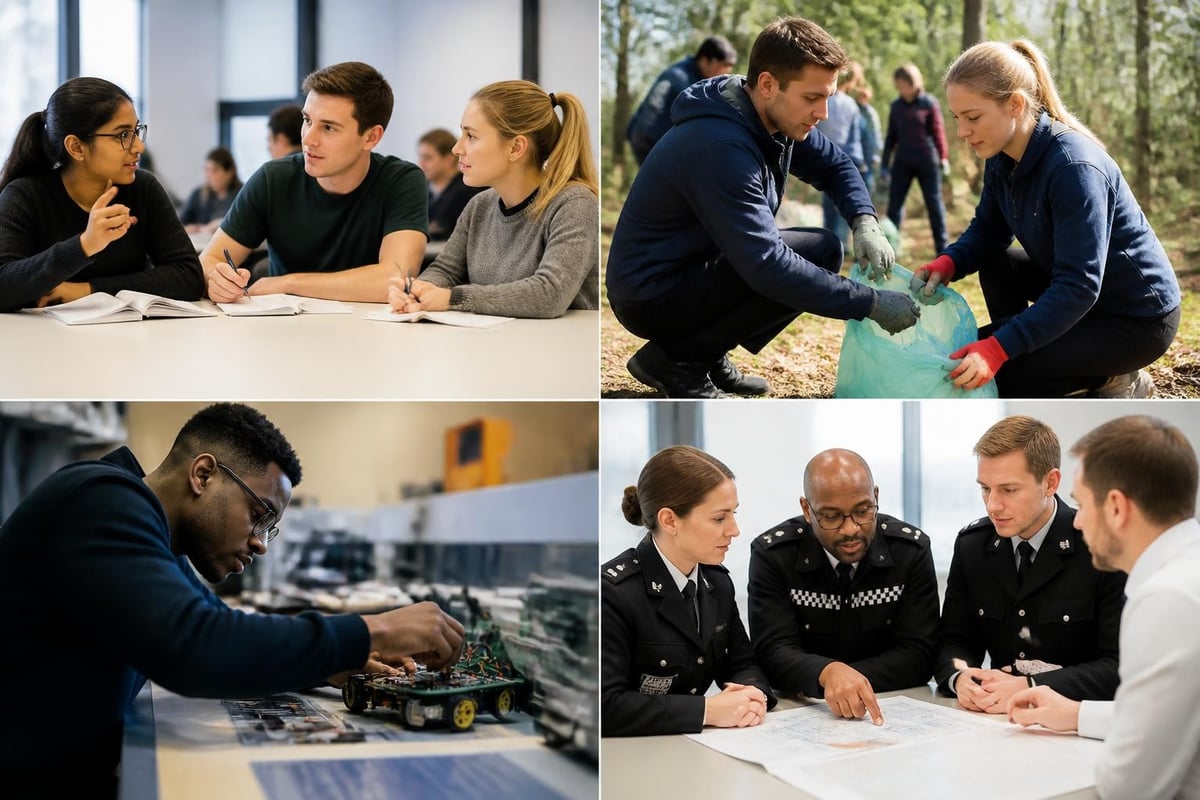
Research from Coursera highlights five practical strategies for candidates creating CVs without formal work experience, emphasising the critical importance of showcasing education and extracurricular involvement.
Structuring Your CV Effectively
The structure of your CV for no job experience should strategically place your strongest credentials at the top, ensuring recruiters immediately see your value proposition. Unlike traditional chronological CVs that lead with employment history, your document should prioritise sections that showcase your capabilities.
Recommended structure for a CV with no job experience:
- Contact details and personal statement (your compelling introduction)
- Education (your most substantial credential section)
- Skills (technical, linguistic, and soft skills relevant to target roles)
- Relevant experience (voluntary work, internships, placements, projects)
- Additional sections (achievements, interests, certifications)
This format ensures that your academic credentials and demonstrable capabilities receive immediate attention, rather than drawing focus to the absence of traditional employment.
Crafting a Powerful Personal Statement
Your personal statement serves as the crucial opening pitch in your CV for no job experience. This brief paragraph (typically 3-4 sentences) must immediately convey your value, enthusiasm, and suitability for the roles you’re targeting. Think of it as your verbal handshake, the first impression that determines whether a recruiter continues reading.
Effective personal statements for CVs without experience should:
Include your current status (student, recent graduate, career changer) and relevant qualifications, express genuine enthusiasm for the industry or role you’re pursuing, highlight 2-3 key strengths or skills that align with employer needs, and demonstrate your understanding of what the role requires. Avoid generic statements that could apply to anyone.
For instance, a recent graduate might write: “Recent Business Management graduate with a 2:1 from Manchester University, seeking to begin my career in digital marketing. Through my dissertation on social media engagement strategies and voluntary work managing content for a local charity, I’ve developed strong analytical skills and a genuine passion for creating campaigns that connect with audiences. Eager to apply my research capabilities and creative thinking to support innovative marketing initiatives.”
The University of York provides comprehensive guidance on creating compelling CVs for students and graduates with limited professional experience, with particular emphasis on leveraging academic achievements.
Maximising Your Education Section
When writing a CV for no job experience, your education section transforms from a simple list of qualifications into a showcase of relevant skills, knowledge, and achievements. This section deserves substantial attention and strategic development.
Presenting Academic Achievements Strategically
Rather than merely listing your qualifications, expand each entry to demonstrate the skills and knowledge gained. Include your degree classification (if strong), relevant modules that align with your target roles, significant projects or dissertations, and any academic awards or scholarships.
| Education Element | What to Include | Why It Matters |
|---|---|---|
| Degree/Qualification | Full title, institution, dates, classification | Establishes your foundational knowledge |
| Relevant Modules | 3-5 courses directly applicable to target roles | Demonstrates specific, job-relevant learning |
| Projects | Brief descriptions highlighting skills used | Shows practical application of knowledge |
| Achievements | Awards, high marks, leadership positions | Evidences excellence and initiative |
For A-levels or equivalent qualifications, include subjects and grades, particularly if they’re relevant to your target industry. If you’re still studying, clearly state your expected graduation date and anticipated classification.
Example education entry for a CV with no job experience:
BSc Computer Science (Expected 2:1), University of Leeds | September 2023 – June 2026
Relevant modules: Database Management, Web Development, User Experience Design, Agile Project Management
Final year project: Developed a mobile application for student timetable management using React Native, achieving 78% mark and positive feedback for intuitive interface design
Member of Computer Science Society; participated in hackathon teams twice, placing third in 2025 university-wide competition

Highlighting Transferable Skills
The skills section of your CV for no job experience requires careful consideration and strategic positioning. Transferable skills are capabilities that apply across different contexts, whether gained through education, volunteering, hobbies, or personal projects.
StandOut CV emphasises the importance of focusing on transferable skills when creating a CV without formal work experience, particularly highlighting abilities gained through education and extracurricular activities.
Identifying Your Transferable Skills
Common transferable skills valuable to employers:
- Communication (written and verbal)
- Teamwork and collaboration
- Time management and organisation
- Problem-solving and critical thinking
- Digital literacy and technical proficiency
- Adaptability and flexibility
- Leadership and initiative
- Attention to detail
- Research and analytical capabilities
- Customer service orientation
For each skill you list, consider where you’ve demonstrated it. A part-time role serving customers at a local café develops communication, multitasking, and customer service skills. Organising a university society event demonstrates project management, leadership, and stakeholder coordination.
Technical and Software Skills
In 2026, digital competencies feature prominently in almost every CV for no job experience. List specific software, platforms, and tools you’re proficient in, being honest about your level of expertise.
Categorise technical skills clearly:
- Microsoft Office: Word (advanced), Excel (intermediate including pivot tables and VLOOKUP), PowerPoint (advanced)
- Digital Marketing: Google Analytics, Hootsuite, Canva, basic SEO principles
- Languages: Spanish (conversational), French (basic)
- Industry-specific: AutoCAD (intermediate), Adobe Creative Suite (Photoshop, InDesign)
Leveraging Non-Traditional Experience
When creating a CV for no job experience in the traditional sense, it’s essential to recognise that experience comes in many forms beyond formal employment. Voluntary work, internships, work placements, university projects, freelance work, and even significant personal initiatives all constitute legitimate experience.
Voluntary Work and Community Involvement
Voluntary positions often provide opportunities to develop skills identical to those required in paid roles. Present this experience with the same professional detail you would traditional employment.
Effective voluntary experience entry:
Social Media Volunteer, Age UK Manchester | January 2025 – Present
- Manage Facebook and Twitter accounts for local branch, growing follower base by 45% through consistent, engaging content
- Create weekly newsletter reaching 300+ subscribers, maintaining 22% open rate
- Coordinate with events team to promote community activities, resulting in 30% increase in attendance
- Respond to enquiries and comments, providing information about services with professionalism and empathy
Notice how this entry focuses on quantifiable achievements and specific responsibilities rather than simply stating “helped with social media.” This approach demonstrates genuine capability rather than casual involvement.
Academic Projects and Dissertations
Substantial academic work, particularly final year projects or dissertations, can effectively substitute for professional experience in a CV for no job experience. These demonstrate research skills, subject matter expertise, project management, and the ability to work independently toward defined objectives.
Present academic projects by outlining the objective or research question, methodology and approach taken, skills utilised (software, research methods, analysis techniques), and outcomes or findings, particularly if they resulted in high marks or commendation.
Addressing Employment Gaps and Career Changes
Some individuals creating a CV for no job experience in a particular field may have employment history that’s completely unrelated to their target roles. Others might be returning to work after caring responsibilities or health issues. Honesty combined with strategic framing proves most effective.
For Career Changers
If you’re transitioning industries, your CV for no job experience in the new field should acknowledge your background whilst emphasising transferable skills and any steps you’ve taken toward your new direction.
Brief employment history entries for unrelated roles can be included, but focus descriptions on transferable skills rather than industry-specific tasks. Highlight any relevant training, courses, or certifications you’ve completed in your target field. Your personal statement should clearly articulate your motivation for change and what you bring from your previous experience.
Working with a professional CV writer can be particularly valuable when navigating career transitions, as they understand how to reposition your background strategically whilst maintaining authenticity and ATS compatibility.
For Returning Workers
Those re-entering the workforce after a significant absence face unique challenges when creating a CV for no job experience in recent years. Address gaps honestly but briefly, focusing instead on what you’ve maintained or developed during your time away.
Consider including volunteering at schools or community organisations, skills development through online courses or certifications, personal projects that kept technical skills current, caring responsibilities that developed transferable skills (organisation, multitasking, problem-solving), or freelance or casual work undertaken during the gap period.
Optimising for Applicant Tracking Systems
In 2026, the majority of medium to large organisations use Applicant Tracking Systems (ATS) to filter CVs before human review. Understanding how to create an ATS-friendly CV for no job experience significantly improves your chances of progressing to interview.
ATS optimisation essentials:
- Use standard section headings (Education, Skills, Experience) rather than creative alternatives
- Include relevant keywords from the job description naturally throughout your CV
- Avoid tables, text boxes, headers, and footers which ATS software often cannot read properly
- Use standard fonts (Arial, Calibri, Times New Roman) in 10-12 point size
- Save as .docx format unless specifically requested otherwise
- Spell out acronyms on first use, then use the abbreviation (e.g., “Search Engine Optimisation (SEO)”)
Built In offers comprehensive guidance on structuring CVs without formal experience, including critical advice on ATS compatibility and common formatting pitfalls to avoid.
Tailoring Your CV for Each Application
A generic CV for no job experience will rarely succeed in competitive application processes. Each role requires specific skills, attributes, and experiences, and your CV should reflect how you meet those particular requirements.
Analysing Job Descriptions
Before tailoring your CV, thoroughly analyse the job description to identify:
- Essential requirements (must-have qualifications, skills, or attributes)
- Desirable criteria (nice-to-have elements that strengthen applications)
- Key responsibilities (what you’ll actually be doing in the role)
- Company values (cultural fit indicators to address in your personal statement)
- Keywords and phrases (language to mirror in your CV for ATS optimisation)
Create a comparison table to assess your match:
| Job Requirement | Your Evidence | Where to Highlight |
|---|---|---|
| Strong communication skills | Presentations at university, newsletter editing | Skills section, education projects |
| Team collaboration | Group projects, sports team membership | Personal statement, experience section |
| Microsoft Excel proficiency | University coursework, online certification | Technical skills section |
| Customer focus | Voluntary helpline work, retail experience | Experience section with specific examples |
Customising Key Sections
For each application, adjust your personal statement to reference the specific role and company, reorder skills to prioritise those most relevant to the position, emphasise educational modules or projects aligned with job requirements, and quantify achievements that demonstrate capabilities the employer seeks.
This tailored approach shows genuine interest and helps your CV for no job experience compete effectively against candidates with more extensive work histories.

Common Mistakes to Avoid
When creating a CV for no job experience, certain pitfalls can significantly undermine your application’s effectiveness. Awareness of these common errors helps you craft a stronger, more professional document.
Critical mistakes that weaken CVs without experience:
- Apologising for lack of experience in your personal statement or cover letter
- Including irrelevant personal information such as marital status, age, or photograph (unless specifically requested)
- Listing generic skills without evidence (claiming “excellent communication skills” without demonstrating where you’ve used them)
- Making your CV too long (aim for one page if possible, maximum two pages)
- Using unprofessional email addresses (create a simple firstname.lastname@email.co.uk address)
- Including outdated or irrelevant qualifications (GCSEs become less relevant once you have A-levels or degrees)
- Failing to proofread (spelling and grammatical errors create extremely negative impressions)
- Copying template language that sounds generic and impersonal
- Exaggerating skills or experience (dishonesty will be discovered and damage your reputation)
Authenticity combined with strategic presentation proves far more effective than embellishment or false claims.
Enhancing Your CV with Additional Sections
Beyond the core sections, additional elements can strengthen a CV for no job experience by demonstrating breadth of interest, commitment, and relevant capabilities.
Achievements and Awards
A dedicated achievements section highlights recognition you’ve received, whether academic, athletic, or community-based. Include scholarships or bursaries, academic prizes or commendations, sports achievements or team captaincy, Duke of Edinburgh awards, competition placements, or recognition for voluntary contributions.
Frame each achievement to demonstrate the qualities it reflects. Winning a university debating competition evidences research skills, persuasive communication, and confidence under pressure.
Interests and Hobbies
Whilst often overlooked, a brief interests section can provide talking points during interviews and demonstrate personal qualities. Choose interests that either show relevant skills, demonstrate commitment and discipline, indicate cultural fit with the organisation, or provide genuine conversation opportunities.
Effective interest descriptions:
“Long-distance running: Completed three half-marathons, demonstrating goal-setting, discipline, and perseverance”
Rather than simply: “Running”
Professional Development
Any courses, certifications, or training you’ve completed strengthen a CV for no job experience by showing initiative and commitment to skill development. Include online courses from platforms like Coursera, FutureLearn, or LinkedIn Learning, professional certifications relevant to your target industry, workshops or training sessions attended, and webinars or conferences that enhanced your industry knowledge.
For each entry, include the course title, provider, completion date, and briefly note what you gained or why it’s relevant to your target roles.
Frequently Asked Questions
How long should my CV be if I have no job experience?
Your CV for no job experience should ideally fit on one page, particularly if you’re a recent graduate or school leaver. Focus on quality over quantity, ensuring every element adds value. If you have substantial educational achievements, relevant projects, and meaningful voluntary work, extending to two pages is acceptable, but avoid padding with irrelevant information simply to fill space.
Should I include a photo on my CV if I have no experience?
In the UK, it’s standard practice not to include photographs on CVs unless specifically requested (such as for acting or modelling roles). Photographs can introduce unconscious bias and aren’t necessary for most professional applications. Focus instead on demonstrating your capabilities through well-presented content.
What if I have absolutely no work experience, volunteering, or extracurricular activities?
If you genuinely have minimal experience beyond education, focus heavily on your academic achievements, relevant coursework, and transferable skills developed through your studies. Consider immediately beginning some voluntary work, even a few hours weekly, to add practical experience. Look for micro-volunteering opportunities online if in-person options aren’t available. Additionally, consider personal projects related to your target field that you can undertake independently and document on your CV.
How do I explain employment gaps in a CV for no job experience?
Brief gaps during education or between qualifications generally don’t require explanation. For longer gaps, a single line in your CV or cover letter suffices: “Career break for family caring responsibilities” or “Gap year travelling and developing language skills.” Focus your CV content on what you can offer moving forward rather than dwelling on absences. If the gap involved any skill development, voluntary work, or relevant activities, include these as experience entries.
Can I use a skills-based CV format instead of chronological?
Skills-based (or functional) CV formats can work well for CVs with no job experience, as they prioritise capabilities over chronological work history. However, many recruiters prefer seeing some chronological structure to understand your timeline. A hybrid approach often works best: lead with a strong personal statement and comprehensive skills section, then include education and any experience (voluntary, projects, internships) in reverse chronological order. This combines the benefits of both formats whilst maintaining clarity.
Practical Steps to Get Started Today
Creating an effective CV for no job experience requires time and thoughtful reflection, but breaking the process into manageable steps makes it less overwhelming.
Action plan for building your CV:
- Conduct a skills audit: List everything you’ve done (education, voluntary work, hobbies, projects) and identify the skills each activity developed
- Research target roles: Review 5-10 job descriptions in your target field to identify common requirements and keywords
- Draft your personal statement: Write 3-4 sentences articulating who you are, what you offer, and what you’re seeking
- Structure your education section: Include relevant modules, projects, achievements, and society memberships
- Compile your experience: Document any voluntary work, internships, projects, or relevant activities with specific responsibilities and achievements
- Build your skills section: Create categorised lists of technical and transferable skills with honest proficiency levels
- Proofread meticulously: Check for spelling, grammar, consistency, and formatting errors
- Seek feedback: Ask a trusted mentor, careers advisor, or family member to review your draft
- Tailor for each application: Customise key sections to align with specific job requirements
- Save appropriately: Use a professional filename (e.g., “Firstname_Lastname_CV.docx”)
Remember that your CV for no job experience will evolve as you gain more qualifications, skills, and experiences. Regular updates ensure it remains current and effective.
Making Your CV Stand Out
In competitive job markets, a technically correct CV for no job experience isn’t always sufficient. Finding ways to differentiate yourself whilst maintaining professionalism can significantly improve your success rate.
Differentiation strategies that work:
Quantify achievements wherever possible (percentages, numbers, timeframes create impact). Use strong action verbs to begin bullet points (achieved, developed, coordinated, implemented, designed). Demonstrate genuine industry knowledge in your personal statement through reference to current trends or challenges. Show progression and development, even within educational or voluntary contexts. Include relevant keywords naturally to pass ATS systems whilst remaining readable for humans.
The most effective CVs tell a coherent story about who you are, what you’ve achieved, and where you’re heading. Even without traditional employment history, you can craft a narrative that positions you as a capable, motivated candidate ready to contribute meaningfully to an organisation.
For personalised support in creating a CV that truly represents your potential, contact me at John@johnlogan.co.uk for an initial consultation and honest feedback on your current approach.
Creating a compelling CV for no job experience requires strategic thinking about how to present your education, skills, and non-traditional experiences in ways that resonate with employers. By focusing on transferable capabilities, quantifiable achievements, and genuine enthusiasm rather than apologising for gaps in employment history, you can craft a document that opens doors to interviews and opportunities. If you’re struggling to position yourself effectively or want expert guidance on creating a bespoke, ATS-optimised CV that showcases your true potential, John Logan Consulting and Mentoring offers personalised, consultative CV writing services tailored to your unique situation and career goals.
Send me your CV for a free review to John@johnlogan.co.uk. I’ll look through it myself and give you honest, constructive feedback as a professional CV writer.