

Send me your CV for a free review to John@johnlogan.co.uk. I’ll look through it myself and give you honest, constructive feedback as a professional CV writer.
Transitioning from military service to civilian employment represents one of the most significant career shifts professionals face. The challenge isn’t a lack of skills or experience, it’s the fundamental disconnect between military terminology and civilian recruitment expectations. A military to civilian resume writer bridges this critical gap, translating years of service, leadership, and technical expertise into language that hiring managers understand and value. For UK veterans, this professional support can mean the difference between dozens of rejections and multiple interview invitations.
Understanding the Military to Civilian Translation Challenge
Military service develops exceptional qualities: leadership under pressure, technical expertise, operational planning, team coordination, and problem-solving in complex environments. Yet these achievements often remain invisible to civilian recruiters who don’t understand military ranks, operational terminology, or the true scope of service roles.
The primary obstacle isn’t capability, it’s communication. Military CVs frequently contain acronyms, unit designations, and role descriptions that carry no meaning outside the armed forces. A Warrant Officer Class 1 with extensive logistics management experience might list “WO1, responsible for MT ops, QM stores, and CQMS duties” without realising that civilian employers have no context for these terms.
A specialised military to civilian resume writer addresses this disconnect through expert translation. They recognise that “section commander leading eight personnel in operational environments” translates to “team leader managing direct reports in high-pressure situations requiring rapid decision-making and accountability.” The skills remain identical, but the presentation shifts entirely.
Common Translation Pitfalls
Veterans commonly make several errors when attempting DIY CV transitions:
- Retaining military jargon without civilian equivalents
- Undervaluing leadership experience by listing duties instead of achievements
- Failing to quantify accomplishments in business-relevant terms
- Omitting transferable skills that seem obvious but aren’t explicitly stated
- Using chronological formats that emphasise gaps during deployment rather than skills
These mistakes don’t reflect poorly on service members, they simply highlight the specialised knowledge required for effective career transition documentation.
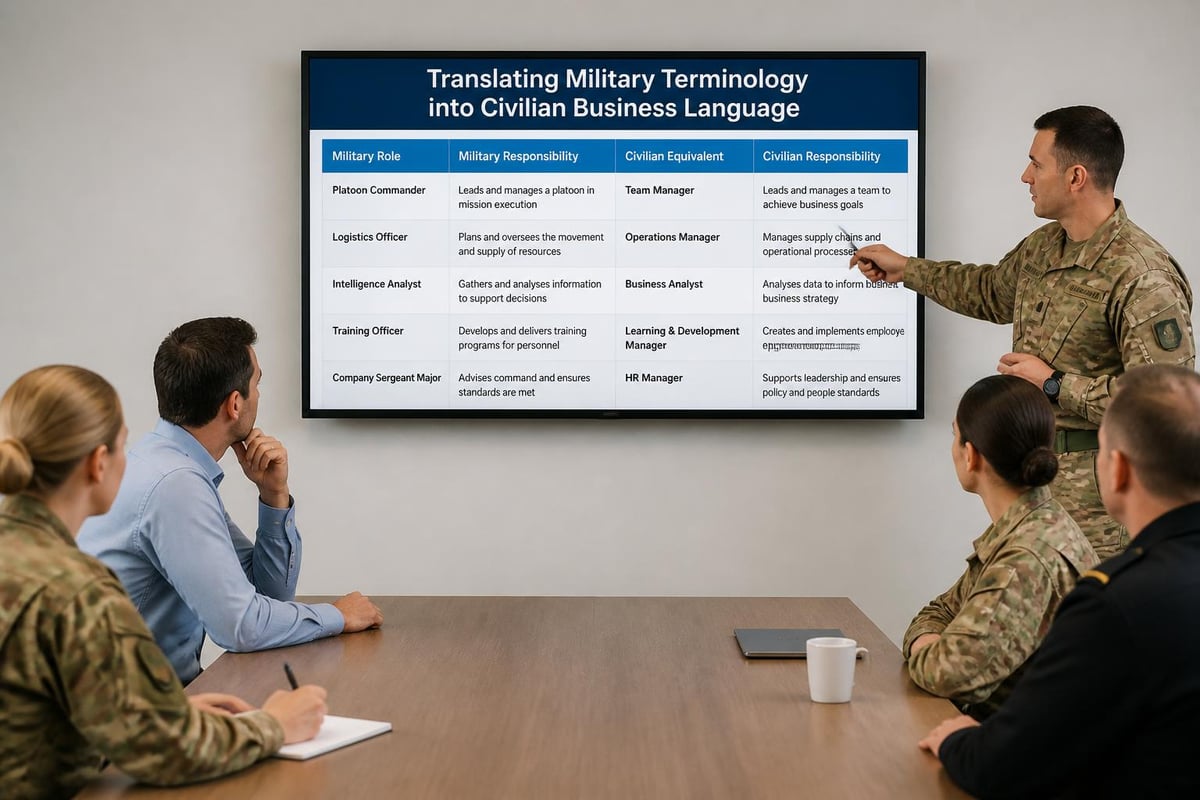
Key Skills That Require Professional Translation
Military service develops competencies that civilian employers desperately seek, yet the language barrier often prevents recognition. A military to civilian resume writer identifies and articulates these transferable skills effectively.
| Military Skill Area | Civilian Equivalent | Business Value |
|---|---|---|
| Operational planning and execution | Project management and delivery | Meeting deadlines, managing resources, achieving objectives |
| Personnel management and training | Team leadership and development | Building capable teams, improving performance, reducing turnover |
| Equipment maintenance and logistics | Supply chain and asset management | Minimising downtime, controlling costs, ensuring availability |
| Security clearance and protocols | Compliance and risk management | Protecting sensitive information, following regulations, reducing liability |
Leadership represents perhaps the most valuable yet poorly communicated military skill. A Lance Corporal who supervised vehicle maintenance for a platoon’s fleet managed assets worth hundreds of thousands of pounds, coordinated multiple team members, ensured compliance with safety regulations, and maintained operational readiness. That’s exceptional management experience, but it must be framed appropriately.
Technical Qualifications and Certifications
Military training produces highly qualified professionals with certifications that directly transfer to civilian roles. Combat medics hold qualifications equivalent to paramedics. Communications specialists possess IT and networking expertise. Engineers gain hands-on experience with sophisticated equipment and systems.
The challenge lies in presenting these qualifications in formats civilian HR departments recognise. Military training courses need civilian equivalents identified. Technical skills require industry-standard terminology. A professional CV writer experienced in military to civilian career transitions understands these nuances and ensures qualifications receive proper recognition.
Structuring the Military to Civilian CV
Format selection significantly impacts how civilian employers receive military experience. Traditional chronological CVs often work against veterans, particularly those with deployment gaps or multiple postings. A military to civilian resume writer typically recommends skills-based or hybrid formats that emphasise capabilities over chronology.
Recommended CV Structure
Professional Profile: A powerful opening statement that immediately positions the veteran for civilian roles. This section translates military identity into civilian professional brand, highlighting leadership, technical skills, and relevant achievements without military jargon.
Key Skills: A bullet-pointed section showcasing transferable competencies using civilian terminology. This might include project management, team leadership, logistics coordination, technical expertise, compliance management, and problem-solving.
Professional Experience: Military roles presented with civilian-friendly job titles and achievement-focused descriptions. Rather than listing duties, this section demonstrates impact through quantified accomplishments.
Education and Qualifications: Military training translated into recognisable credentials, alongside any civilian education completed during or after service.
Additional Information: Security clearances (if still valid), volunteer work, professional memberships, and other relevant details that strengthen the application.
The Professional CV Writing Process for Veterans
Working with a military to civilian resume writer involves more than simple reformatting. The consultative process draws out achievements and experiences that veterans often consider unremarkable but employers find compelling.
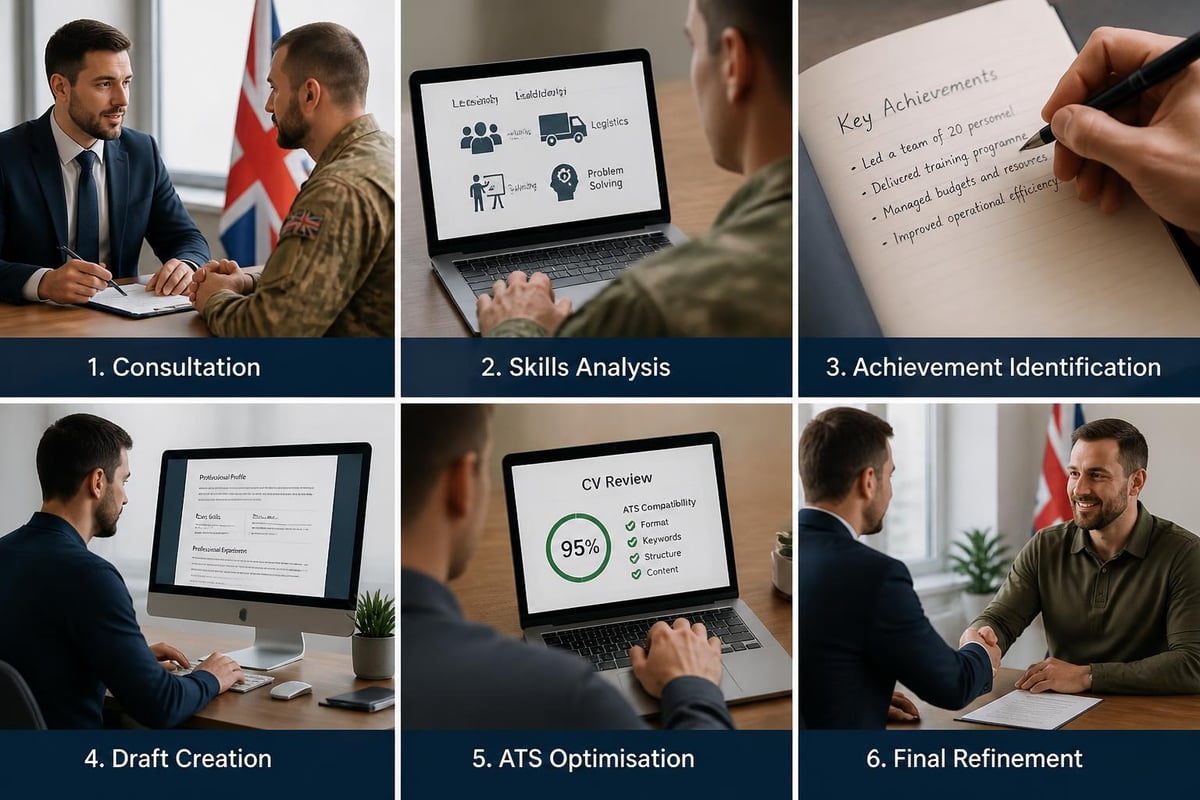
The typical process includes:
- Detailed consultation exploring the full scope of military service, specific roles, achievements, and career objectives
- Skills identification pinpointing transferable competencies and technical qualifications relevant to target industries
- Achievement quantification translating military accomplishments into metrics civilian employers value
- Draft creation building a bespoke CV that positions the veteran competitively for specific roles
- Refinement and optimisation ensuring ATS compatibility whilst maintaining compelling, human-readable content
At John Logan Consulting, this process is completely personal and consultative, with no templates or AI shortcuts. Every CV is written from scratch through detailed meetings, understanding each veteran’s unique journey and goals, then reviewing each draft together, word by word, refining it until it truly reflects individual experience and supports targeted roles.
ATS Optimisation for Military CVs
Applicant Tracking Systems present additional challenges for military to civilian transitions. These software platforms scan CVs for keywords, qualifications, and formatting before human eyes ever see them. Military jargon triggers no keyword matches. Unusual job titles confuse the algorithms. Poor formatting causes parsing errors.
A military to civilian resume writer ensures CVs pass ATS screening through:
- Strategic keyword placement based on target job descriptions
- Clean, ATS-friendly formatting that software can reliably parse
- Civilian job title equivalents that match recruiter search terms
- Standard section headings that ATS systems recognise
- Qualification formatting that automated systems correctly identify
This technical optimisation happens alongside compelling human-readable content, ensuring CVs succeed at both algorithmic and human evaluation stages.
Industry-Specific Considerations
Different civilian sectors value different aspects of military experience. A military to civilian resume writer tailors CVs based on target industries, emphasising relevant skills and downplaying less applicable experience.
Logistics and Supply Chain
Military logistics professionals transition naturally into civilian supply chain roles. However, the CV must emphasise inventory management, procurement, supplier coordination, and cost control rather than military-specific operational terminology. Quantified achievements might include percentage improvements in supply availability, cost savings achieved, or efficiency gains delivered.
Security and Risk Management
Veterans with security clearances and protective services experience suit security management, risk assessment, and compliance roles. The CV should highlight access control, threat assessment, incident response, and regulatory compliance rather than operational security procedures. Current or recently expired clearances add significant value and must be prominently featured.
Technology and Engineering
Technical specialists from signals, engineering, or IT backgrounds possess highly marketable skills. Their CVs need specific technical competencies listed using industry-standard terminology. Rather than military equipment designations, the focus shifts to transferable skills: network administration, systems maintenance, troubleshooting methodologies, and project delivery.
Healthcare and Emergency Services
Combat medics, nursing staff, and emergency responders from military backgrounds have clear civilian equivalents. Their CVs must present qualifications in recognised civilian frameworks, emphasise patient care achievements, and highlight experience managing medical situations under pressure. Professional registration requirements and continuing education must be clearly documented.
Common Questions About Military to Civilian Resume Writing
How long should a military to civilian CV be?
For most veterans, two pages represents the optimal length. This provides sufficient space to thoroughly explain transferable skills and achievements without overwhelming recruiters. Senior officers or those with extensive technical backgrounds might extend to three pages, but brevity and impact should always take priority over comprehensiveness.
Should I include my full military service history?
Not necessarily. Recent and relevant experience deserves detailed coverage, whilst earlier roles might be summarised briefly. The CV should emphasise experience most applicable to target civilian positions. A veteran with 20 years of service applying for logistics management roles might detail the last 10 years whilst summarising earlier postings in a single line.
Do I need different CVs for different job applications?
Yes. Whilst core content remains consistent, successful applications require tailoring to specific roles. This means adjusting the professional profile, reordering key skills, and emphasising different achievements based on each job description. A military to civilian resume writer typically provides a master CV that can be adapted for various applications, plus guidance on effective customisation.
How do I explain deployment gaps?
Deployment isn’t a gap, it’s valuable experience. Frame it as operational deployment or overseas assignment, then highlight achievements and skills gained during that period. Most employers view military service positively, particularly when the CV clearly articulates the professional development and leadership experience deployments provide.
Should I mention my military rank?
In some contexts, yes. Security-related roles, leadership positions, and certain government contractors value understanding military rank structure. However, the rank should be explained in civilian terms. Rather than “achieved WO1 rank,” consider “promoted to senior management level (Warrant Officer Class 1) responsible for department leadership and strategic planning.” This provides context whilst maintaining civilian accessibility.
Beyond the CV: Supporting Documents
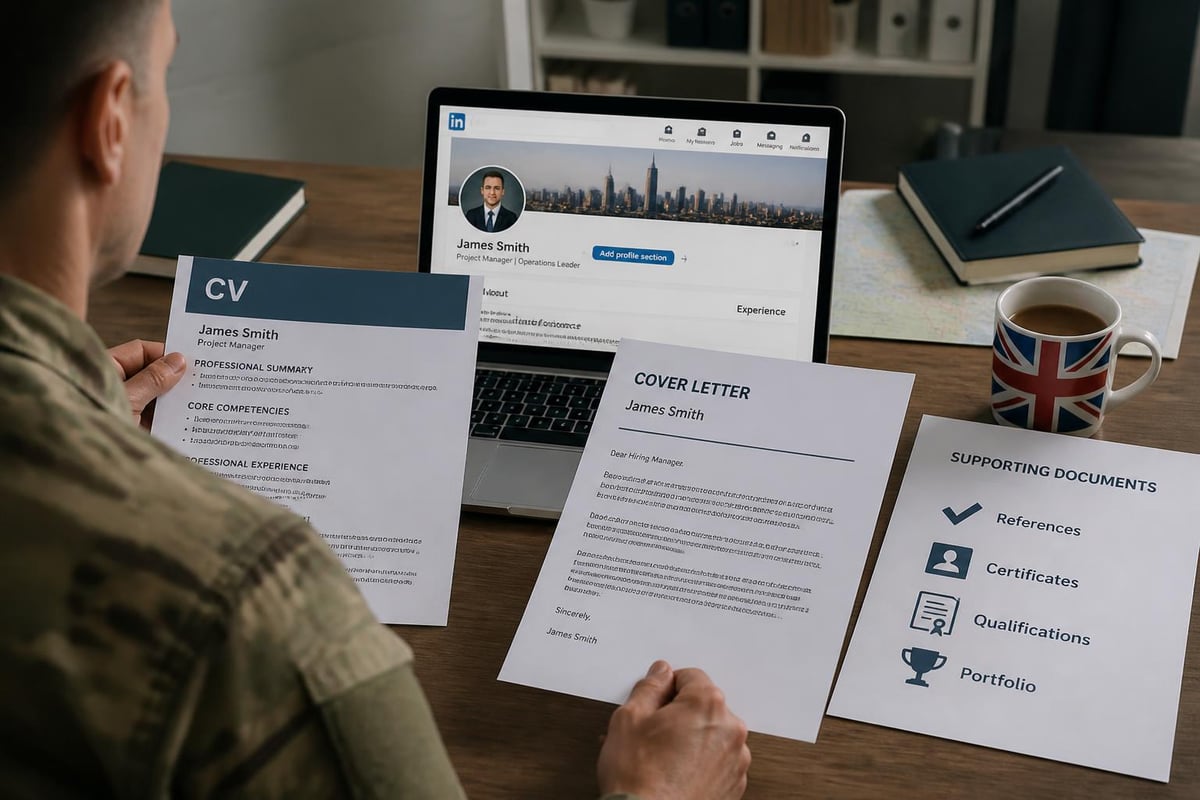
A military to civilian resume writer often provides additional documents that strengthen applications. Cover letters particularly benefit from professional writing, as they offer space to explicitly address the military-to-civilian transition and frame service experience as an asset rather than a curiosity.
Effective cover letters for transitioning veterans:
- Acknowledge the transition directly rather than hoping employers won’t notice
- Frame military service as professional development that created valuable skills
- Connect specific experiences to requirements in the job description
- Demonstrate research about the company and role
- Express enthusiasm for the civilian opportunity whilst respecting military background
LinkedIn profiles require similar translation work. Veterans benefit from comprehensive profile optimisation that converts military terminology into civilian language, connects them with relevant industry networks, and positions them for recruiter searches. Professional profile development ensures consistency across all career marketing materials.
Measuring Success: What Results Should Veterans Expect?
A professionally written military to civilian CV should generate measurable improvements in job search outcomes. Veterans typically report:
- Increased interview invitations, often within weeks of updating their CV
- Better quality opportunities that match skills and experience levels
- Improved confidence in applications, knowing their experience is properly represented
- Faster transition timelines from service to civilian employment
- Higher starting salaries reflecting properly communicated experience and qualifications
The investment in professional CV writing services pays dividends through these improved outcomes. Many veterans spend months applying unsuccessfully with self-written CVs before seeking professional help, losing potential earnings and opportunities during that period.
Industry Recognition and Professional Standards
Quality varies significantly amongst CV writing services claiming military expertise. Veterans should seek writers with demonstrable experience in military to civilian transitions, ideally with recruitment or HR backgrounds that provide insight into employer perspectives.
Professional CV writers who understand military experience translation typically possess:
- Recruitment industry experience understanding what employers actually seek
- Military familiarity either through service, family connections, or extensive work with veteran clients
- Strong portfolios demonstrating successful transitions across various industries
- Consultative approaches that draw out relevant experience through discussion rather than questionnaires
- Revision policies ensuring the final CV accurately represents the veteran and targets appropriate roles
Testimonials and reviews from other veterans provide valuable insight into service quality and results achieved.
Sector-Specific Terminology Translation
Certain military specialisms require particularly careful translation due to highly technical or operationally specific language. These areas benefit significantly from experienced military to civilian resume writer support.
Intelligence and Analysis
Intelligence professionals possess exceptional analytical skills, information management capabilities, and strategic thinking. However, terms like “intelligence preparation of the battlefield” or “collection management” mean nothing to civilian recruiters. The CV must reframe these as market analysis, competitive intelligence, data-driven decision support, and research coordination.
Aviation and Aerospace
Military pilots, ground crew, and aviation technicians have civilian equivalents, but the CV must emphasise relevant qualifications and experience appropriately. Commercial pilot licenses, technical certifications, safety management experience, and operational coordination all need clear presentation in industry-standard formats.
Communications and IT
Signals specialists and military IT professionals often possess cutting-edge technical skills but describe them using military designations. The CV should list specific technologies, programming languages, network protocols, and systems using civilian industry terminology. Certifications like CompTIA, Cisco, or Microsoft credentials should be prominently featured.
Regional Considerations for UK Veterans
UK veterans face specific market conditions that differ from other countries’ military transition landscapes. Understanding these regional factors helps optimise CV effectiveness.
The UK job market particularly values:
- Security clearances, which remain valid for civilian roles requiring government contract work
- Leadership experience, especially from combat or operational environments
- Technical qualifications that transfer to high-demand civilian sectors
- Project management capabilities demonstrated through operational planning and execution
- Diversity and inclusion initiatives that specifically recruit veterans
Many UK employers have veteran employment programmes or commitments. A well-crafted CV that explicitly identifies military service whilst demonstrating civilian readiness positions candidates to benefit from these initiatives.
The Investment in Professional CV Writing
Professional CV writing represents a career investment rather than an expense. For transitioning service members, the cost of expert support typically returns multiples through improved employment outcomes, faster placements, and better salary negotiations.
Veterans should consider:
- Lost earnings from extended job searches using ineffective CVs
- Opportunity costs of accepting positions below qualification levels due to poor CV presentation
- Confidence impacts from repeated rejections that professional support could prevent
- Long-term career trajectory improvements from starting civilian careers in appropriate roles
Quality CV writing services provide value far exceeding their fees through these improved outcomes and reduced transition friction.
Practical Next Steps for Transitioning Veterans
Veterans beginning civilian career transitions should:
- Audit current CVs for military jargon, unexplained acronyms, and duty-focused content
- Research target industries understanding terminology, qualifications valued, and typical career paths
- Identify transferable skills using civilian frameworks and language
- Seek professional support from experienced military to civilian resume writers
- Prepare supporting materials including cover letters and LinkedIn profiles
The transition process requires patience and strategic preparation, but professional support significantly accelerates progress and improves outcomes.
Final Considerations for CV Excellence
Successful military to civilian CVs share common characteristics: clear civilian language, achievement-focused content, quantified accomplishments, ATS optimisation, and strategic positioning for target roles. These elements rarely emerge from template-based approaches or DIY efforts without specialist knowledge.
Veterans possess exceptional professional capabilities developed through years of service in demanding environments. The challenge isn’t capability, it’s communication. A military to civilian resume writer solves this challenge, translating valuable experience into language civilian employers understand and ensuring qualified veterans receive opportunities matching their true potential.
For veterans serious about career transition success, professional CV writing represents essential infrastructure for the job search ahead. The difference between self-written and professionally crafted CVs often determines whether exceptional candidates receive interviews or remain invisible to employers seeking exactly their capabilities.
Send me your CV for a free review to John@johnlogan.co.uk. I’ll look through it myself and give you honest, constructive feedback as a professional CV writer.
Transitioning from military service to civilian employment demands more than simply reformatting your CV-it requires expert translation of your valuable experience into language that civilian employers recognise and respect. If you’re ready to position your military background as the competitive advantage it truly is, John Logan Consulting and Mentoring provides the bespoke, consultative CV writing service that transforms service experience into interview opportunities. Every CV is written from scratch, optimised for both ATS systems and human recruiters, ensuring your skills, leadership, and achievements open the doors you deserve.