

[et_pb_section fb_built=”1″ _builder_version=”4.16″ global_colors_info=”{}” theme_builder_area=”post_content”][et_pb_row _builder_version=”4.16″ background_size=”initial” background_position=”top_left” background_repeat=”repeat” global_colors_info=”{}” theme_builder_area=”post_content”][et_pb_column type=”4_4″ _builder_version=”4.16″ custom_padding=”|||” global_colors_info=”{}” custom_padding__hover=”|||” theme_builder_area=”post_content”][et_pb_text _builder_version=”4.27.6″ background_size=”initial” background_position=”top_left” background_repeat=”repeat” hover_enabled=”0″ global_colors_info=”{}” theme_builder_area=”post_content” sticky_enabled=”0″]

text][et_pb_button button_url=”https://johnloganbmc.co.uk/contact-john-logan-cv-writer/” button_text=”Contact” admin_label=”Button” _builder_version=”4.27.4″ _module_preset=”default” global_colors_info=”{}” theme_builder_area=”post_content”]button][et_pb_text admin_label=”Text” _builder_version=”4.27.6″ background_size=”initial” background_position=”top_left” background_repeat=”repeat” hover_enabled=”0″ global_colors_info=”{}” theme_builder_area=”post_content” sticky_enabled=”0″]
Send me your CV for a free review to John@johnlogan.co.uk. I’ll look through it myself and give you honest, constructive feedback as a professional CV writer.
Transitioning from military service to civilian employment represents one of the most significant career changes anyone can make. The skills, discipline, and experience gained during military service are invaluable, yet translating them into language that civilian employers understand requires careful consideration and strategy. A well-structured military to civilian resume template provides the foundation for this crucial translation, helping veterans showcase their capabilities in ways that resonate with hiring managers who may have little understanding of military terminology or rank structures. Whether you served two years or twenty, your military background has equipped you with transferable skills that civilian organisations desperately need, and your CV must communicate this clearly and powerfully.
Understanding the Military to Civilian Translation Challenge
The fundamental challenge facing veterans lies in bridging two distinctly different workplace cultures. Military environments operate with specific terminology, rank structures, and operational frameworks that rarely exist in civilian organisations. When you list your role as “Squadron Leader” or “Warrant Officer Class 2,” most civilian recruiters cannot immediately grasp the level of responsibility or leadership this represents.
Creating an effective military to civilian resume template begins with recognising that your audience lacks context. They haven’t experienced military life, don’t understand the significance of various postings, and cannot interpret acronyms that were part of your daily vocabulary for years. This isn’t a criticism of civilian employers but rather a reality that must shape how you present your experience.
Key translation principles include:
- Replacing military rank titles with civilian equivalents
- Converting technical military terms into industry-standard language
- Quantifying achievements with specific metrics and outcomes
- Emphasising leadership, management, and technical skills over operational details
- Removing acronyms or explaining them when first used
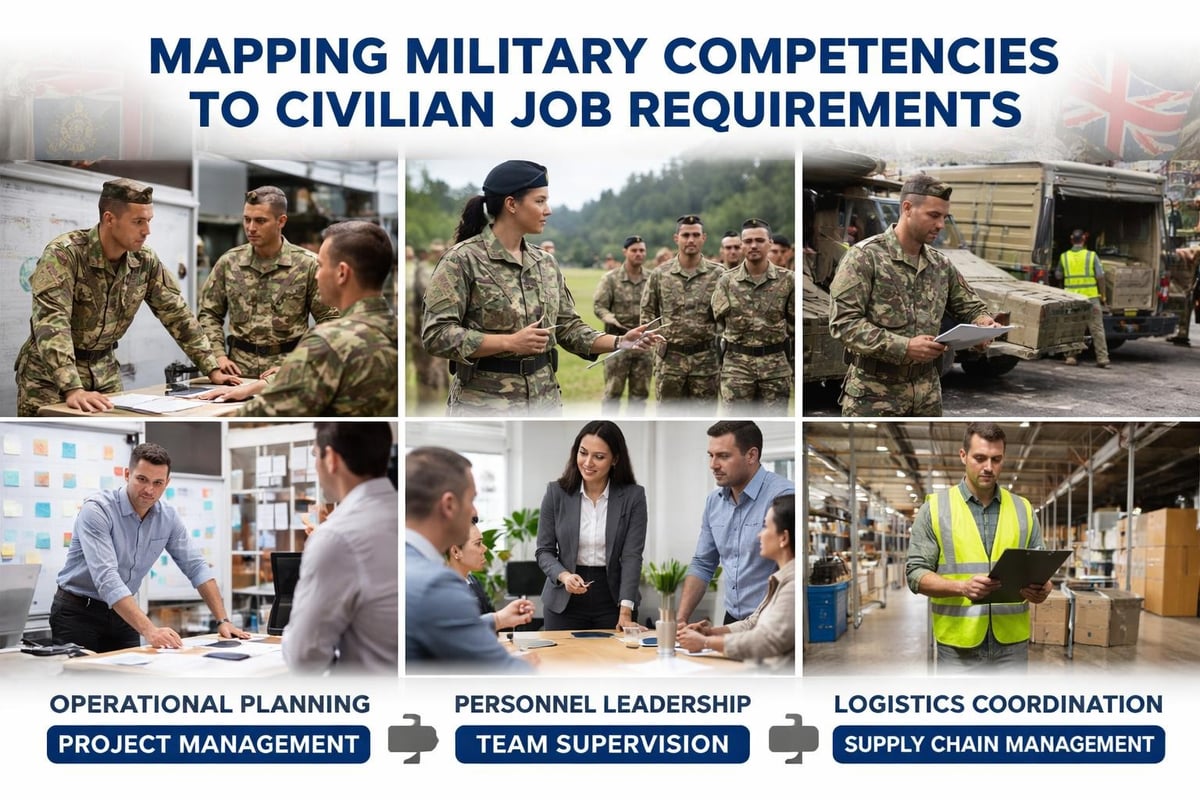
The most successful transitions occur when veterans view their military experience through a civilian lens, asking themselves what each role actually involved in terms of people management, budget oversight, training delivery, or project coordination. These are the elements that translate military experience effectively into civilian career contexts.
Essential Components of Your Military to Civilian Resume Template
A properly structured military to civilian resume template differs from standard civilian CVs in several important ways. Your template must accommodate the unique aspects of military service whilst presenting information in formats familiar to civilian recruiters.
Professional Summary Section
Begin with a powerful professional summary that immediately positions you as a civilian professional rather than a transitioning service member. This three-to-four-sentence paragraph should highlight your strongest transferable skills, quantified achievements, and target role.
Example structure:
“Accomplished operations manager with 12 years’ experience leading teams of up to 45 personnel in high-pressure environments. Proven track record in logistics coordination, budget management (£2.5M annually), and strategic planning. Expert in staff development, having trained over 200 individuals to operational standard. Seeking to leverage leadership expertise and operational excellence in a civilian project management role.”
Skills and Competencies
Create a dedicated skills section that uses civilian terminology exclusively. Research job descriptions in your target industry and mirror their language whilst remaining truthful about your capabilities.
| Military Context | Civilian Translation |
|---|---|
| Section Commander | Team Leader / Supervisor |
| Logistics Officer | Supply Chain Manager |
| Training Instructor | Learning & Development Specialist |
| Intelligence Analyst | Data Analyst / Research Specialist |
| Communications Technician | IT Systems Administrator |
This section should include both hard skills (software proficiency, technical qualifications, certifications) and soft skills (leadership, communication, problem-solving, adaptability). Many military-to-civilian resume examples demonstrate how effective this dual approach can be.
Professional Experience
This section requires the most careful translation work. For each military position, create a civilian-equivalent job title, followed by the actual military role in parentheses if relevant.
Format each role with:
- Civilian job title – e.g., “Operations Team Leader”
- Organisation and location – “British Army, Various UK and International Postings”
- Dates of service – Month/Year to Month/Year format
- Achievement-focused bullet points – 4-6 points per role
Focus your bullet points on outcomes rather than duties. Instead of “Responsible for maintaining equipment,” write “Maintained operational readiness of 15 vehicles valued at £750K, achieving 98% availability rate through preventative maintenance programme.”
Education and Qualifications
Many veterans underestimate the value of their military training and qualifications. List all relevant certifications, courses, and formal education, translating military-specific training into civilian equivalents where possible.
Include:
- Civilian-recognised qualifications (NVQs, BTECs, degrees)
- Professional certifications (project management, first aid, driving categories)
- Technical training (translated into civilian terms)
- Leadership and management courses
- Any ongoing professional development
Tailoring Your Military to Civilian Resume Template for Different Industries
Different sectors value different aspects of military experience. Your military to civilian resume template should be adaptable enough to emphasise the most relevant skills for each application.
Corporate and Business Roles
Corporate employers value your leadership, project management, and organisational skills. Emphasise your experience managing teams, coordinating complex operations, meeting deadlines under pressure, and working within hierarchical structures. Highlight any budget management, procurement experience, or strategic planning involvement.
Your military background demonstrates reliability, commitment, and the ability to work within established processes, all highly valued in corporate environments. When applying for management positions, focus on the size of teams you led, the scope of your responsibilities, and measurable outcomes you achieved.
Technical and Engineering Positions
If your military role involved technical skills, emphasise specific equipment, systems, or technologies you worked with. Research whether military-specific systems have civilian equivalents or applications, and highlight transferable technical competencies.
Technical translation examples:
- Electronic warfare systems → Network security and communications
- Vehicle maintenance → Automotive engineering and diagnostics
- Aviation ground crew → Aerospace operations and safety compliance
- Communications systems → IT infrastructure and telecommunications
Many military skills translate directly into technical civilian roles, particularly in engineering, manufacturing, and technology sectors.
Public Sector and Emergency Services
Public sector organisations, particularly emergency services, NHS, and local government, often understand military experience more readily than private sector employers. However, you should still translate your experience clearly.
These sectors particularly value your crisis management experience, ability to work under pressure, understanding of protocols and procedures, and commitment to public service. Emphasise any experience with public engagement, community relations, or inter-agency cooperation.
Optimising Your Military to Civilian Resume Template for ATS Systems
Applicant Tracking Systems (ATS) scan CVs for specific keywords, formatting elements, and relevant content before human recruiters ever see them. Veterans often struggle with ATS because military terminology doesn’t match the keywords these systems search for.
Keyword Research and Implementation
Before finalising your military to civilian resume template, thoroughly research job descriptions in your target field. Identify recurring terms, required skills, and common qualifications. Incorporate these keywords naturally throughout your CV, particularly in your skills section and professional experience bullet points.
ATS-friendly practices:
- Use standard section headings (Professional Experience, Education, Skills)
- Avoid headers, footers, tables, and graphics that ATS cannot read
- Include both acronyms and spelt-out versions of important terms
- Use simple, clean formatting with a clear hierarchy
- Save as .docx format unless specifically requested otherwise
- Include relevant keywords in context, not just listed randomly
When working with a professional CV writer, they’ll ensure your document is fully ATS-optimised whilst remaining compelling for human readers. This dual-purpose approach significantly increases your chances of progressing through initial screening stages.
Quantifying Military Achievements
Numbers speak louder than descriptions. Transform vague responsibilities into concrete achievements by adding metrics, percentages, timeframes, and financial values wherever possible.
| Weak Statement | Strong, Quantified Statement |
|---|---|
| Led a team | Led a team of 22 personnel across 3 operational units |
| Managed equipment | Maintained equipment inventory worth £1.2M with 99.5% accountability |
| Conducted training | Designed and delivered 40+ training sessions to 150 personnel annually |
| Improved processes | Streamlined logistics procedures, reducing processing time by 35% |
This approach mirrors advice from top resume tips for veterans, which emphasises the importance of demonstrating impact through measurable results.
Common Mistakes to Avoid When Creating Your Military to Civilian Resume Template
Even experienced service personnel make predictable errors when translating their military background into civilian CV format. Awareness of these pitfalls helps you avoid them entirely.
Excessive Military Jargon
Your CV should be comprehensible to someone with no military knowledge whatsoever. Avoid acronyms like “OIC,” “SNCO,” “CBRN,” or “J1-J9” unless you explicitly define them, and even then, consider whether they add value.
Common jargon problems:
- Using military rank without civilian equivalent
- Including operation codenames without context
- Referencing military-specific systems without explanation
- Assuming knowledge of military structure or hierarchy
- Using abbreviations for units, postings, or qualifications
Every term should pass the “civilian comprehension test.” If your neighbour, parent, or partner wouldn’t understand it, rephrase it.
Focusing on Duties Rather Than Achievements
Military job descriptions often emphasise responsibilities and duties, but civilian employers care more about what you accomplished and the impact you made. Transform duty-based descriptions into achievement-focused statements.
Instead of listing what you were responsible for, demonstrate what you achieved, improved, or delivered. This shift in perspective makes your experience relevant regardless of the specific military context.
Creating an Overly Long CV
Military careers accumulate extensive experience, qualifications, and deployments, but civilian recruiters expect concise CVs. In the UK, two pages is standard, occasionally extending to three for very senior roles or highly technical positions.
Strategies for managing length:
- Focus on the most recent 10-15 years of experience
- Provide detailed information for recent roles, brief summaries for earlier ones
- Combine similar roles held at different postings
- Remove outdated technical skills or irrelevant early-career positions
- Use concise language and strong action verbs
If you’re struggling to condense extensive military experience into a compelling, concise format, guidance from specialists in creating CVs for ex-British military can prove invaluable.
Complementing Your CV with Cover Letters and LinkedIn
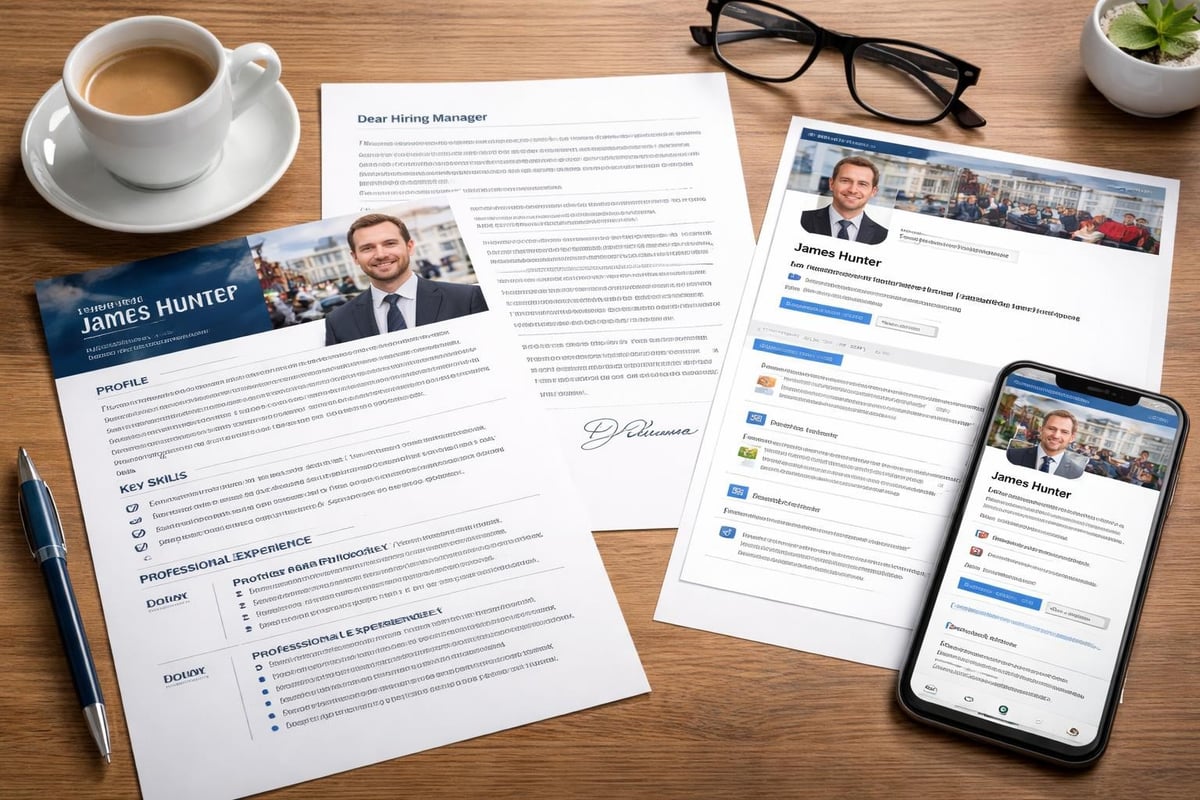
Your military to civilian resume template forms the foundation of your application package, but it shouldn’t work in isolation. Cover letters and LinkedIn profiles play crucial supporting roles in your civilian job search.
Strategic Cover Letter Integration
A well-crafted cover letter allows you to address your military background directly, explaining your transition motivation and demonstrating cultural fit with potential employers. Unlike your CV, which must remain factual and concise, your cover letter provides space to tell your story.
Use your cover letter to acknowledge your non-traditional background whilst positioning it as an asset rather than a liability. Explain what attracted you to the specific role and organisation, demonstrating research and genuine interest. Connect your military experience to the role’s requirements explicitly, making the recruiter’s job easier.
When applying for roles, consider working with specialists who provide bespoke cover letters tailored to specific opportunities. This personalised approach can significantly strengthen applications, particularly when transitioning from military to civilian employment.
LinkedIn Profile Optimisation
LinkedIn serves a different purpose than your CV. Where your CV provides a formal, concise overview, LinkedIn allows for more comprehensive storytelling, networking, and ongoing professional development demonstration.
LinkedIn strategies for veterans:
- Use a civilian-appropriate job title in your headline
- Write a compelling “About” section that addresses your transition
- Translate each military role into civilian terminology
- Highlight specific projects, achievements, and skills
- Request recommendations from military colleagues who can articulate your strengths in civilian terms
- Engage with content relevant to your target industry
- Join professional groups related to your target sector
Professional support with LinkedIn optimisation ensures your online presence reinforces rather than contradicts your CV, creating a consistent personal brand across platforms.
Addressing Employment Gaps and Unique Military Circumstances
Military careers often include elements that don’t translate neatly into civilian CV conventions. Deployments, training periods, and operational rotations can create apparent gaps or confusing timelines if not handled properly.
Managing Deployment Periods
Rather than listing each deployment separately, consolidate roles by position and responsibility level. If you held the same rank and performed similar duties across multiple postings, combine them into a single entry with date ranges that encompass the entire period.
Format example:
Operations Team Leader (Infantry Section Commander)
British Army, UK and International Deployments
March 2018 – September 2024
This approach maintains chronological accuracy whilst avoiding the confusion of multiple short-term positions. In your bullet points, you can reference specific deployments when describing particular achievements.
Explaining Training and Transition Periods
Initial military training, career courses, and resettlement periods are all legitimate professional activities. Include significant training periods as separate entries if they involved substantial skill development, or incorporate them into your education section.
For your most recent military role, it’s appropriate to mention if you’re currently in a resettlement or transition period, as this explains your availability and demonstrates you’re taking a structured approach to your career change.
Handling Security Clearances
Security clearances represent valuable assets in certain civilian sectors, particularly defence contractors, government agencies, and organisations working with sensitive information. However, handle this information carefully on your CV.
- Do mention that you hold or held security clearance at an appropriate level
- Don’t provide specific clearance details, dates, or scope beyond a basic level
- Do recognise that some clearances may be transferable or provide eligibility advantages
- Don’t assume all employers understand clearance levels or value them
Frequently Asked Questions
How long should my military to civilian resume template be?
Your CV should typically be two pages in length, regardless of how many years you have served. Focus on the most recent and relevant experience, providing detailed information for recent roles and brief summaries for earlier positions. If you have extensive technical qualifications or specialised training directly relevant to your target role, a third page may be acceptable, but two pages is the UK standard.
Should I include my military rank on my civilian CV?
Include your military rank only in parentheses after a civilian-equivalent job title, or omit it entirely if it doesn’t translate clearly. For example, “Operations Manager (Captain, British Army)” provides context without requiring civilian employers to understand military rank structures. The civilian job title should always come first and be most prominent.
How do I explain gaps in employment caused by military deployments?
Military service isn’t an employment gap-it’s continuous professional experience. Structure your CV so that each military role covers the full period you held that position, including any deployments, training, or temporary assignments. If you had a break between leaving military service and starting your job search, address this briefly in your cover letter, particularly if you used the time for education, certifications, or family commitments.
What if my military role doesn’t have an obvious civilian equivalent?
Break down your role into its component functions rather than focusing on the military-specific title. Every role involves some combination of leadership, technical skills, planning, communication, or problem-solving. Identify which of these elements were most significant in your position and create a job title that reflects those responsibilities. For instance, “Infantry Platoon Commander” might become “Operations Team Leader” or “Field Operations Manager” depending on which aspects you want to emphasise.
Should I use a military to civilian resume template or create a CV from scratch?
Whilst templates provide useful structure, the most effective CVs are bespoke documents tailored to your specific experience and target roles. Generic templates often don’t accommodate the unique aspects of military experience effectively, and civilian employers can sometimes recognise templated CVs. Working with a professional CV writer who understands both military backgrounds and civilian recruitment ensures your document is optimised for your specific circumstances whilst maintaining professional standards. Contact me at John@johnloganbmc.co.uk to discuss your individual situation.
Sector-Specific Considerations for Your Military to Civilian Resume Template
Different industries place varying emphasis on aspects of military experience. Understanding these nuances helps you tailor your military to civilian resume template effectively for each application.
Logistics and Supply Chain Management
Military logistics experience translates exceptionally well into civilian supply chain roles. Emphasise your experience with inventory management, procurement processes, vendor coordination, and distribution planning. Quantify the scale of operations you managed, including budget values, inventory sizes, geographic scope, and team sizes.
Highlight any experience with logistics software systems, warehouse management, transportation coordination, or customs and international shipping procedures. These skills directly transfer to civilian logistics operations.
Project Management and Operations
Military operations are essentially complex projects with defined objectives, resources, timelines, and stakeholder management requirements. Reframe your operational experience using project management terminology.
Translation approach:
- Mission planning → Project scoping and planning
- Resource allocation → Budget and resource management
- Operational execution → Project delivery and implementation
- After-action reviews → Project evaluation and lessons learned
If you’ve held leadership positions, you’ve almost certainly managed projects, even if they weren’t labelled as such. Civilian employers in this sector value your experience delivering results under pressure, managing competing priorities, and coordinating multiple stakeholders.
Healthcare and Emergency Services
Veterans transitioning into healthcare, ambulance services, or emergency response roles have significant advantages. Military medical personnel obviously possess transferable clinical skills, but all service personnel bring valuable crisis management, teamwork, and high-pressure decision-making experience.
For medical roles, ensure your clinical qualifications are clearly presented with civilian-recognised credentials. For emergency services, emphasise your experience working in challenging environments, following protocols under pressure, and maintaining composure during critical incidents.
Final Optimisation Steps for Your Military to Civilian Resume Template
Before submitting your CV, implement these final checks to ensure maximum impact and professionalism.
Civilian Language Audit
Read your entire CV with the specific question: “Would someone with no military knowledge understand this?” Better yet, ask a civilian friend or family member to review it and identify any confusing terms or unclear references.
Every military-specific term should either be removed, translated, or placed in context that makes it comprehensible. This includes unit names, operation names, technical systems, and rank structures.
Achievement Verification
Each bullet point should ideally include a specific, quantified achievement. Review your CV and strengthen any statements that describe duties without demonstrating impact. Where possible, add metrics such as:
- Number of people managed or trained
- Budget values overseen
- Percentage improvements delivered
- Geographic scope of responsibilities
- Volume of operations managed
Consistency and Professionalism Check
Ensure consistent formatting throughout your document. Check that date formats, bullet point styles, heading formatting, and spacing remain uniform. Verify that all contact information is current and professional, including your email address and LinkedIn URL.
Proofread multiple times for spelling, grammar, and punctuation errors. Military attention to detail should extend to your CV presentation. Consider having multiple people review your document, as fresh eyes often catch errors you’ve overlooked.
Tailoring for Specific Applications
Your master military to civilian resume template should be adapted for each application. Research the specific organisation and role, then emphasise the most relevant aspects of your experience. Adjust your professional summary, reorder your skills to prioritise those mentioned in the job description, and select bullet points that most closely align with the role requirements.
This targeted approach significantly increases your success rate compared to sending identical CVs to multiple employers. Quality applications to well-matched roles outperform volume applications to anything available.
Translating military experience into a civilian CV format requires strategic thinking, careful language choices, and a thorough understanding of what civilian employers value. Your military to civilian resume template should position your service as the asset it truly is, demonstrating that your skills, discipline, and experience make you an exceptional candidate for civilian roles. Whether you’re just beginning your transition or refining your approach after initial applications, professional support can transform how effectively you communicate your value. I’m John Logan, and I’ve helped numerous veterans successfully navigate this transition through bespoke CV writing that authentically represents their capabilities whilst speaking directly to civilian employers’ needs. If you’re ready to create a CV that opens doors to your next career chapter, contact John Logan Consulting and Mentoring today.
Send me your CV for a free review to John@johnlogan.co.uk. I’ll look through it myself and give you honest, constructive feedback as a professional CV writer.
text][et_pb_button button_url=”https://johnloganbmc.co.uk/cv-packages/” button_text=”Pricing and Packages” _builder_version=”4.27.4″ _module_preset=”default” global_colors_info=”{}” theme_builder_area=”post_content”]button][et_pb_button button_url=”https://johnloganbmc.co.uk/john-logan-cv-reviews/” button_text=”Reviews” _builder_version=”4.27.4″ _module_preset=”default” global_colors_info=”{}” theme_builder_area=”post_content”]button][et_pb_button button_url=”https://johnloganbmc.co.uk/contact-john-logan-cv-writer/” button_text=”Contact” _builder_version=”4.27.4″ _module_preset=”default” global_colors_info=”{}” theme_builder_area=”post_content”]button]column]row]section]