

[et_pb_section fb_built=”1″ _builder_version=”4.16″ global_colors_info=”{}” theme_builder_area=”post_content”][et_pb_row _builder_version=”4.16″ background_size=”initial” background_position=”top_left” background_repeat=”repeat” global_colors_info=”{}” theme_builder_area=”post_content”][et_pb_column type=”4_4″ _builder_version=”4.16″ custom_padding=”|||” global_colors_info=”{}” custom_padding__hover=”|||” theme_builder_area=”post_content”][et_pb_text _builder_version=”4.27.6″ background_size=”initial” background_position=”top_left” background_repeat=”repeat” hover_enabled=”0″ global_colors_info=”{}” theme_builder_area=”post_content” sticky_enabled=”0″]

text][et_pb_button button_url=”https://johnloganbmc.co.uk/contact-john-logan-cv-writer/” button_text=”Contact” admin_label=”Button” _builder_version=”4.27.4″ _module_preset=”default” global_colors_info=”{}” theme_builder_area=”post_content”]button][et_pb_text admin_label=”Text” _builder_version=”4.27.6″ background_size=”initial” background_position=”top_left” background_repeat=”repeat” hover_enabled=”0″ global_colors_info=”{}” theme_builder_area=”post_content” sticky_enabled=”0″]
Send me your CV for a free review to John@johnlogan.co.uk. I’ll look through it myself and give you honest, constructive feedback as a professional CV writer.
Transitioning from military service to civilian employment represents one of the most significant career moves you’ll ever make. Whether you served in the British Army, Royal Navy, or Royal Air Force, your experience has equipped you with valuable skills that employers actively seek. However, the challenge lies in translating military terminology and achievements into language that civilian recruiters understand. An effective army resume example demonstrates how to bridge this gap, showcasing your leadership, technical expertise, and operational accomplishments in a format that resonates with hiring managers. This comprehensive guide walks you through creating a powerful CV that honours your service whilst positioning you competitively for your next career chapter.
Understanding the Military to Civilian CV Challenge
The transition from armed forces to civilian employment requires more than simply listing your rank and duties. Military roles often involve complex responsibilities that don’t have direct civilian equivalents, making translation essential.
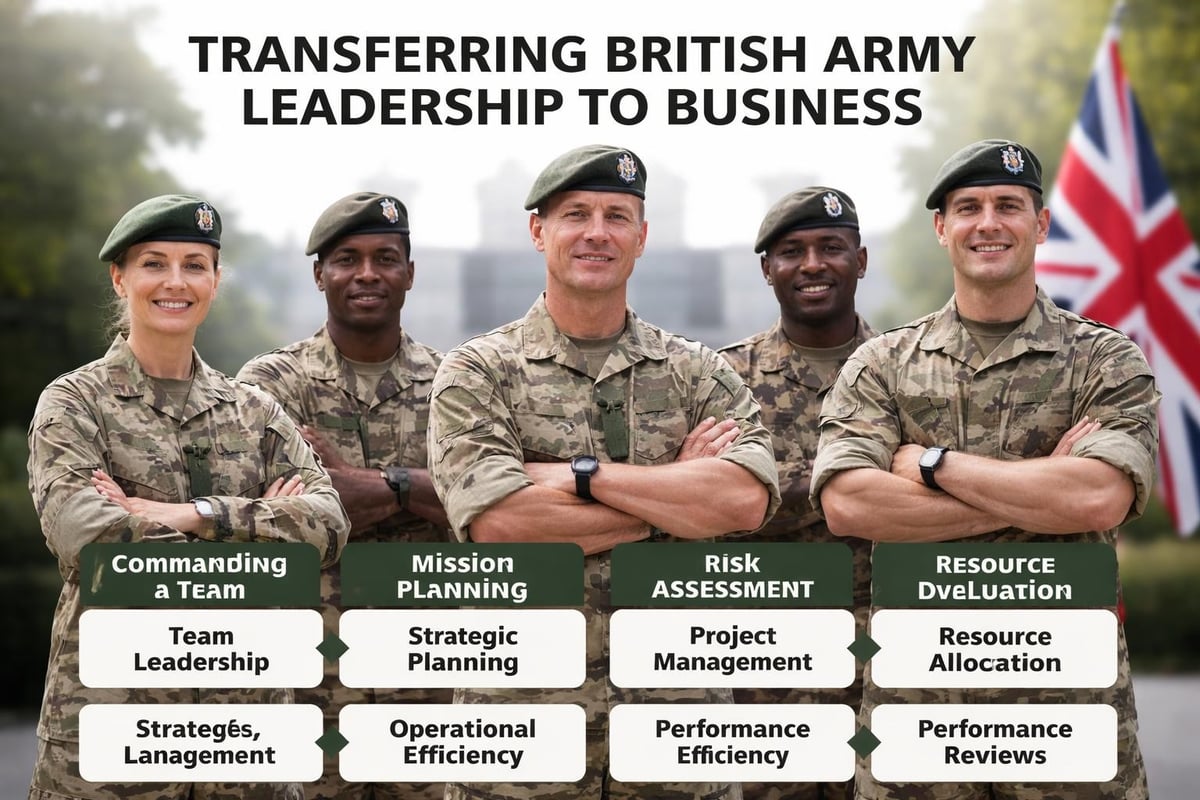
Your military service has developed competencies that civilian employers value highly: leadership under pressure, strategic planning, team coordination, risk management, and adaptability. The difficulty arises when these skills remain hidden behind military jargon and acronyms. An army resume example should demonstrate how to reframe your experience using universally understood terminology.
Consider that civilian hiring managers typically spend just six to eight seconds on an initial CV scan. If they encounter unfamiliar military terms or can’t quickly identify relevant skills, your application moves to the rejection pile regardless of your qualifications.
Translating Military Roles Into Civilian Language
Effective translation requires understanding both what you did and why it matters to civilian employers. Rather than stating “Platoon Sergeant responsible for 30 soldiers,” transform this to “Team Leader managing 30 personnel across complex operational environments, ensuring safety, performance, and mission success.”
Key translation principles include:
-
Replace military job titles with civilian equivalents
-
Convert acronyms to full descriptions with context
-
Emphasise transferable skills over military-specific tasks
-
Quantify achievements with numbers, percentages, and outcomes
-
Focus on results rather than processes
This approach ensures your CV speaks the language of civilian recruiters whilst maintaining the integrity of your accomplishments. Resources like VisualCV’s military resume samples provide excellent frameworks for this translation process.
Essential Components of an Effective Army Resume Example
A well-structured military CV follows specific conventions that differ slightly from standard civilian formats, whilst maintaining professional standards that hiring managers expect.
Personal Profile Section
Begin with a compelling personal profile that immediately establishes your value proposition. This 3-4 sentence paragraph should highlight your most relevant skills, achievements, and career objectives.
Example: “Results-driven operations professional with 12 years of British Army experience leading teams of up to 50 personnel in high-pressure environments. Proven track record in strategic planning, risk management, and process improvement, delivering operational efficiency gains of 35%. Seeking to leverage leadership expertise and analytical capabilities in a project management role within the logistics sector.”
This opening immediately communicates transferable value without requiring recruiters to decipher military terminology. It positions you as a business professional who happens to have military experience rather than a soldier seeking civilian work.
Employment History That Demonstrates Progression
Your employment history should follow reverse chronological order, presenting each role with clarity and impact. For each position, include your rank (translated if necessary), dates of service, and key achievements.
|
Element |
Military Version |
Civilian Translation |
|---|---|---|
|
Job Title |
Lance Corporal, Infantry |
Team Leader, Operations |
|
Responsibility |
Section 2IC |
Deputy Team Supervisor managing 8 personnel |
|
Achievement |
Conducted 50+ patrols |
Led 50+ field operations with 100% safety record |
|
Duty |
Vehicle maintenance |
Asset management and preventive maintenance scheduling |
Structure each role with 4-6 bullet points that emphasise achievements over duties. Begin each bullet with action verbs: managed, delivered, improved, coordinated, developed, implemented.
Skills Section With Civilian Relevance
Create a dedicated skills section that bridges military and civilian contexts. Divide this into technical skills and transferable competencies.
Technical Skills:
-
Project management and strategic planning
-
Risk assessment and mitigation
-
Budget management (specify amounts if possible)
-
Supply chain and logistics coordination
-
Training development and delivery
-
Quality assurance and compliance
Transferable Competencies:
-
Leadership and team development
-
Crisis management and decision-making under pressure
-
Cross-functional collaboration
-
Communication across organisational levels
-
Adaptability and resilience
-
Performance monitoring and improvement
This dual approach demonstrates both hard skills that match job requirements and soft skills that differentiate you from civilian candidates. Many professionals find that working with a professional CV writer helps identify skills they hadn’t considered highlighting.
Crafting Achievement Statements That Resonate
The difference between a mediocre army resume example and an exceptional one lies in how you present your achievements. Generic duty descriptions fail to capture the scope of your capabilities or the value you delivered.
The STAR Method for Military Achievements
Structure your achievement statements using the Situation, Task, Action, Result framework to provide context and demonstrate impact.
Standard statement: “Responsible for equipment maintenance.”
STAR-enhanced statement: “Managed preventive maintenance programme for £2.5M equipment inventory, implementing new tracking system that reduced downtime by 40% and extended asset lifecycle by 18 months.”
-
Situation: Equipment maintenance responsibility
-
Task: Manage and improve maintenance efficiency
-
Action: Implemented new tracking system
-
Result: 40% reduction in downtime, 18-month lifecycle extension
This approach transforms routine duties into compelling evidence of your problem-solving abilities and business impact. The Career.io military resume guide provides additional examples of this technique in action.
Quantifying Military Success
Numbers provide concrete evidence of your capabilities and help recruiters visualise your impact. Wherever possible, include metrics that demonstrate scale, efficiency, or improvement.
Quantification opportunities:
-
Team size managed (personnel, budget, resources)
-
Performance improvements (time saved, efficiency gains, error reduction)
-
Financial impact (budget managed, cost savings, asset value)
-
Training delivered (courses developed, personnel trained, qualification rates)
-
Safety records (incident-free days, compliance percentages)
-
Project completion (on-time delivery, quality scores)
For instance, “Led training programme” becomes “Developed and delivered comprehensive training programme for 120 personnel, achieving 98% first-time qualification rate and reducing training cycle time by 25%.”
Addressing Common Army Resume Example Challenges
Veterans face unique challenges when creating civilian CVs that require thoughtful solutions to present military experience effectively.
Handling Sensitive or Classified Information
Many military roles involve classified operations or sensitive information that cannot appear on civilian CVs. This creates gaps that might concern potential employers.
Address this by focusing on transferable processes and outcomes rather than specific operations. Instead of detailing classified missions, emphasise the skills you utilised: “Coordinated multi-team operations requiring precise planning, real-time communication, and rapid decision-making in dynamic environments.”
If asked about gaps during interviews, explain that certain details remain classified but offer to discuss the transferable skills developed during those assignments.
Explaining Career Progression Within Military Structure
Civilian recruiters may not understand military promotion systems or the significance of your career progression. Make this clear through a strategic presentation.
Rather than listing ranks chronologically, group similar roles together and emphasise increasing responsibility:
2018-2026: British Army, Royal Logistics Corps
-
Operations Manager (2023-2026): Senior role overseeing 80 personnel and £5M annual budget
-
Team Leader (2020-2023): Supervised 25 personnel across multiple operational deployments
-
Logistics Coordinator (2018-2020): Entry-level position managing supply chain operations
This structure demonstrates clear progression whilst using civilian-friendly terminology. The Assignment Interactive Module 2.0 system is used by the UK. Army provides insight into how military organisations track career development.
Managing Multiple Short-Term Assignments
Military personnel often complete numerous short-term assignments that might appear as job-hopping to civilian recruiters. Consolidate these under broader role descriptions when appropriate.
Instead of listing every posting separately, group related assignments:
Infantry Team Leader, Various Locations (2019-2024)Completed six operational deployments across diverse environments, consistently managing teams of 8-12 personnel
This approach maintains honesty whilst presenting your experience as coherent career development rather than frequent job changes.
Tailoring Your Army Resume Example to Specific Industries
Different civilian sectors value different aspects of military experience, requiring strategic emphasis depending on your target industry.
Security and Defence Contracting
When targeting security-related roles, maintain some military terminology that demonstrates your credentials whilst explaining context for non-military colleagues within those organisations.
Emphasise security clearances, operational experience, threat assessment capabilities, and understanding of defence protocols. These sectors value military background directly and understand the terminology better than general civilian employers.
Project Management and Operations
Project management roles align naturally with military planning and execution experience. Highlight your ability to coordinate resources, manage timelines, assess risks, and deliver objectives under pressure.
Relevant military experiences to emphasise:
-
Multi-phase operation planning and execution
-
Resource allocation and logistics coordination
-
Stakeholder management across different units
-
Performance monitoring and reporting
-
Contingency planning and risk mitigation
Connect your military planning to civilian project methodologies like PRINCE2 or Agile if you’ve received relevant certifications during your transition preparation.
Healthcare and Emergency Services
For veterans with medical training or those targeting emergency services, emphasise your crisis response capabilities, triage experience, and ability to perform under extreme pressure.
Medical professionals like Bernhard T. Mittemeyer, who transitioned from military Surgeon General to civilian medical leadership, demonstrate how military medical experience translates effectively to civilian healthcare.
Focus on patient care numbers, emergency response times, training certifications, and collaborative work with civilian medical facilities during exercises or real-world events.
Technology and Cybersecurity
Military technology roles provide excellent foundations for civilian IT and cybersecurity careers. Emphasise technical certifications, systems you’ve worked with, and security protocols you’ve implemented.
Translate military systems to civilian equivalents where possible: “Network administration for 500+ users” rather than specific military network designations. Highlight any transferable certifications like CompTIA Security+, Cisco qualifications, or cloud platforms.

Formatting and Presentation Standards
Professional presentation significantly impacts how recruiters perceive your CV, with specific formatting conventions ensuring readability and ATS compatibility.
Length and Structure Conventions
British CVs typically span two pages, though exceptional circumstances might justify three for senior military officers with extensive careers. Prioritise recent and relevant experience, summarising early career roles briefly.
Recommended structure:
-
Contact details and personal profile (top quarter of page one)
-
Key skills summary (middle of page one)
-
Employment history in reverse chronological order (remainder of page one through page two)
-
Education and qualifications (final section)
-
Additional information: awards, volunteer work, professional memberships (if space permits)
This structure ensures recruiters encounter your most compelling information immediately, with supporting details readily accessible. Understanding how to compile a CV properly ensures your military experience receives appropriate emphasis.
ATS Optimisation for Military CVs
Applicant Tracking Systems scan CVs for keywords matching job descriptions before human recruiters see your application. Military CVs face particular ATS challenges due to terminology differences.
|
ATS Challenge |
Solution |
|---|---|
|
Military acronyms |
Spell out in full with context |
|
Rank-based titles |
Include the civilian equivalent in parentheses |
|
Complex formatting |
Use simple, clean layouts without graphics |
|
Missing keywords |
Mirror language from target job descriptions |
|
Unusual job titles |
Add civilian translation as a subtitle |
Incorporate keywords naturally throughout your CV, particularly in your skills section and achievement statements. If a job description mentions “team leadership,” “budget management,” or “process improvement,” ensure these phrases appear in your CV where truthfully applicable.
Visual Presentation Principles
Whilst content matters most, visual presentation affects readability and professionalism. Choose a clean, modern format with clear section headings and consistent spacing.
Formatting best practices:
-
Use 11-12pt professional fonts (Calibri, Arial, Garamond)
-
Maintain consistent heading hierarchy
-
Include adequate white space between sections
-
Use bullet points for achievement lists
-
Bold sparingly for emphasis on key terms
-
Avoid graphics, photos, or complex tables
Remember that hiring managers often review CVs on screen, so ensure your formatting remains clear in digital format. Creating a perfect curriculum vitae requires attention to both content and presentation.
Supporting Documents and Application Materials
Your army resume example forms the foundation of your application package, but supporting documents strengthen your candidacy significantly.
Cover Letters for Military Transitions
Every application should include a tailored cover letter that explains your transition motivation and connects your military background to the specific role. This provides context that your CV alone cannot deliver.
A strong cover letter addresses three key points: why you’re leaving military service, what attracts you to this particular role and organisation, and how your military experience specifically prepares you for this position.
When working with a professional CV writer, consider investing in bespoke cover letters that complement your CV whilst providing additional context about your transition. These documents work together to present a complete picture of your candidacy.
LinkedIn Profile Optimisation
Modern recruitment increasingly relies on LinkedIn for candidate sourcing and verification. Your LinkedIn profile should complement rather than duplicate your CV.
LinkedIn advantages for military transitions:
-
Space to tell your story in greater detail
-
Recommendations from colleagues validating your skills
-
Opportunity to engage with industry content
-
Visibility to recruiters searching for candidates
-
Platform to demonstrate ongoing professional development
Translate your military experience using the same principles applied to your CV, but leverage LinkedIn’s additional features like endorsements, media uploads, and volunteer experience sections. Some veterans find value in the U.S. Army officer resume examples provided by platforms like Zippia for additional formatting ideas.
References and Verification
Military references carry significant weight with civilian employers who value the disciplined recommendation culture within armed forces. Secure 2-3 strong references who can speak to your professional capabilities.
Ideal references include direct supervisors, colleagues who witnessed your leadership, or civilian contacts from joint operations. Brief them on your civilian career goals so their recommendations emphasise transferable skills rather than purely military competencies.
Frequently Asked Questions
How far back should my military CV go?
Include your entire military career if it spans less than 15 years. For longer service, provide detailed information for the most recent 10-12 years and summarise earlier roles briefly. Focus on positions most relevant to your target civilian career, regardless of when they occurred.
Should I include my military rank on my CV?
Include your final rank alongside the civilian translation of your role. For example, “Sergeant (Operations Team Leader)” or “Captain (Project Manager).” This acknowledges your military achievement whilst immediately clarifying your level for civilian recruiters. Avoid leading with rank alone, as many civilians don’t understand military hierarchy.
How do I explain gaps between military postings?
Military career gaps often result from training courses, transition programmes, or medical leave. Address these briefly in your employment history or cover letter: “Career development period including advanced leadership qualification and civilian certification preparation.” Honesty matters, but you needn’t provide exhaustive detail about every week between assignments.
What if I have no civilian work experience?
Military service is work experience. The challenge lies in translation, not credentials. Focus on transferable skills, quantifiable achievements, and civilian-equivalent terminology. Consider volunteer work, part-time roles during service, or transition training programmes as additional experience. Many successful transitions occur with purely military backgrounds when presented effectively.
Should I mention military awards and decorations?
Include significant awards that demonstrate achievement, particularly those civilians recognise or that translate to business values: leadership awards, commendations for exceptional performance, or qualifications. Avoid listing routine medals that all service members receive. Translate award names to explain what they recognised: “Commended for Outstanding Leadership” rather than military decoration numbers alone.
Building Your Unique Army Resume Example
Creating an effective military-to-civilian CV requires understanding both the value you offer and how to communicate it in language that resonates with your target audience. Your military service has equipped you with exceptional skills that civilian employers actively seek, but translation and presentation determine whether hiring managers recognise this value.
Focus on achievements over duties, quantify your impact wherever possible, and ensure every element of your CV speaks to civilian career requirements. Tailor your application to specific roles and industries, emphasising the aspects of your military background most relevant to each opportunity.
Professional Support for Military Transitions
The transition from military to civilian employment represents a significant life change that benefits from expert guidance. Professional CV writers who understand both military experience and civilian recruitment can help you present your background most effectively.
If you’re uncertain about how to translate your military service or want to ensure your CV positions you competitively, reach out to John@johnloganbmc.co.uk for personalised feedback on your current CV. Expert insight can identify opportunities you’ve missed and ensure your application materials truly reflect your capabilities.
Specific Format Considerations
For civilian positions, standard professional CV formatting serves you better than military-specific templates. However, maintain copies of military-format documents for any defence contractor or military-adjacent applications that might request them.
Final Preparation Steps
Before submitting your army resume example to potential employers, complete a thorough review process ensuring every element supports your civilian career objectives.
Peer Review and Feedback
Ask trusted colleagues, both military and civilian, to review your CV critically. Military peers can verify accuracy and identify jargon you’ve missed. Civilian contacts can confirm whether your CV makes sense without military context.
Specific questions for reviewers:
-
Does my CV clearly communicate what I can do in a civilian role?
-
Are there any terms or acronyms you don’t understand?
-
Do my achievements sound credible and impressive?
-
Would you interview me based on this CV?
-
What questions does my CV raise that I should address in my cover letter?
Incorporate feedback thoughtfully, recognising that different reviewers may offer conflicting advice based on their perspectives and industries.
Proofreading and Quality Assurance
Military precision should extend to your CV presentation. Spelling errors, grammatical mistakes, or formatting inconsistencies undermine your professionalism and attention to detail.
Quality checks:
-
Spell-check using British English settings
-
Read aloud to catch awkward phrasing
-
Verify all dates and ensure chronological accuracy
-
Confirm contact information is current and professional
-
Check that all claimed achievements are accurate
-
Ensure consistent formatting throughout
-
Save in PDF format to preserve formatting
Consider printing your CV to review on paper, as errors often appear more obvious in physical format than on screen.
Continuous Improvement
Your CV should evolve as you gain civilian experience, complete transition training, or refine your career objectives. Treat it as a living document that grows with your post-military career.
After each application or interview, reflect on questions asked or confusion expressed. Use these insights to clarify your CV further. Track which versions generate interviews and analyse what made them effective.
Request feedback from interviewers when possible, particularly after unsuccessful applications. This information proves invaluable for strengthening future submissions.
Send me your CV for a free review to John@johnlogan.co.uk. I’ll look through it myself and give you honest, constructive feedback as a professional CV writer.
Translating military experience into compelling civilian credentials requires strategic thinking about how your service translates to business value, but the effort yields significant returns in interview opportunities and career advancement. Your army resume example should honour your military service whilst positioning you as the solution to civilian employers’ needs. If you’re ready to create a CV that truly opens doors to your next career chapter, John Logan Consulting and Mentoring offers the personalised, consultative support that helps military professionals transition successfully, with bespoke CVs that showcase your unique strengths and achievements in language that civilian recruiters immediately understand and value.
text][et_pb_button button_url=”https://johnloganbmc.co.uk/cv-packages/” button_text=”Pricing and Packages” _builder_version=”4.27.4″ _module_preset=”default” global_colors_info=”{}” theme_builder_area=”post_content”]button][et_pb_button button_url=”https://johnloganbmc.co.uk/john-logan-cv-reviews/” button_text=”Reviews” _builder_version=”4.27.4″ _module_preset=”default” global_colors_info=”{}” theme_builder_area=”post_content”]button][et_pb_button button_url=”https://johnloganbmc.co.uk/contact-john-logan-cv-writer/” button_text=”Contact” _builder_version=”4.27.4″ _module_preset=”default” global_colors_info=”{}” theme_builder_area=”post_content”]button]column]row]section]