
Send me your CV for a free review to John@johnlogan.co.uk. I’ll look through it myself and give you honest, constructive feedback as a professional CV writer.
Your CV is often your first introduction to a potential employer, and in today’s competitive job market, good resume writing has become more critical than ever. A well-crafted CV doesn’t simply list your work history; it presents a compelling narrative of your professional journey, highlighting achievements and demonstrating the unique value you bring to an organisation. Whether you’re a recent graduate, an ex-military professional transitioning to civilian roles, or an experienced executive seeking your next challenge, understanding the principles of good resume writing can be the difference between landing an interview and being overlooked entirely.
The Foundation of Good Resume Writing
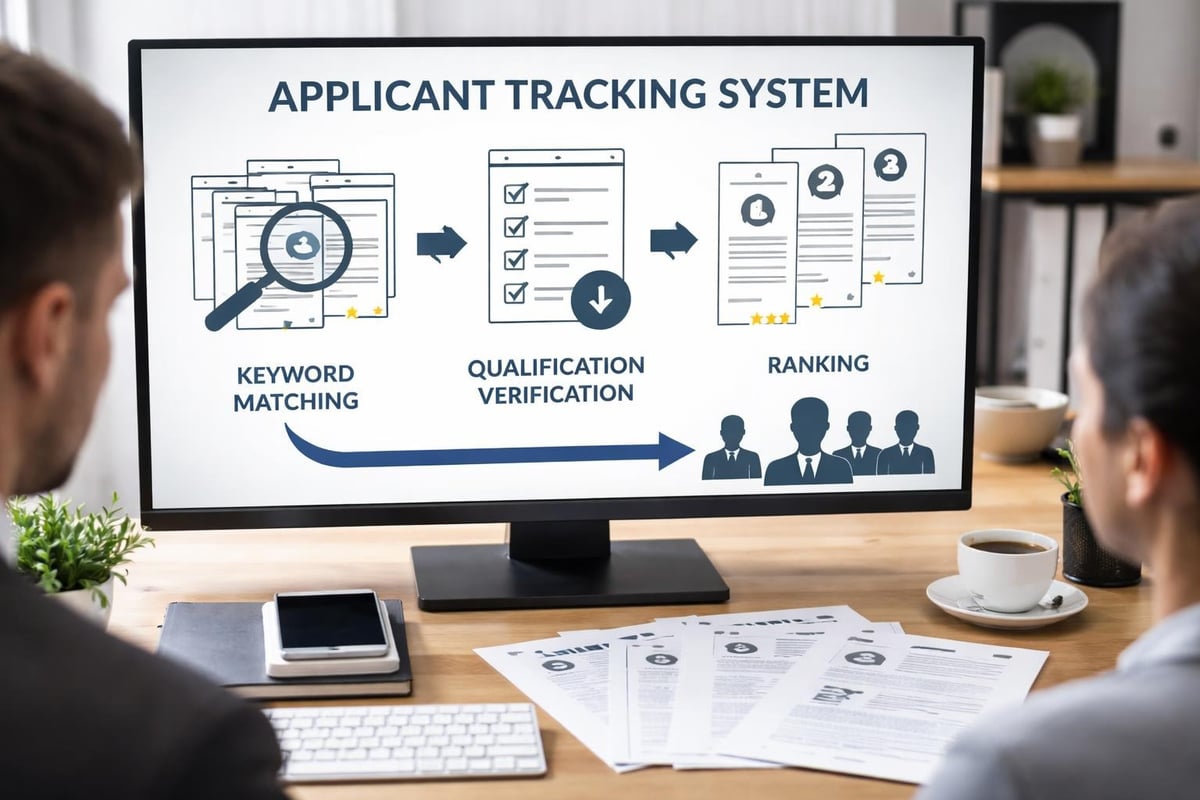
Good resume writing begins with understanding your audience. Every CV you create should be tailored to the specific role and organisation you’re targeting. Generic, one-size-fits-all CVs rarely make it past initial screening processes, particularly when Applicant Tracking Systems (ATS) are involved.
The core principles of effective CV writing include:
- Clarity and conciseness – presenting information in a scannable, easily digestible format
- Achievement-focused content – demonstrating impact rather than merely listing duties
- Strategic keyword optimisation – ensuring your CV passes ATS screening whilst remaining readable
- Professional presentation – maintaining consistent formatting and a polished appearance
- Relevance – including only information that strengthens your application for the specific role
The structure of your CV matters tremendously. Thomas Jefferson University’s resume writing handbook offers insights into organising information effectively, emphasising the importance of placing your strongest qualifications prominently.
Understanding ATS and Modern Screening
In 2026, approximately 75% of CVs are filtered by ATS before a human ever reviews them. These systems scan for specific keywords, relevant qualifications, and proper formatting. Good resume writing requires optimising for both technology and human readers.
Your CV must pass through digital gates whilst still engaging the hiring manager who ultimately makes decisions. This dual requirement means avoiding complex formatting, tables within the main content, and graphics that confuse parsing software, whilst maintaining visual appeal for human reviewers.
Crafting Compelling Content Through Good Resume Writing
The difference between average and exceptional CV writing lies in how you present your experience. Rather than writing job descriptions, you should be writing achievement statements that quantify your impact.
| Weak Statement | Strong Achievement Statement |
|---|---|
| Responsible for managing the team | Led a cross-functional team of 12, delivering £2.3M project 6 weeks ahead of schedule, resulting in 15% cost savings |
| Handled customer complaints | Redesigned customer service protocols, reducing complaint resolution time by 42% and improving satisfaction scores from 73% to 91% |
| Worked on social media | Developed and executed a social media strategy that increased engagement by 156% and generated 2,400 qualified leads over 8 months |
Power Verbs and Action-Oriented Language
Good resume writing relies heavily on strong action verbs that convey leadership, initiative, and results. St. Mary’s College of Maryland offers a guide on professional document writing that includes extensive lists of power verbs appropriate for different industries and roles.
Consider these categories when selecting verbs:
- Leadership verbs – directed, spearheaded, championed, orchestrated
- Achievement verbs – delivered, exceeded, accelerated, transformed
- Innovation verbs – pioneered, designed, created, developed
- Efficiency verbs – streamlined, optimised, consolidated, automated
The verb you choose sets the tone for the entire statement. “Managed a budget” is passive and unremarkable. “Controlled £500K operational budget whilst reducing expenditure by 18% through strategic vendor negotiations” demonstrates fiscal responsibility and delivers measurable impact.
Tailoring Your CV for Maximum Impact
Generic CVs fail because they don’t speak to the specific needs of the employer. Good resume writing requires customisation for each application, which doesn’t mean rewriting your entire CV but rather emphasising relevant experience and adjusting language to mirror the job description.
Start by analysing the job posting carefully. Identify the key requirements, desired skills, and language used. If the posting emphasises “stakeholder management,” use that exact phrase rather than “working with partners.” This alignment helps both ATS screening and demonstrates attention to detail.
The Two-Page Rule and Information Hierarchy
In the UK market, the standard expectation is a two-page CV. This constraint forces you to be selective and strategic about what you include. Good resume writing means prioritising recent, relevant experience whilst summarising or omitting older, less applicable roles.
Your information hierarchy should follow this pattern:
- Most recent and relevant – detailed achievement statements with metrics
- Moderately relevant – condensed descriptions highlighting transferable skills
- Older or less relevant – brief mentions or complete omission if space requires
For those transitioning from military service, translating military experience into civilian terminology presents unique challenges. Avoid jargon and acronyms unfamiliar to civilian recruiters whilst ensuring you capture the leadership, project management, and technical skills you’ve developed.
Common Pitfalls in Resume Writing
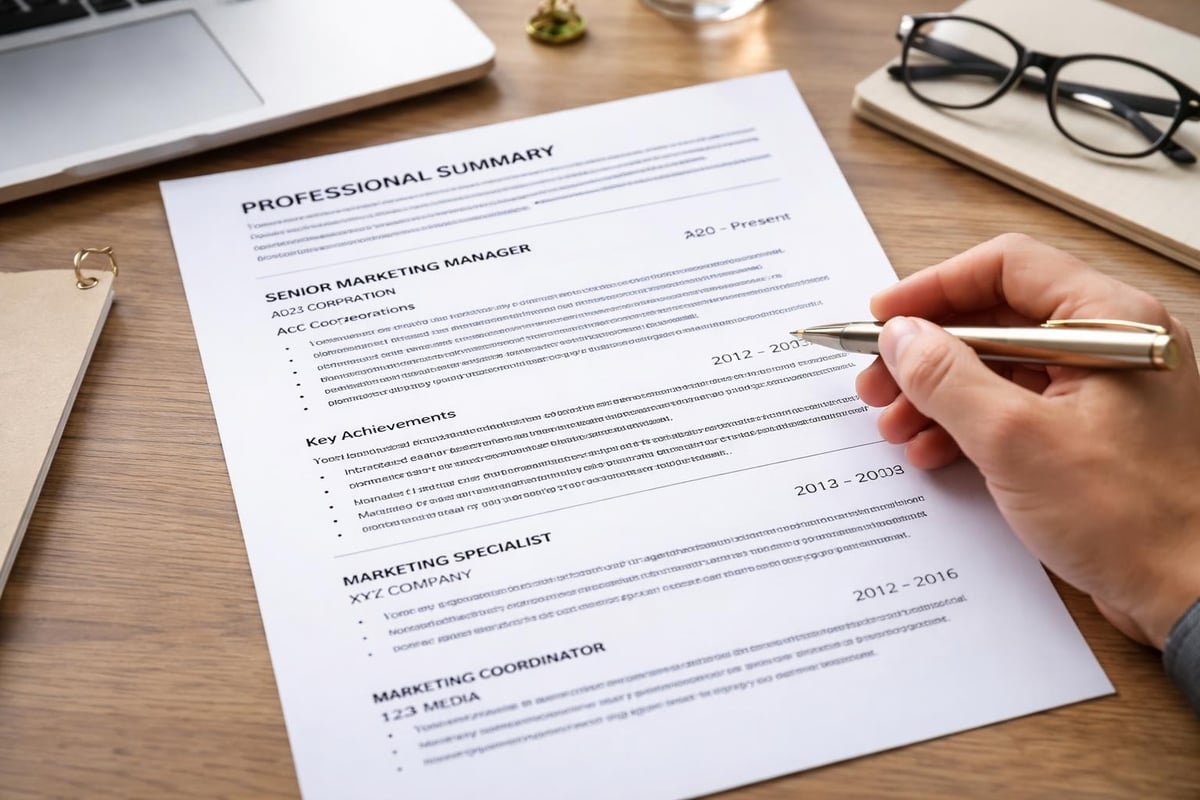
Even experienced professionals make critical mistakes that undermine their applications. Awareness of these common errors is essential to good resume writing.
Frequent mistakes include:
- Including personal information such as age, marital status, or photographs (unnecessary and potentially problematic in UK applications)
- Using personal pronouns (“I,” “me,” “my”) – CVs should use the implied first person
- Listing duties rather than achievements
- Including references or “references available upon request” (outdated practice)
- Poor proofreading resulting in spelling or grammatical errors
- Inconsistent formatting, fonts, or styling
- Excessive length or irrelevant information
The Importance of Professional Review
According to research-backed content development practices, having a second set of expert eyes review your work significantly improves quality and credibility. This principle applies directly to CV writing.
Many candidates struggle to present themselves objectively. You may downplay significant achievements or struggle to articulate your value proposition. A professional CV writer brings an external perspective, industry knowledge, and writing expertise that transforms competent self-written CVs into compelling marketing documents.
If you’re uncertain about your CV’s effectiveness, send it to John@johnloganbmc.co.uk for professional review and feedback.
Sector-Specific Considerations
Different industries have varying expectations for CV content and presentation. Good resume writing acknowledges these nuances and adapts accordingly.
| Sector | Key Focus Areas | Common Requirements |
|---|---|---|
| Finance | Quantifiable results, regulatory knowledge, and technical certifications | Professional qualifications (CFA, ACCA), systems expertise |
| Technology | Technical skills, project deliverables, innovation | Programming languages, methodologies, GitHub portfolios |
| Healthcare | Clinical competencies, patient outcomes, and continuing education | Professional registration, specialisations, and safeguarding training |
| Creative Industries | Portfolio work, campaign results, brand impact | Links to work samples, creative awards, and client testimonials |
For professionals in uniformed services, whether police, fire service, or ex-military personnel, good resume writing means effectively translating specialised experience into language that resonates with civilian employers, whilst highlighting transferable leadership, crisis management, and operational planning skills.
Formatting and Visual Presentation
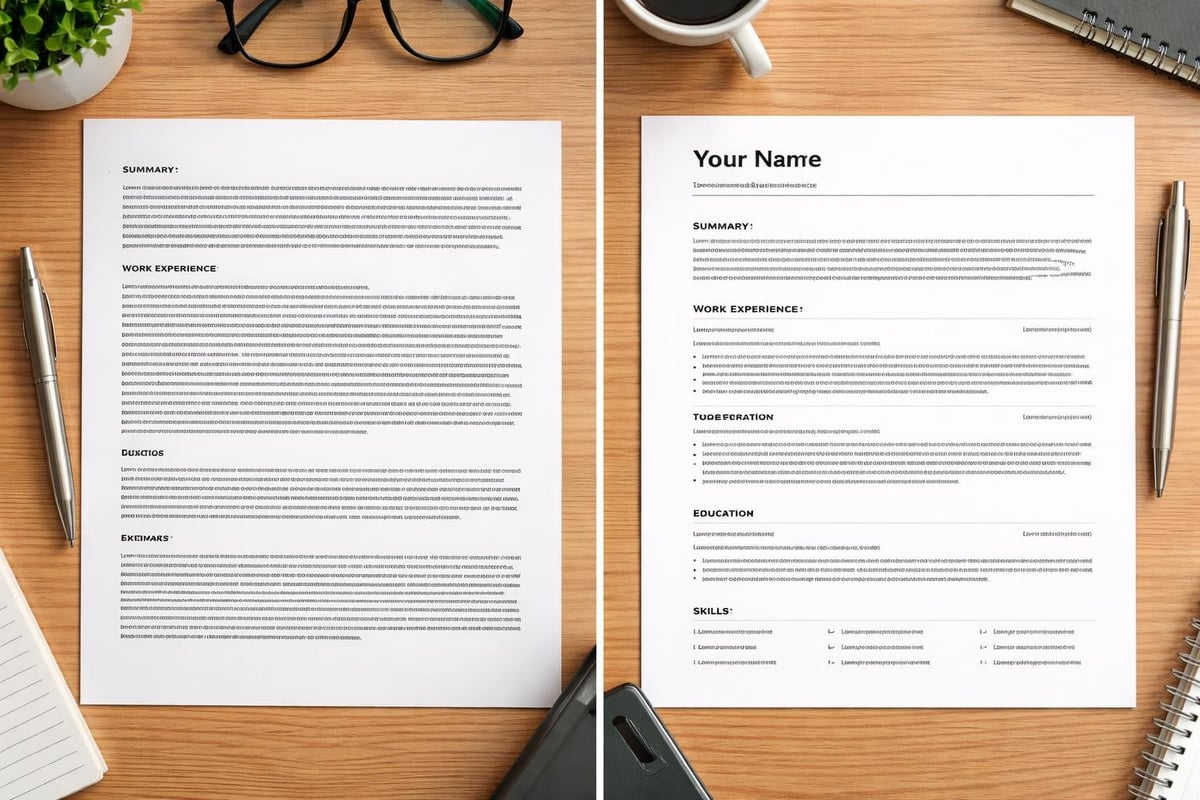
Whilst content remains paramount, presentation significantly affects readability and first impressions. Good resume writing balances information density with white space, creating a document that’s professional yet approachable.
Essential formatting guidelines:
- Use a professional, readable font (Arial, Calibri, or Times New Roman) in 10-12 point size
- Maintain consistent spacing, typically 1.15 line spacing, with clear section breaks
- Employ bold text strategically for job titles and company names
- Use bullet points for achievement lists, limiting each role to 4-6 key points
- Ensure margins of at least 2cm on all sides for a professional appearance
San Jose State University’s Career Center offers concise guidance on resume writing that emphasises these formatting essentials alongside content recommendations.
The Supporting Documents: Cover Letters and LinkedIn
Good resume writing extends beyond the CV itself. In 2026, your application typically comprises three interconnected elements: your CV, cover letter, and LinkedIn profile. Consistency across these documents strengthens your professional brand.
Cover Letter Essentials
Cover letters remain important because they provide context that CVs cannot. A well-written cover letter explains your motivation for applying, demonstrates knowledge of the organisation, and highlights specific examples of how your experience aligns with their needs.
Effective cover letters follow this structure:
- Opening paragraph – state the position and briefly explain why you’re interested
- Body paragraphs – provide 2-3 specific examples of relevant achievements
- Closing paragraph – express enthusiasm and indicate availability for the interview
Your cover letter should complement rather than duplicate your CV, expanding on your most relevant accomplishments and demonstrating personality whilst maintaining professionalism.
LinkedIn Profile Optimisation
Your LinkedIn profile serves as your dynamic, searchable professional presence. Good resume writing principles apply equally to profile optimisation: achievement-focused content, strategic keywords, and a clear value proposition.
Recruiters actively search LinkedIn, making optimisation crucial. Your headline should go beyond job title to include key skills or value statements. Your summary section allows a first-person narrative that’s inappropriate for CVs, creating an opportunity to share your professional story more personally.
The Investment in Professional CV Writing
Many professionals question whether investing in affordable CV writing services provides sufficient return. The evidence overwhelmingly supports professional assistance.
Consider these statistics:
- Professionally written CVs receive 38% more interview invitations than self-written equivalents
- The average job search with a professional CV is 4-6 weeks shorter
- Senior-level positions increasingly expect an executive-standard CV presentation
- A single successful application recoups the investment many times over through salary and career progression
Professional CV writers bring expertise in multiple areas: industry knowledge, ATS optimisation, achievement articulation, and strategic positioning. They also provide objectivity that’s nearly impossible to maintain about your own career.
When you’re updating your CV for new opportunities, professional guidance ensures you’re presenting yourself in the strongest possible light. For those seeking to understand what constitutes a perfect curriculum vitae, working with an experienced writer reveals the nuances that separate good from exceptional.
Practical Steps to Improve Your CV Today
Whilst professional assistance delivers optimal results, you can implement immediate improvements using good resume writing principles.
Action steps for CV enhancement:
- Audit your current CV – review every bullet point, asking “does this demonstrate impact or just describe duties?”
- Quantify achievements – add numbers, percentages, timeframes, or scale to every accomplishment possible
- Remove outdated sections – eliminate “Interests” unless directly relevant, remove “Objective” statements
- Update your language – replace passive descriptions with active achievement statements
- Tailor for each application – customise your professional summary and emphasise relevant experience
Start with your most recent role and work backwards, ensuring each position clearly demonstrates progression and increasing responsibility. Your CV should tell a story of professional growth, not simply chronicle employment history.
Proofreading and Quality Assurance
Good resume writing demands flawless execution. A single typo can eliminate you from consideration, particularly for roles requiring attention to detail.
Quality assurance checklist:
- Read your CV aloud to catch awkward phrasing
- Use spelling and grammar checking tools, but don’t rely on them exclusively
- Print your CV and review the hard copy (errors appear differently on paper)
- Have someone else review it, preferably someone in your industry
- Check that all dates align correctly and show no unexplained gaps
- Verify that contact information is current and professional
- Ensure your email address is professional (avoid nicknames or outdated providers)
For a thorough professional review, you can send your CV to John@johnloganbmc.co.uk to receive expert feedback on both content and presentation.
Frequently Asked Questions About Good Resume Writing
How long should my CV be in 2026?
For most UK professionals, two pages remains the standard. Senior executives with extensive experience might extend to three pages, but only if every line adds value. Recent graduates and early-career professionals can use a single page if their experience is limited, though two pages allows more comprehensive presentation of education, internships, and relevant projects.
Should I include a photograph on my CV?
In the UK, photographs are generally unnecessary and potentially problematic. Unlike some European countries, where photos are standard, British employers typically prefer CVs without images to reduce unconscious bias. The exception might be industries where appearance is directly relevant, such as acting or modelling, but even then, headshots are usually provided separately.
How do I explain employment gaps in my CV?
Good resume writing addresses gaps honestly but strategically. For short gaps (under six months), you may not need an explicit explanation. For longer periods, briefly mention the reason in your cover letter if it adds context (caring responsibilities, further education, health recovery, redundancy during economic downturn). On your CV, consider using years only rather than months, or include a brief line explaining productive activities during the gap (freelance consulting, professional development, volunteer work).
Can I use a CV template from online sources?
Templates can provide structural guidance, but they often create more problems than they solve. Many templates use formatting that confuses ATS, include outdated sections, or create a generic appearance that doesn’t differentiate you. Good resume writing requires a bespoke presentation tailored to your experience and target role. If you use a template as a starting point, ensure you heavily customise it and verify ATS compatibility.
How often should I update my CV?
Update your CV immediately after significant achievements, promotions, completed projects, or new certifications, even if you’re not actively job searching. This practice ensures you capture details whilst they’re fresh and maintains a current CV for unexpected opportunities. At minimum, review and refresh your CV annually, updating language, removing older, less relevant information, and ensuring alignment with current industry standards for good resume writing.
Good resume writing transforms your career narrative into a compelling document that opens doors to better opportunities. The principles outlined here provide a foundation for creating CVs that pass ATS screening, engage hiring managers, and position you as the ideal candidate. However, translating these principles into a polished, professional CV that truly showcases your unique value requires expertise, objectivity, and industry knowledge. John Logan Consulting and Mentoring offers bespoke CV writing services with no templates, no AI shortcuts, and a completely personalised consultation to help you present your strongest professional self and accelerate your career progression.
Send me your CV for a free review to John@johnlogan.co.uk. I’ll look through it myself and give you honest, constructive feedback as a professional CV writer.
text][et_pb_button button_url=”https://johnloganbmc.co.uk/cv-packages/” button_text=”Pricing and Packages” _builder_version=”4.27.4″ _module_preset=”default” global_colors_info=”{}” theme_builder_area=”post_content”]button][et_pb_button button_url=”https://johnloganbmc.co.uk/john-logan-cv-reviews/” button_text=”Reviews” _builder_version=”4.27.4″ _module_preset=”default” global_colors_info=”{}” theme_builder_area=”post_content”]button][et_pb_button button_url=”https://johnloganbmc.co.uk/contact-john-logan-cv-writer/” button_text=”Contact” _builder_version=”4.27.4″ _module_preset=”default” global_colors_info=”{}” theme_builder_area=”post_content”]button]column]row]section]