

Is your CV ready to open doors in 2026, or is it quietly holding you back? With the job market evolving rapidly, standing out is more crucial than ever.
This expert guide will show you exactly how to update your CV for maximum impact. You’ll learn the latest CV trends for 2026, what sections are essential, and proven step-by-step strategies to stay ahead of the competition.
Discover common pitfalls, get answers to your top questions, and gain confidence that your CV will impress both recruiters and Applicant Tracking Systems. Let’s make your next career move a reality—starting with a powerful CV transformation.
Understanding the 2026 Job Market and CV Trends
The UK job market in 2026 is evolving at a rapid pace. If you want to stand out, you need to update your CV with the latest trends and employer expectations in mind. More organisations are embracing digital transformation, and your CV must reflect your readiness for change.

The Evolving Recruitment Landscape
In 2026, over 90% of UK employers rely on Applicant Tracking Systems (ATS) to filter CVs before a human ever sees them. This means that, unless you update your CV for modern screening, your application could be overlooked in seconds. The competition is intense, with each vacancy attracting more than 250 CVs.
Remote and hybrid roles are now mainstream, so employers seek candidates with transferable skills and evidence of adaptability. Digital literacy and soft skills are in high demand, while diversity, equity, and inclusion (DEI) have become central to hiring policies. According to AI’s impact on UK hiring practices, artificial intelligence is reshaping recruitment, making it crucial to tailor your CV for both ATS and human readers.
For example, a finance professional recently boosted interview invites by highlighting remote teamwork and digital collaboration skills in their application.
What Recruiters Expect in 2026
Recruiters in 2026 expect you to update your CV to be concise and tailored, typically 1–2 pages for most roles. They want clear evidence of achievements, not just a list of duties. Quantifiable results such as “increased sales by 30%” make a real impact.
Generic CVs are quickly filtered out by ATS systems, so customisation for each role is essential. Modern, clean formatting without graphics or tables is favoured, as these elements can confuse automated software. For instance, a senior manager’s generic CV was initially rejected, but after tailoring content to the specific job description, they were shortlisted for an interview.
Key Arguments and Insights
Staying current is non-negotiable if you want your CV noticed in 2026. Your CV is your personal marketing tool, shaping first impressions with every application. If you fail to update your CV, you risk missing out, even if your skills and experience are outstanding.
Remember, recruiters often spend as little as seven seconds scanning a CV. Make every second count by ensuring your document is modern, relevant, and tailored to both the role and the realities of today’s job market.
Step-by-Step: How to Update Your CV for 2026
Refreshing your CV for 2026 is essential to staying ahead in a competitive market. By following these five practical steps, you can ensure your CV stands out, impresses recruiters, and passes through modern ATS systems. Let us break down exactly how to update your CV to meet evolving employer expectations.
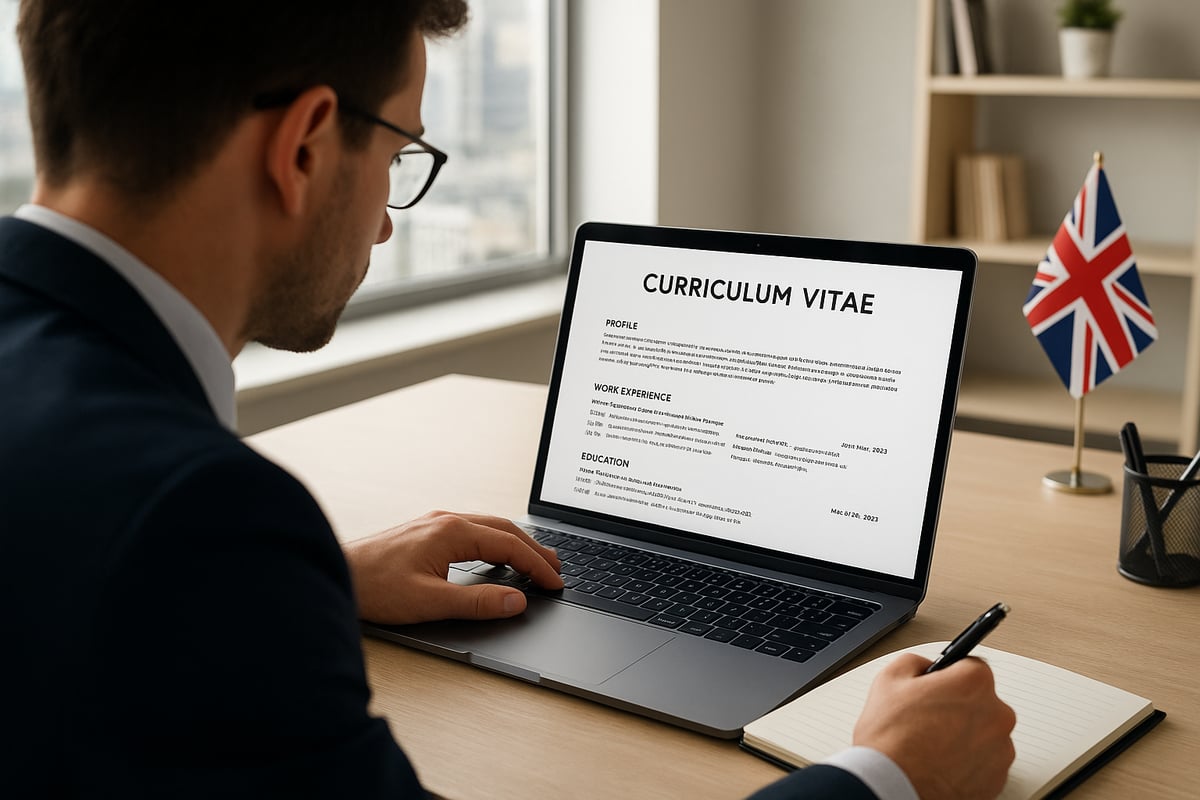
Step 1: Audit Your Existing CV
The first step to update your CV is a thorough audit. Start by reading through your current CV with a critical eye. Identify any outdated content, irrelevant jobs, or skills that no longer reflect your goals for 2026.
Remove roles or experiences older than 10 to 15 years, unless they are directly relevant to the positions you seek. For most graduates, a one-page CV is best, while senior professionals can use up to three pages. This process helps focus your CV on recent, impactful achievements rather than old responsibilities.
Create a checklist to guide your audit:
Remove out-of-date roles
Cut irrelevant skills
Focus on the last decade of experience
Tailor length to your career stage
A clean audit lays the groundwork for an effective update to your CV strategy.
Step 2: Research Your Target Role and Industry
To truly update your cv for 2026, research is crucial. Examine job adverts in your chosen field and note the keywords, skills, and qualifications that employers expect. Pay attention to industry-specific language and any emerging trends, such as AI literacy for tech roles.
Use LinkedIn and professional groups to see what skills are in demand. Engage with industry forums and read sector reports. For example, technology job seekers now need to show practical experience with artificial intelligence tools.
Ask yourself:
What are the most requested skills?
Are there new certifications or technologies you should highlight?
How are top professionals in your field presenting themselves?
This research phase ensures your update your cv project is targeted and relevant.
Step 3: Refresh Core CV Sections
Now is the time to update your cv by refreshing its core sections. Begin with your personal statement: rewrite it to reflect your current aspirations and the latest hiring trends. Highlight your unique strengths and align your goals with the roles you want.
Next, revise your work history. Use bullet points to showcase achievements, not just responsibilities. Quantify results where possible, such as “Implemented new CRM system, improving response times by 40%.”
Include recent training, certifications, and upskilling activities relevant to 2026. Add digital, soft, and transferable skills that match your target roles.
By focusing on these updates, you ensure your CV demonstrates growth and adaptability, crucial qualities for modern employers looking to update your cv.
Step 4: Optimise for ATS and Recruiters
A critical part of how you update your CV is ensuring it passes Applicant Tracking Systems (ATS). Use standard section headings like Work Experience, Education, and Skills. Incorporate keywords directly from job descriptions to increase your chances of being shortlisted.
Avoid graphics, tables, or unusual fonts, as these can confuse ATS software. Always save and send your CV in PDF format unless the employer specifies another format. Up to 75% of CVs are rejected automatically due to poor formatting.
For a detailed guide on keyword optimisation, visit How to use keywords in a CV. This resource explains how the right keywords can help your updated CV get noticed by both ATS and recruiters.
Step 5: Proofread and Seek Feedback
The final step to update your CV is meticulous proofreading. Check for spelling, grammar, and formatting errors. Even a single typo can lead to instant rejection, no matter how strong your credentials are.
Ask a trusted colleague or a professional CV writer for feedback. A fresh perspective can catch mistakes you might overlook and suggest improvements you had not considered.
Contact John Logan at John@johnloganbmc.co.uk to receive honest, constructive feedback from an expert. This review can make all the difference when you update your CV for 2026.
Essential CV Sections and What to Include in 2026
A strong CV in 2026 is more than a list of jobs. Each section plays a vital role in presenting your experience, skills, and potential to employers. Understanding what to include—and what to leave out—is essential if you want to update your CV for maximum impact. For a detailed breakdown of best practices, see What makes a successful CV.
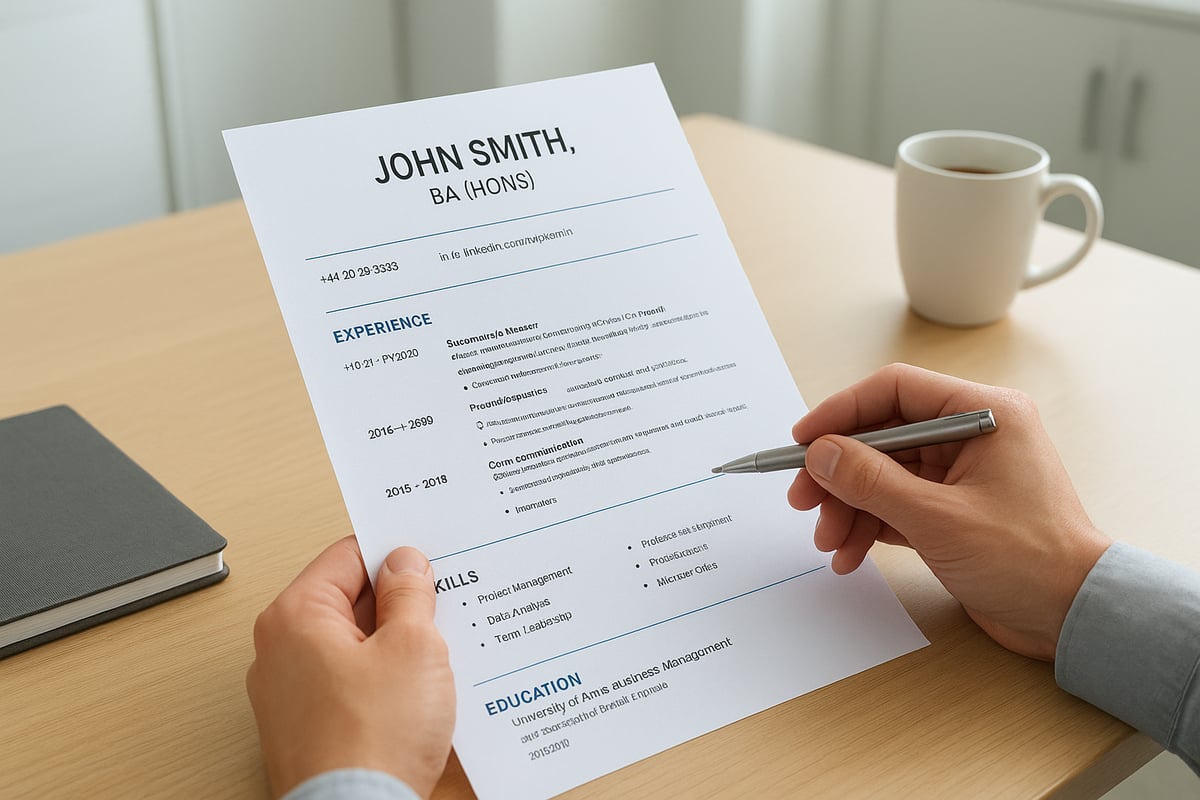
Header and Contact Information
Begin every CV with your name, a professional email address, mobile number, and a LinkedIn profile link. Skip your date of birth, photo, or unnecessary personal details to stay compliant with UK standards.
Example:
John Smith, BA (Hons)
john.smith@email.com | 07xxx xxx xxx | linkedin.com/in/johnsmith
Keeping this section concise sets the right tone when you update your CV.
Personal Statement/Profile
Craft a personal statement tailored to each application. Focus on your unique selling points, career goals, and how you add value. Keep it to 3–4 lines.
Example:
Adaptable project manager with 10+ years’ experience leading digital transformation in the public sector. Proven ability to deliver results in remote and hybrid teams.
This summary should immediately show why you are the right candidate.
Work Experience
List your work experience in reverse chronological order, covering the last 10–15 years. Use bullet points and active verbs to highlight achievements, not just duties. Quantify your impact where possible.
Example:
Reduced late payments by 25% through proactive client communications
Implemented new CRM, improving response times by 40%
Tailoring this section each time you update your CV helps you stand out.
Education and Qualifications
Show your most recent and relevant qualifications first. Include ongoing professional development, such as courses or certifications. For recent graduates, highlight key modules or projects.
Example:
BSc (Hons) Business Management, University of Manchester, 2024
Relevant modules: Data Analytics, Digital Strategy
Demonstrate your commitment to lifelong learning.
Skills Section
Blend technical skills (like coding or data analysis) with soft skills (such as leadership or communication). Match your skills to keywords from the job advert.
Example:
Advanced Excel
Stakeholder management
Remote team leadership
This section is critical when you update your cv for roles requiring adaptability and digital literacy.
Additional Sections
Include volunteering, awards, publications, languages, or military and police service—translating experience into civilian terms. For example, describe police experience as “Managed critical incidents and led cross-functional teams.” References can simply state “Available upon request.”
Addressing these areas ensures you update your CV to reflect all relevant strengths.
Updating your CV for 2026 means focusing on clarity, relevance, and results. If you are unsure about any section, contact John Logan at John@johnloganbmc.co.uk for a personal review. Remember, every detail counts when you want your CV to open doors.
Avoiding Common CV Mistakes and Rejection Traps
Is your CV ready to survive the first sift, or is it at risk of instant rejection? Many professionals overlook the critical need to update their CVs, only to find themselves lost in a sea of applicants. Let’s break down why so many CVs fail and how you can avoid these costly mistakes.

Top Reasons CVs Get Rejected
Recruiters in 2026 are stricter than ever. The smallest oversight can mean your application is discarded in seconds. If you want to update your CV successfully, watch out for these red flags:
Spelling or grammar mistakes, which can instantly undermine your credibility.
Unreadable formatting or unusual fonts that confuse both humans and ATS.
CVs lacking relevant achievements or up-to-date experience.
Generic, untailored content that fails to address the specific job.
Missing key industry terms or keywords, which ATS systems require.
Wrong file format, such as submitting in Word instead of PDF.
For example, one candidate was rejected simply for a typo, while another lost out by sending a generic CV that never mentioned the employer’s core values.
How to Stand Out and Succeed
To truly update your cv for 2026, every detail must be intentional. Start by tailoring your CV to each role, using action verbs and focusing on measurable outcomes. Keep your layout clean and easy for both humans and ATS to scan.
Use bullet points to highlight achievements, not just duties.
Quantify results wherever possible, for example: “Transformed cash flow by creating a new workflow, reducing late payments by 25%.”
Avoid graphics and tables that may confuse automated systems.
For a full breakdown of classic errors and how to avoid them, see Avoid common CV mistakes. This resource is invaluable as you update your CV for today’s market.
Key Arguments and Insights
Proofreading is not optional. Always review your CV for errors and ask a trusted colleague or professional for feedback. A strong personal statement at the top can capture a recruiter’s attention in just seconds.
Remember, recruiters shortlist only 2–3% of applicants for an interview, so your efforts to update your CV must be ongoing. For unbiased feedback and to ensure your CV is truly competitive, take advantage of the Free CV review service or contact John Logan at John@johnloganbmc.co.uk. This single step could be the difference between rejection and an interview.
Frequently Asked Questions: CV Success in 2026
Navigating the 2026 job market means your CV must be sharper and more strategic than ever. Here, we answer the most common questions job seekers have as they update their CV for success in a rapidly changing recruitment landscape.
1. How often should I update my CV?
You should update your CV after every significant achievement, new responsibility, or completed training. Even if you are not actively job hunting, reviewing your CV every 6–12 months ensures it is ready for unexpected opportunities.
The UK job market is competitive, with UK job vacancies and employment statistics showing a steady demand for top talent. Regularly update your CV to remain visible and relevant.
2. What is the ideal length for a CV in 2026?
For most professionals, a CV should be concise and focused, typically 1–2 pages. Graduates should keep their CV to a single page, while senior executives and C-suite leaders may need up to 3 pages to showcase extensive achievements.
Always tailor the length to the role and industry. When you update your CV, remove older or less relevant details to keep it targeted.
3. How do I make my CV ATS-friendly?
To pass Applicant Tracking Systems (ATS), use standard section headings like Work Experience, Education, and Skills. Incorporate keywords from the job description, and avoid graphics, tables, or unusual fonts.
When you update your CV, always save and send it in PDF format unless the employer requests otherwise. This helps ensure your CV is readable by both ATS and recruiters.
4. Should I include a photo or personal details?
No. UK best practice is to include only your name, professional email, mobile number, and LinkedIn profile at the top of your CV. Avoid including your photo, date of birth, or any unnecessary personal information.
This approach keeps your CV compliant with equality and privacy standards. Every time you update your CV, double-check your header for only essential details.
5. Where can I get a free, professional review of my CV?
To stand out in 2026, expert feedback is invaluable. You can send your CV to John@johnloganbmc.co.uk for a complimentary and honest review by a professional CV writer.
If you are concerned about employment gaps, recent data on the rise in UK employment gaps highlights the importance of addressing these transparently. John Logan will advise on how best to present your experience and update your CV for maximum impact.
As you look to update your CV for the competitive 2026 job market, remember that a well-crafted document isn’t just about listing experience—it’s about telling your unique career story with purpose and clarity. I’ve highlighted what employers want, how to avoid common pitfalls, and the power of tailoring your CV to get noticed. If you want expert support to truly stand out, I’m here to help with personal, results-driven advice. Discover how a bespoke, professionally written CV can open doors by visiting Professional CV Writer UK Bespoke CV Writing Service for Results.