

In today’s rapidly changing job market, standing out is more challenging than ever. Employers expect more than a standard CV, and competition for professional roles is fierce.
This essential guide is designed to help you create a CV for professional job applications that not only passes automated screening but also captures the attention of recruiters. You will discover proven strategies and practical steps tailored for 2025.
Explore the latest trends, learn how to avoid common pitfalls, and gain expert insights to help you secure more interviews and advance your career with confidence.
Understanding the 2025 Professional Job Market
The professional job market in 2025 is evolving quickly, and your approach to crafting a CV for professional job opportunities must keep pace. Understanding what employers expect, the impact of technology, and the latest trends can help you stay ahead and secure interviews.

The Changing Landscape of Recruitment
Recruitment in 2025 is driven by technology and flexibility. Artificial intelligence and applicant tracking systems (ATS) are now standard in most hiring processes, with 98% of Fortune 500 companies leveraging ATS. Remote and hybrid roles have altered how companies evaluate candidates, placing a greater emphasis on digital literacy and adaptability. Employers increasingly value sector-specific expertise and strong soft skills, such as communication and problem-solving, when evaluating a CV for professional job applications.
What Employers Look For in a Professional CV
Employers seek clarity, relevance, and customisation in every CV for professional job roles. Instead of generic lists of duties, hiring managers look for quantifiable achievements that reflect real impact, such as “Reduced costs by 20%” or “Led a team of 10.” Demonstrating continuous learning and upskilling is crucial, as it shows you are proactive and adaptable. Tailoring each CV to the specific position, using evidence and examples, will set you apart from other applicants.
Key CV Trends for 2025
Modern CVs are concise, ideally no longer than two pages, and often use a skills-based or hybrid layout. In a CV for professional job applications, integrating digital portfolios and LinkedIn links is now common, providing recruiters with quick access to your broader professional brand. Subtle design elements and infographics are gaining traction, but should be used with care to maintain ATS compatibility. Employers appreciate CVs that are visually appealing yet easy to scan.
The Impact of ATS and Digital Screening
With over 70% of CVs never reaching a human, understanding ATS is essential. These systems screen for keywords, standard formatting, and specific section headings. Formatting missteps, such as using graphics or unusual fonts, can lead to instant rejection. According to ATS Usage Among Fortune 500 Companies, nearly all large employers rely on ATS, making it critical that your CV for professional job roles is optimised for digital screening to ensure it passes through these filters.
The Importance of Personal Branding
Personal branding is now an essential part of every CV for professional job seekers. Crafting a unique professional narrative helps you stand out and aligns your CV with your online presence. Including a personal branding statement at the top of your CV and ensuring consistency with your LinkedIn profile demonstrates authenticity and strategic career planning. Employers are increasingly seeking candidates who present a cohesive and compelling narrative about their skills and ambitions.
Step-by-Step Guide to Writing a CV for Professional Jobs
Crafting a standout CV for professional job roles in 2025 demands more than a simple template. You need a strategic approach that showcases your expertise, aligns with employer expectations, and passes both human and digital screening.
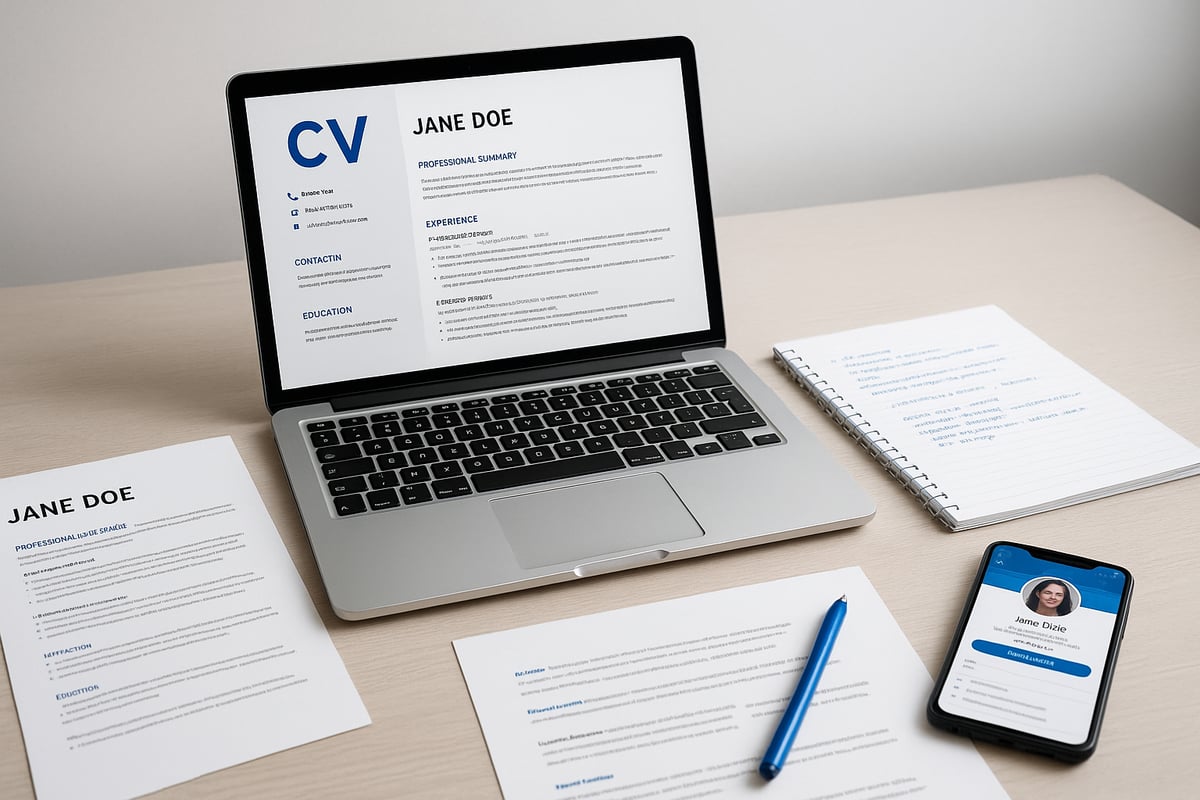
Below is a clear step-by-step process to help you build a CV for professional job applications that gets noticed.
Step 1: Research and Preparation
The foundation of a strong cv for professional job success is thorough research. Begin by analysing the job descriptions for your target roles. Pay close attention to the required skills, qualifications, and specific keywords employers use.
Study employer profiles on LinkedIn and review the CVs of professionals who have landed similar positions. This helps you identify what is valued in your sector and what achievements stand out. Gather concrete evidence of your successes, such as awards, metrics, and feedback.
Create a list of your top achievements and skills, aligning them with what employers are looking for. This ensures your CV for professional job applications is tailored from the outset, increasing your chances of passing initial screening.
Step 2: Structuring Your CV
Selecting the proper structure is crucial. For most applicants, a chronological format is preferred, especially in the UK, as it highlights career progression. However, functional or hybrid layouts can be effective if you are changing careers or have diverse experience.
Your CV for professional job applications must include these essential sections:
| Section | Purpose |
|---|---|
| Contact Details | How recruiters reach you |
| Professional Profile | Short, targeted summary |
| Experience | Key roles and achievements |
| Education | Relevant qualifications |
| Skills | Hard and soft skills |
| Certifications | Industry-standard credentials |
Logical ordering helps recruiters find the information they need quickly and efficiently. For more detailed advice, refer to the Crafting a Professional CV guide, which provides step-by-step best practices for structuring an effective CV for professional job roles.
Step 3: Crafting a Compelling Professional Profile
Your professional profile is the first impression you make. In a CV for professional job applications, this summary should be tailored to each role, highlighting your unique value and key achievements.
Use dynamic language and quantify results wherever possible. For example: “Dynamic marketing manager with 8+ years’ experience delivering campaigns that increased engagement by 40%.” Align your profile with the employer’s needs and mission.
Focus on clarity and relevance. A strong profile sets the tone for the rest of your CV for professional job submissions and grabs the recruiter’s attention immediately.
Step 4: Showcasing Achievements and Experience
Employers want to see results, not just responsibilities. Structure your experience section in reverse chronological order, focusing on measurable achievements for each role.
Apply the STAR method (Situation, Task, Action, Result) to demonstrate your impact clearly. For example: “Increased sales by 35% in 12 months by launching a new product line.” Use bullet points to make your CV for professional job achievements easy to scan.
Highlight promotions or expanded responsibilities to showcase career progression. This approach proves your value and sets your CV for professional job applications apart from generic submissions.
Step 5: Highlighting Skills and Additional Sections
To stand out in a competitive market, your CV for a professional job should prioritise in-demand skills. List both hard and soft skills relevant to the role, such as project management, data analysis, or communication.
Include certifications, languages, and technical proficiencies. If you have relevant voluntary work, publications, or awards, add them in a separate section. For example: “Certified Project Manager (PMP), fluent in Spanish, Volunteer Mentor.”
This comprehensive approach ensures your CV for professional job submissions reflects your full range of capabilities, making you a more attractive candidate.
Optimising Your CV for ATS and Recruiters
Creating a CV for a professional job in 2025 means mastering both digital and human screening. Applicant tracking systems (ATS) are now the gatekeepers for most roles, so your CV must be optimised to make it through automated filters and appeal to recruiters. Let us explore the key strategies for crafting a CV that stands out on both fronts.

Understanding ATS Algorithms
ATS software scans and ranks every CV for a professional job using predefined keywords, section titles, and formatting. Over 70% of CVs are filtered out at this stage and never reach a recruiter.
It is crucial to understand how ATS parses information. The system looks for standard headings, logical structure, and relevant skills. Graphics, tables, and unusual fonts can confuse the software, causing your application to be missed. For a deeper dive into how these systems work and how to optimise your CV, see Optimising your CV for ATS.
Keyword Optimisation Strategies
To ensure your CV for a professional job is noticed, use keywords from the job description naturally throughout your document. Identify the main skills, qualifications, and responsibilities the employer is seeking.
Integrate these terms into your experience and skills sections, but avoid keyword stuffing to ensure a natural flow. For example, if the advert mentions “project management,” use that exact phrase rather than synonyms. This targeted approach increases your chances of passing ATS filters and being shortlisted.
Formatting for Maximum ATS Compatibility
Formatting is vital for an ATS-friendly CV for a professional job. Use standard section titles such as:
Experience
Education
Skills
Certifications
Save your CV as a Word doc, .docx or PDF file, depending on the employer’s preference. Avoid using headers, footers, images, or non-standard fonts. These elements can break the parsing process, leading to rejection before a human even sees your application.
Human-Friendly Design for Recruiters
Once your CV for a professional job passes ATS, it must impress the recruiter. Balance ATS requirements with clean, professional formatting. Use plenty of white space and a clear hierarchy to guide the reader’s eye.
Bullet points are highly effective for listing achievements and skills. A logical, easy-to-read layout demonstrates your attention to detail and professionalism, making it easy for recruiters to quickly identify your strengths.
Common ATS Pitfalls to Avoid
Many candidates lose out due to avoidable mistakes in their CVs for professional jobs. Common pitfalls include:
- Overuse of graphics or unusual fonts
- Inconsistent formatting or spacing
- Placing key information in tables or images
Data show that 43% of CVs are rejected due to formatting errors. Double-check your document for these issues before submitting, ensuring it is both ATS-friendly and visually appealing to recruiters.
Essential Sections of a 2025 Professional CV
Creating a standout CV for professional job opportunities in 2025 means understanding exactly what recruiters expect. Each CV section must be purposeful, focused, and tailored to the role. Structuring your document in line with what makes a successful CV will maximise your chances of passing both ATS and human review.
Contact Details and LinkedIn Integration
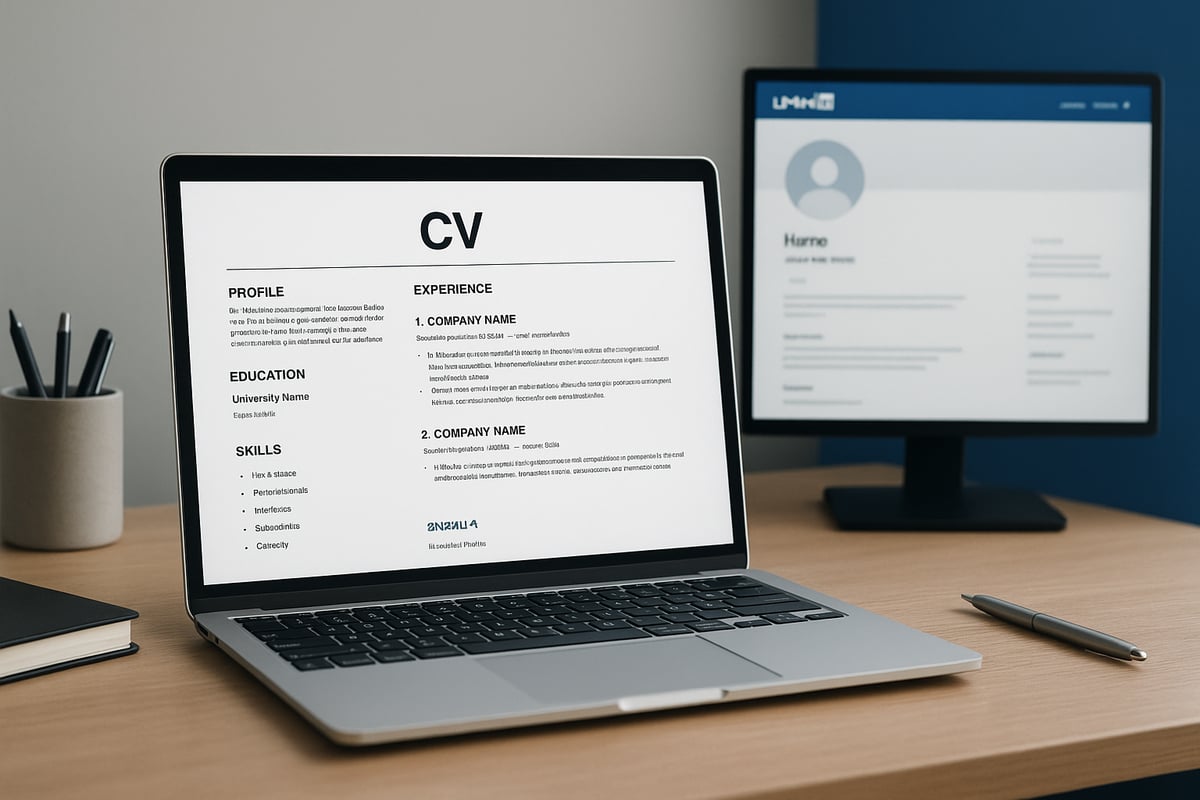
Start your CV for professional job applications with precise contact details. Include your full name, professional email, phone number, and a customised LinkedIn URL.
A LinkedIn profile is now essential. Profiles with a professional photo receive up to 21 times more views. Ensure that your LinkedIn information aligns with your CV, and verify that your privacy settings permit recruiters to view your profile.
Writing a Standout Personal Statement
A strong personal statement is crucial for your CV to achieve professional job success. Customise this section for each application, aligning your skills and experience with the employer’s needs.
Focus on your unique value and career ambitions. For example, use: “Results-driven finance director with global experience, skilled in leading transformation projects and delivering growth.” Avoid generic phrases and opt for specific, measurable impact.
Detailing Professional Experience
List your work history in reverse chronological order. For a CV for professional job roles, highlight promotions and career progression to demonstrate growth.
Use bullet points to showcase quantifiable achievements. For example: “Increased sales by 35% in 12 months by leading a cross-functional team.” Always link your responsibilities to outcomes, using numbers to evidence your impact.
Education and Qualifications
Present your most recent and relevant qualifications first. Include degree titles, awarding institutions, and dates.
Professional certifications add credibility. For example: “MSc in Data Science, University of Manchester, 2023.” Only mention qualifications that support your application for the specific professional job.
Skills, Certifications, and Additional Sections
Prioritise skills that are directly relevant to the CV for the professional job you are targeting. Include a mix of hard and soft skills, such as advanced Excel skills or leadership experience.
Add professional certifications, language proficiency, and voluntary work if they enhance your application. For instance: “Advanced Excel, French (B2), Volunteer Mentor.” These extra details can help set you apart from other candidates.
Common CV Mistakes and How to Avoid Them
Crafting a standout CV for professional job applications requires more than listing your experience. Even strong candidates can fall into common traps that undermine their chances. By recognising and correcting these errors, you can ensure your CV presents you as a top-tier professional.
Overused Phrases and Buzzwords
One of the most frequent CV mistakes for professional jobs is relying on clichés such as “hardworking”, “team player”, or “dynamic”. These phrases are overused and fail to differentiate you from other applicants.
Instead, opt for specific, action-oriented language that demonstrates your impact. For example, replace “responsible for” with “delivered”, “achieved”, or “led”. Strong verbs paired with measurable results give your CV energy and clarity.
- Use unique achievements, not generic statements.
- Showcase leadership or problem-solving through real examples.
- Avoid empty adjectives and focus on substance.
Typos, Formatting Errors, and Inconsistencies
Nothing undermines a CV for a professional job faster than careless mistakes. Typos, inconsistent bullet points, or mixed fonts suggest a lack of attention to detail. According to recent studies, 58% of employers will reject a CV with errors.
Proofread your CV multiple times and use tools like spell check or peer review. Maintain consistent formatting throughout: select a single font, align bullet points, and use clear section headings. Attention to these details signals professionalism to recruiters.
Ignoring ATS Requirements
Many candidates overlook the importance of ATS compliance when preparing a CV for professional job applications. Applicant Tracking Systems scan CVs for keywords and structure, and formatting errors can prevent your CV from being read at all.
Avoid using graphics, tables, or unusual fonts, as they can confuse ATS software. Use straightforward section titles and integrate relevant keywords from the job description. For a deeper dive into these issues, see Avoid common CV mistakes.
Lack of Quantifiable Achievements
A CV for a professional job should highlight your impact, not just your responsibilities. Recruiters want to see measurable outcomes, not vague duties. For example, rather than saying “managed budgets”, specify “managed £500k budget, reduced costs by 18%”.
Use numbers, percentages, or timeframes to demonstrate the scale of your achievements. This approach provides concrete evidence of your value and sets you apart from other applicants.
Submitting Generic or Untailored CVs
Sending the same CV for a professional job to every employer is a common error. Recruiters can spot generic applications instantly, and these often fail to make an impression.
Always tailor your CV to each role by researching the company and reflecting its values and language. Align your experience with the specific requirements of the job, and show genuine interest in the organisation. Personalisation demonstrates commitment and increases your chances of success.
You’ve seen how a truly professional CV can open doors in today’s competitive market—from passing rigorous ATS filters to impressing recruiters with your achievements and personal brand. If you’re ready to take your career to the next level and want expert guidance tailored to your goals, I’m here to help. Together, we can craft a CV that highlights your strengths and positions you for the opportunities you deserve in 2025. Let’s ensure your next application stands out for all the right reasons—discover more about my Professional CV Writer UK Bespoke CV Writing Service for Results.
text][et_pb_button button_url=”https://johnloganbmc.co.uk/cv-packages/” button_text=”Pricing and Packages” _builder_version=”4.27.4″ _module_preset=”default” global_colors_info=”{}”]button][et_pb_button button_url=”https://johnloganbmc.co.uk/john-logan-cv-reviews/” button_text=”Reviews” _builder_version=”4.27.4″ _module_preset=”default” global_colors_info=”{}”]button][et_pb_button button_url=”https://johnloganbmc.co.uk/contact-john-logan-cv-writer/” button_text=”Contact” _builder_version=”4.27.4″ _module_preset=”default” global_colors_info=”{}”]button]column]row]section]